

Google Pixel 10 Supports C2PA to Confirm the Authenticity of AI-Generated Media
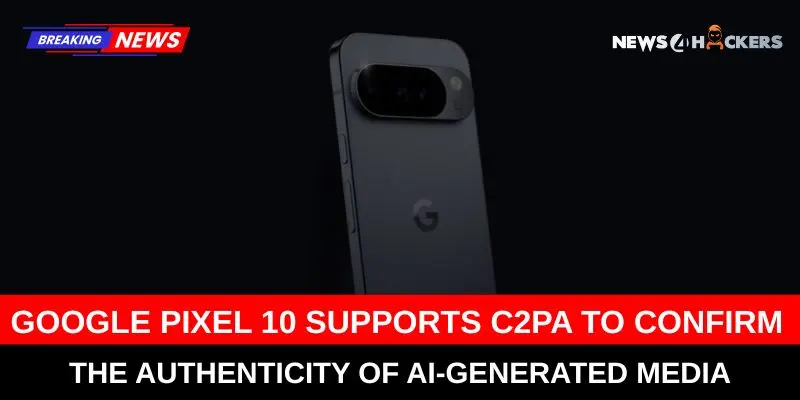
Google Pixel 10 Supports C2PA to Confirm the Authenticity of AI-Generated Media
Google declared on Tuesday that the Coalition for Material Provenance and Authenticity (C2PA) standard, which verifies the provenance and history of digital material, is supported by the new Google Pixel 10 phones right out of the box.
Consequently, the Pixel Camera and Google Photos applications for Android now support C2PA’s Content Credentials. Google stated that the action is intended to increase the transparency of digital media.

The tamper-evident, cryptographically signed digital manifest known as C2PA’s Content Credentials offers digital content, including pictures, movies, and audio files, a traceable provenance. Adobe claims that the metadata type acts as a “digital nutrition label,” providing details about the author, the creation process, and whether artificial intelligence (AI) was used in its creation.
“The Pixel Camera app achieved Assurance Level 2, the highest security rating currently defined by the C2PA Conformance Program,” according to the C2PA Core and Android Security teams at Google. “Assurance Level 2 for a mobile app is currently only possible on the Android platform.”
“Pixel 10 phones support on-device trusted time-stamps, which ensure images captured with your native camera app can be trusted after the certificate expires, even if they were captured when your device was offline.”
The Google Tensor G5, Titan M2 security chip, and hardware-backed security mechanisms integrated into the Android operating system work together to enable the functionality.
In order to ensure that provenance data is reliable, the process is not individually identifiable, and it functions even when the device is not connected to the internet, Google claimed to have built C2PA in a way that is safe, verifiable, and usable offline.

This is accomplished by utilizing:
- Google C2PA Certification Authorities (CAs) can confirm that they are interacting with an authentic physical device by using Android Key Attestation.
- To confirm that the request came from a reliable, registered app, hardware-backed Android Key Attestation certificates that contain the package name and signing certificates linked to the application that made the request to generate the C2PA signing key.
- Utilizing Android StrongBox in the Titan M2 security chip to generate and store C2PA claim signing keys for tamper resistance.
- Hardware-backed, anonymous attestation that verifies newly created cryptographic keys on-device without revealing the user’s identity.
- Each image is signed with a unique certificate, making the creator’s identity “cryptographically impossible” to deanonymize.
- When the shutter of the camera is pressed, the Tensor chip’s on-device, offline Time-Stamping Authority (TSA) component creates cryptographically signed time stamps.
“C2PA Content Credentials are not the sole solution for identifying the provenance of digital media,” Google stated. “They are, however, a tangible step toward more media transparency and trust as we continue to unlock more human creativity with AI.”

About The Author:
Yogesh Naager is a content marketer who specializes in the cybersecurity and B2B space. Besides writing for the News4Hackers blogs, he also writes for brands including Craw Security, Bytecode Security, and NASSCOM.
Read More:
VoidProxy, A Hacker Assistant, Enhances Microsoft and Google Accounts Upon Request
About Author









 English