

New Digital Arrest Scam Tied to Aadhaar and Terror Allegations Exposed by Police
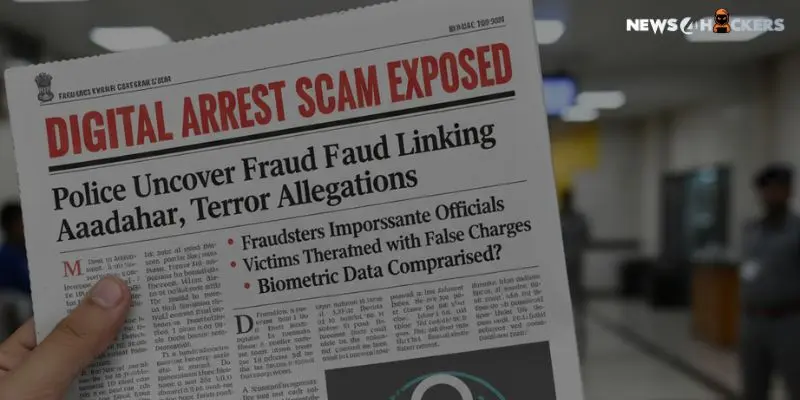
“Let’s talk about a recent digital arrest scam case, which is tied to Aadhaar and terror allegations exposed by the police!”
Rajasthan’s cybercrime bureau has issued a public alert due to a recent surge in cybercrime. To extort money through fear and deceit, criminals acting as senior police officials are frightening civilians by falsely connecting their phone numbers or Aadhaar numbers to high-profile criminal cases, such as terror and bomb attacks.

A Fraud Based on Fear Appears
On Tuesday, the Rajasthan Police Cyber Crime section warned the public about a rapidly developing online extortion fraud.
Police
| Scammers are pretending to be law enforcement personnel and forcing victims to send money by claiming that their mobile numbers or Aadhaar are connected to major criminal investigations. |
A call purporting to be from a police department, intelligence agency, or even the Central Bureau of Investigation is frequently the first step in the scam. To instill a sense of urgency and terror, the target is informed that their name has been connected to a criminal case, perhaps mentioning recent high-profile instances like the Delhi vehicle blast.
How Does the Scam Work?
In order to increase psychological pressure, victims are usually connected to a so-called “senior officer” during the call, according to DIG (Cyber Crime) Vikas Sharma. In many instances, the victims are put under virtual “custody” during a video conference and are unable to end it as the con artists question and threaten them.
Vikas Sharma, DIG, Cyber Crime
| “Many victims end up disclosing bank account information, UPI IDs, or even sending money for purported “verification” due to mental stress.” |
Before the victim discovers it is a scam, the thieves take advantage of this fear-driven cooperation to obtain private information or money transfers.
Police Call for Alertness, Not Fear
No legal police official will ever request money, Aadhaar verification, or bank information over the phone, according to the advice, which was issued under the direction of DGP Rajiv Kumar Sharma.

Rajiv Kumar Sharma, DGP
| “The public must maintain composure and refrain from answering such calls.” |
Authorities have advised anyone who receives such communications to call the Cyber Helpdesk, dial 112, or get in touch with their local police station. Additionally, victims are urged to phone 1930, the national helpline for cyber fraud, or report incidents via the National Cybercrime Reporting Portal (cybercrime.gov.in).
Residents are encouraged to notify their banks as soon as possible to prevent or freeze suspicious transactions, and they can contact the local helplines at 9256001930 or 9257510100 for quick assistance.
The More Comprehensive Fight Against Digital Extortion
According to cyber specialists, these “digital arrest” frauds, which combine psychological coercion and social engineering, are a worrisome development in online fraud. These scams have a disturbing legitimacy due to the use of real-world case references and official impersonation.
In order to identify these calls before they proliferate further, authorities in Rajasthan and other states are now boosting awareness efforts and technical surveillance. Police officials caution that vigilance, public education, and prompt reporting continue to be the strongest defenses against such digital extortion schemes as online impersonation becomes more sophisticated.
About The Author
Suraj Koli is a content specialist in technical writing about cybersecurity & information security. He has written many amazing articles related to cybersecurity concepts, with the latest trends in cyber awareness and ethical hacking. Find out more about “Him.”
Read More:
Cyberattack at Delhi Airport: Investigation Launched After Major AMSS System Malfunction
About Author






 English