

Phishing Simulation and Security Awareness: An Integrated Approach to Creating Secure Users
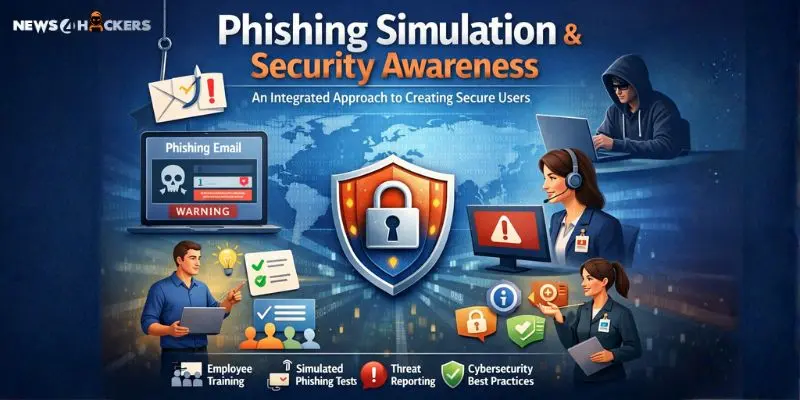
Combining Productivity and Protection
Organizations must balance enabling end users to effectively utilize tools with safeguarding against a constantly changing security environment in a world where digital tools power almost every element of contemporary work. According to research, between 68% and 95% of data breaches are caused by human error, which frequently results from clicks, misplaced trust, or unfamiliarity.
The combination of a lack of technological expertise and the speed and scope of threats from misuse and misinterpretation highlights the need for users to be both proficient with technologies and security-conscious. A strong loop is started when you incorporate simulated Phishing Simulation into your tool training: increased proficiency fosters confidence, which increases alertness, which fosters resilience.
Understanding the Human Risk in IT Security
Human error is the rule, not the exception.
The most common entry point for cyberattacks is human activity. This stark picture is consistently painted by industry research:
- A human component is involved in 74% of breaches, whether it is through clicking on a malicious link or incorrectly setting up a system. (com, infosecinstitute.com)
- According to recent IBM XForce studies, human error accounts for 95% of problems. (com)
- A Stanford and Tessian investigation found that staff errors account for 88% of breaches. (com)
- According to Mimecast’s 2025 Human Risk Report, human error still accounts for 68% of breaches. (com)
The “weakest link” in the field of cybersecurity is frequently a person rather than a machine. Our users are our biggest weakness, but with the right training, they can also be our greatest asset, whether it’s through phishing, misdirected emails, or incorrect configurations.
The Consequences: Financial and Reputational
Human-caused accidents have consequences that go beyond IT headaches:
- According to Mimecast, insider-related breaches typically cost $13.9 million. (com, infosecurity-magazine.com)
- 60% of small and mid-sized businesses shut down within six months, and the average cost to recover from phishing attacks is 1.6 million dollars. (io)
- 35% of workers acknowledge that they frequently use incorrect email addresses to alert clients about unintentional data exposure. (com)
Technical safeguards lose their effectiveness if end-user behavior is not addressed. What happens if a worker clicks on a fake email or sends a spreadsheet containing private information? These errors damage confidence and jeopardize financial sustainability in addition to interfering with workflows.
Prevent these phishing losses before they occur.
PhishNext reduces incident volume and recovery costs by using safe simulations to detect high-risk users early on and guiding them with focused micro-training.
Phishing Simulation: Practical Education at Best Possible ROI
Why simulated phishing works?
Phishing campaign simulations have a noticeable, behavior-focused effect. Take a look at these facts:
- In one study, the average phish-prone proportion decreased from 37.9% to just 4.7% following a year of phishing awareness training (Globals).
- According to Microsoft’s Digital Defense Report 2022, employees who receive simulated phishing training are 50% less likely to fall for actual phishing attempts.
- According to Ponemon Institute and others, the return on investment is 37×, divided between threat reduction and expense avoidance (com).
- ROI can approach 50:1 at optimal performance levels. $50 can be saved for every $1 spent (com).
Not only can simulations impart knowledge, but they also foster experience and incorporate learning into an emotionally charged encounter. More successfully than a lecture, users identify a threat, draw lessons from it, and create impressions that influence behavior in the future.
Observe how this functions in real life.
With PhishNext, you can execute safe, realistic phishing simulations with immediate, sympathetic feedback, allowing those 37.9% of users who are susceptible to phishing to become early reporters rather than your biggest danger.
Designing an effective simulation strategy
Organizations frequently make two major errors: frightening people with exaggerated situations and giving feedback either too late or not at all.
- Fake Ebola alarms and other over-the-top simulations have backfired, causing fear and mistrust (com).
- Employees “feel tricked—not taught,” according to a Wall Street Journal article that demonstrates how staged antics breed mistrust (com).
Training becomes an opportunity rather than a trap when it is followed by an empathic, well-targeted, and grounded message.
Unintended repercussions are sometimes highlighted in academic works. Overly frequent embedded training within simulations can occasionally desensitize staff, according to a multi-month trial involving 14,000 participants (arxiv.org).
What is the takeaway?
Provide deliberate design and targeted instruction rather than just alerts.
Just-in-time instruction: quick reinforcement promotes change
A fundamental component of successful behavior modification is immediate, context-rich reinforcement:
- After a simulation fails, remedial training aids users in making the connection between cause and effect.
- Promote genuine email reporting by redefining failure as collective awareness.
- Monitor and tailor interactions, including click-through rates, reports, and thematic weak points.
- Instead of using harsh language, speak with empathy; shame is ineffective.
Users transition from passive recipients to active defenders when they comprehend why they clicked and how to avoid such traps in the future.
Tool Proficiency: Building Confident, Responsible Users
Competent users are safer and more productive. Think about data:
- Better data governance, including safe file storage, rights control, and avoiding shadowIT, is correlated with confident platform use.
- According to Mimecast, 67% of enterprises believe that native tool security is inadequate, despite the fact that collaboration technologies like Teams and Slack are being attacked more frequently (org, scworld.com).
- Errors such as misdirected emails, incorrect cloud configuration, or unintentional file sharing are becoming more frequent and can be avoided with training.
Continuous tool training produces self-assured users who protect their data and themselves, with a particular emphasis on data handling and security settings. These users encourage safe behavior among their peers by acting as unofficial ambassadors.
Sustaining Change: Shifting Culture
A phishing simulation cannot be a one-time event. Integrate these activities into a larger cultural ecosystem:
- Organizational priorities are communicated when senior leadership models security-conscious behaviors.
- Peer-to-peer acknowledgment, not shame: When someone reports a questionable email, public recognition increases adoption and morale (cyberpilot.io).
- Empathetic correction demonstrates to users that phishing tests are meant to be educative rather than punitive.
- Training efficiency is scaled by deliberate feedback loops. Share to increase accountability and awareness among teams.
Trust is crucial. The system is harmed when increased phishing tests undermine confidence or frighten users, as was the case with the UCSC Ebola event (wsj.com). Users are empowered to speak up without fear when there is a culture of safe, compassionate learning.
Evaluating Impact: Actual Metrics, Actual Advantages
Metrics should direct everything in order to maintain momentum:
- Tracking click trends and reporting rates over time.
- Comparisons before and after training serve as a benchmark against the industry.
- Cost-avoidance analysis: how much has been saved by preventing breaches?
- Following a 60% decrease in phishing instances, one US shop reported saving $2 million a year (org, metacompliance.com).
- Financial services reduce phishing click rates from 25% to 4%, which improves confidence and reduces incident costs by 40% (com).
Combine quantitative analysis with qualitative insights such as shared successes, illustrative stories, and team comments. These create compelling business narratives that managers and leaders can rally behind.
Obtain the measurements that demonstrate the effectiveness of your program.
Every simulation is transformed into usable data by PhishNext, including click trends, reporting rates, repeat offenders, and anticipated cost avoidance—all in a dashboard that your leadership can quickly comprehend.
Sample Roadmap: A Blueprint for Change
- Align Teams: Unite the IT, security, and enablement teams behind common objectives.
- Baseline Risk: Analyze incident data and initial tool proficiency.
- Launch Layered Campaigns: Integrate timely feedback, recurring phishing simulations, and tool-based training.
- Reinforce Engagement: Make use of leaderboards, tests, newsletters, and recognition initiatives.
- Iterate Based on Data: Based on measurements, shift attention to areas where risks continue to exist.
- Celebrate Successes: Tell tales, honor groups, and promote culture.
- Institutionalize: Include training on leadership objectives, yearly plans, and onboarding.
Transform End Users from a Weakness to a Tactical Advantage
Organizations may turn their employees from passive users into proactive defenders by incorporating tool proficiency, just-in-time phishing training, and culture-building techniques. These users operate with assurance and security. They develop into a network of stewards who use and safeguard data in an organic way. The ability to view security as a path to trust and productivity rather than a burden is a tremendous competitive advantage at a time when digital threats and tools are constantly changing.
Use PhishNext to put this strategy into practice.
You just saw the importance of integrated phishing simulation, just-in-time training, and cultural transformation. PhishNext provides a single platform for:
- Launch realistic, moral phishing scenarios without betraying user confidence.
- Instead of yearly lectures, provide rapid micro-training when someone clicks.
- Monitor cost avoidance, reporting patterns, and click rates over time.
Are you prepared to employ your end users as a human firewall? Schedule a demo of PhishNext.
About The Author:
Yogesh Naager is a content marketer who specializes in the cybersecurity and B2B space. Besides writing for the News4Hackers blogs, he also writes for brands including Craw Security, Bytecode Security, and NASSCOM.
Read More:
CyberSec India Expo 2026: Bombay Exhibition Centre (NESCO), Mumbai
About Author









 English