

iOS 26.3 Released, Featuring 5 New Additions
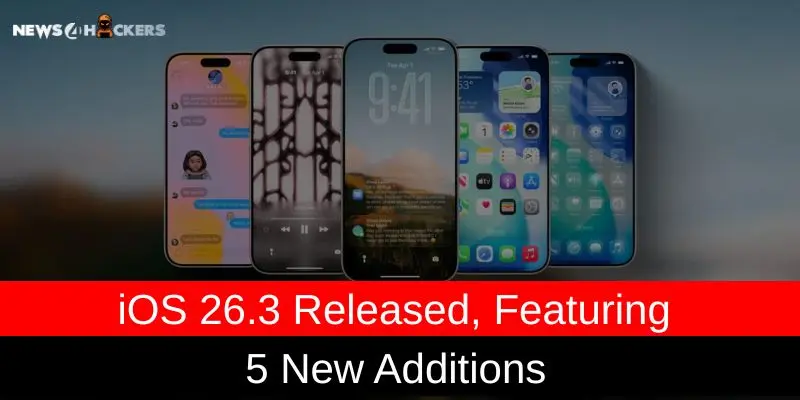
Apple is finally launching iOS 26.3, along with iPadOS 26.3, macOS Tahoe 26.3, watchOS 26.3, tvOS 26.3, and visionOS 26.3, a few months after the company began testing it. This software update is more focused on bug fixes and general stability than previous updates. Nonetheless, iOS 26.3 introduces a new feature for transferring data between iOS and Android, enhanced privacy settings, and three exclusive functions available only in Europe—these will not be accessible to Americans.
The absence of several new features may be due to Apple’s preparations for a significant iOS 26.4 update, which is said to include a supercharged Siri augmented by Google’s Gemini AI, new emojis, and additional enhancements. While iOS 26.3 may not seem revolutionary for many, it marks a crucial advancement toward the anticipated iOS 26.4 release, expected around April.
As an illustration, the Weather and Astronomy wallpapers are divided into two distinct sections in iOS 26.3. Although the reason for Apple’s decision to take that step is uncertain, it demonstrates the system’s lack of change. Here is all the information you require regarding the best features of iOS 26.3 that have just been released for iPhone users.
Until now, Apple and Google have depended on their Move to iOS and Android Switch applications to assist users in transferring data across different operating systems. At this point, both firms are simplifying the process by introducing a new data transfer standard. With the release of iOS 26.3, users of the iPhone can initiate the process by putting their device next to an Android phone (and the other way around).
Currently, Apple and Google provide users with the ability to transfer photos, messages, notes, apps, passwords, email accounts, phone numbers, voice memos, and WhatsApp content. In the future, the two companies may provide additional features that can be transferred between systems, such as health data and Bluetooth-paired devices, which remain linked to their original software.
Easier iOS-Android Data Transfer
Until now, Apple and Google have depended on their Move to iOS and Android Switch applications to assist users in transferring data across different operating systems. At this point, both firms are simplifying the process by introducing a new data transfer standard. With the release of iOS 26.3, users of the iPhone can initiate the process by putting their device next to an Android phone (and the other way around).
Currently, Apple and Google provide users with the ability to transfer photos, messages, notes, apps, passwords, email accounts, phone numbers, voice memos, and WhatsApp content. In the future, the two companies may provide additional features that can be transferred between systems, such as health data and Bluetooth-paired devices, which remain linked to their original software.
Both devices must be connected to the same Wi-Fi network and have Bluetooth turned on. As soon as the new device detects the other one, a QR code will be shown for users to start the transfer.
Hide your location setting
A new privacy feature that allows users to conceal their precise location is likely the most intriguing aspect of the iOS 26.3 cycle. This feature is currently restricted to devices equipped with Apple’s proprietary 5G modems, such as the iPhone 16e and iPhone Air. However, the list will grow with the launch of the iPhone 17e and iPhone 18 models. While the 17e is anticipated to include Apple’s C1X chip, all iPhone 18 variants should come equipped with Apple’s forthcoming C2 modem.
This added layer of privacy complicates the task of cell service providers to determine a user’s exact location at any moment. This feature could identify only your approximate neighborhood instead of providing your exact address; it would not interfere with apps that intentionally share your exact location, such as the Find My app.
The only “issue” at this point is that concealing your location is restricted not just to certain devices, but also to a select number of mobile carriers. This includes Telekom in Germany, EE and BT in the UK, Boost Mobile in the US, and AIS and True in Thailand. Provided that your phone and carrier are compatible, simply navigate to the Settings app > Cellular > Cellular Data Options, and you will find it there.
Exclusive European features
While in Europe, if you have a European Apple Account, you can access four additional features with iOS 26.3. Apple must ensure that the process of connecting third-party headphones is as smooth as that of AirPods. While an app might be required for additional features, accessory makers can employ a system like Apple’s for AirPods, enabling a quick connection just by bringing the new earbuds near your phone.
With the second update, developers can incorporate NFC features into their applications. This means that rather than depending on Apple Wallet, a bank could allow users to make NFC payments directly within its app using a digital card. Finally, Apple is facilitating improved communication between other devices and an iPhone, enabling data transfers such as AirDrop, AirPlay, or the Continuity Camera to be used with non-Apple devices as well. Although developers’ implementation may take some time, iOS 26.3 ultimately grants them access to those perks.
Apart from those features, Apple examined the capability of replying to messages via a third-party smartwatch. With the selection of Apple’s new Notification Forwarding option, users can respond to notifications via a non-Apple Watch smartwatch. Nonetheless, this feature was still in beta when iOS 26.3 was released. Apple has until June 1st to put this change into effect.
About The Author:
Yogesh Naager is a content marketer who specializes in the cybersecurity and B2B space. Besides writing for the News4Hackers blogs, he also writes for brands including Craw Security, Bytecode Security, and NASSCOM.
Read More:
ApolloMD Data Breach Exposes 626,000 Individuals
About Author









 English