

Russia to Block WhatsApp and Telegram as part of a Communication Blockade
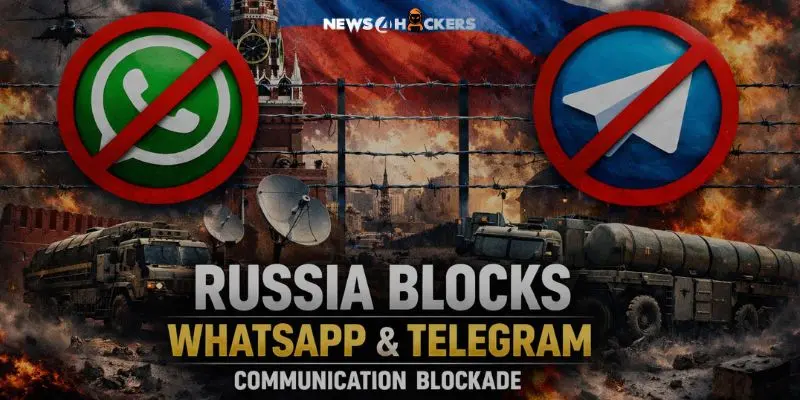
Russia to Block WhatsApp and Telegram as part of a Communication Blockade
The Russian government is intensifying its efforts to block WhatsApp in the country as part of a broader crackdown on communication platforms that are not under its control.
WhatsApp declared the measure on X, labeling it “a backwards step” that “can only lead to less safety for people in Russia.”
WhatsApp guaranteed its users in Russia that it will persist in doing everything possible to maintain their connection.
As reported by Russian media, Roskomnadzor, the country’s internet watchdog, has recently removed the domains whatsapp.com and web.whatsapp.com from the National Domain Name System, citing the official rationale of combating crime and fraud.
As a practical matter, by excluding the domains from domestic DNS routing, WhatsApp services became accessible only to users employing VPN tools or external resolvers.
However, it has been reported that more aggressive measures are now implemented, including the most recent effort to completely prevent access to WhatsApp in Russia. Meta, the company that owns the instant messenger, has been classified as an “extremist” organization in Russia since 2022.
In August 2025, Roskomnadzor initiated throttling of voice and video calls, marking the beginning of WhatsApp’s restrictions in the country. The authorities made an effort to BLOCK new user registrations in October 2025.
Dmitry Peskov, the press secretary for the president, has reportedly said that the government is willing to permit WhatsApp to operate again in Russia if Meta adheres to local laws.
WhatsApp blocks were implemented shortly after a similar measure was taken against Telegram, which was said to have been aggressively throttled earlier this week in Russia.
Pavel Durov, the founder of Telegram, reacted to the situation by asserting that Russia is attempting to promote the use of the MAX messenger app, which is under Kremlin control, among its citizens
As reported by Russian media, Roskomnadzor, the country’s internet watchdog, has recently removed the domains whatsapp.com and web.whatsapp.com from the National Domain Name System, citing the official rationale of combating crime and fraud.
As a practical matter, by excluding the domains from domestic DNS routing, WhatsApp services became accessible only to users employing VPN tools or external resolvers.
However, it has been reported that more aggressive measures are now implemented, including the most recent effort to completely prevent access to WhatsApp in Russia. Meta, the company that owns the instant messenger, has been classified as an “extremist” organization in Russia since 2022.
In August 2025, Roskomnadzor initiated throttling of voice and video calls, marking the beginning of WhatsApp’s restrictions in the country. The authorities made an effort to BLOCK new user registrations in October 2025.
Dmitry Peskov, the press secretary for the president, has reportedly said that the government is willing to permit WhatsApp to operate again in Russia if Meta adheres to local laws.
WhatsApp blocks were implemented shortly after a similar measure was taken against Telegram, which was said to have been aggressively throttled earlier this week in Russia.
Pavel Durov, the founder of Telegram, reacted to the situation by asserting that Russia is attempting to promote the use of the MAX messenger app, which is under Kremlin control, among its citizens
Developed by VK, MAX is a contentious communications platform that has been obligatory on all electronic devices sold in the country since September 2025.
Despite MAX being marketed as a secure application that protects national communications from foreign surveillance, numerous independent reviewers have expressed concerns regarding vulnerabilities in encryption, potential government access, and the risks associated with extensive data collection.
Currently, users in Russia might still access their preferred messengers through VPN tools, but these are also not completely safe from the government’s crackdown.
About The Author:
Yogesh Naager is a content marketer who specializes in the cybersecurity and B2B space. Besides writing for the News4Hackers blogs, he also writes for brands including Craw Security, Bytecode Security, and NASSCOM.
Read More:
Industrial Automation Security: Why Secure OT Protocols Struggle to Gain Traction
About Author







 English