

CBI Inquiry Exposed: Fake Investigation Conducted Over WhatsApp Video Calls
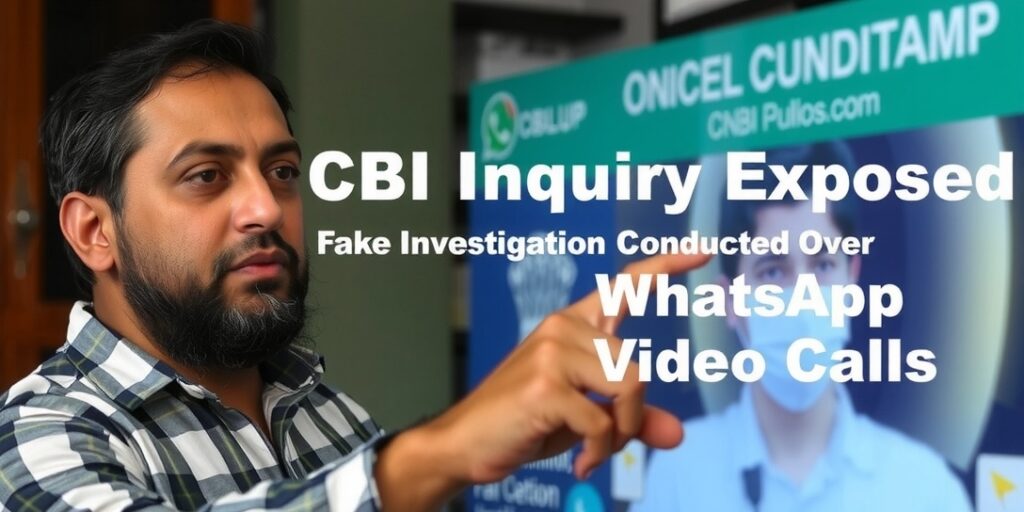
Cyber Fraudsters Conduct Fake CBI Inquiry via Video Calls, Dupe Elderly Retiree of ₹42.50 Lakh
A recent case of cybercrime has come to light in Ahmedabad, where an 83-year-old retired Indian Navy officer was deceived of ₹42.50 lakh by fraudsters posing as officials from the Central Bureau of Investigation (CBI).
The Scam
The scammers conducted a mock inquiry over video calls, convincing the victim to liquidate his fixed deposits and transfer the funds for supposed verification.
According to the First Information Report (FIR), the elderly officer received a call on December 8 from a person claiming to be a Telecom Department official, stating that multiple complaints had been filed against him.
To add credibility to the scam, the fraudsters arranged another video call, where a man dressed as a judge appeared to conduct a mock courtroom proceeding.
The victim was intimidated and threatened with arrest and reputational damage, a common tactic used in “digital arrest” scams.
The Loss
He was instructed not to leave his house or speak to anyone during the hours-long video calls.
The scammers then directed him to write a declaration stating he was not involved in any wrongdoing and to share photographs of the signed statement along with his bank details.
On December 9, the victim’s wife broke a fixed deposit at a private bank branch and transferred ₹21.24 lakh via RTGS to a YES Bank account provided by the callers.
The next day, another fixed deposit was prematurely closed at a nationalized bank branch, and ₹21.25 lakh was transferred to the same account.
In total, ₹42.50 lakh was siphoned off over two days.
The Investigation
The fraud was discovered on December 11 when the family attempted another withdrawal, and bank officials flagged the transaction as suspicious.
An online complaint was filed on the national cybercrime portal, followed by a formal FIR.
Investigations revealed that the accused had deleted call logs and chat records from the victim’s phone, indicating possible remote manipulation or instructions to erase digital evidence.
Cybercrime officials stated that the case bears the hallmarks of the growing “digital arrest” fraud model, where victims, often senior citizens, are isolated, intimidated, and coerced into transferring money under the guise of law-enforcement verification.
Warning
Authorities emphasized that no investigative agency conducts inquiries via calls, demands secrecy from family members, or asks citizens to transfer money for verification.
They urged the public to immediately disconnect such calls, inform relatives, and report incidents on the national cybercrime helpline 1930.

About Author









 English