

Satara Jewelers & Phone Shops Scammed via Fake Receipts, Losing Lakhs
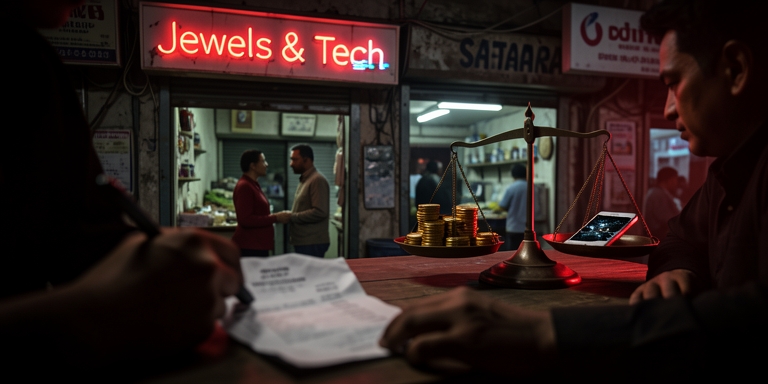
A commercial fraud scheme involving manipulated digital transactions has been uncovered in Maharashtra, resulting in significant financial losses for retail businesses.
The Fraud Unveiled
Fraudsters employed counterfeit transaction screenshots to deceive merchants into releasing high-value goods without actual payment. The incidents occurred at two separate locations, with total losses amounting to ₹5.23 lakh.
The Initial Deception at Ranka Jewellers
The initial deception took place at Ranka Jewellers, where an individual posing as a wealthy customer spent considerable time selecting a 23-gram gold chain valued at ₹3.48 lakh. After finalizing the purchase, the suspect used a mobile device to display a fabricated National Electronic Funds Transfer (NEFT) confirmation. The screenshot, designed to mimic a real-time banking transaction, showed a successful fund clearance. Based on this visual evidence, the store manager authorized the release of the item. Subsequent verification revealed no corresponding deposit in the bank account, exposing the fraud.
The Second Incident at SS Mobile
A similar tactic was employed hours later at SS Mobile, a retail outlet near Powai Naka. A suspect with identical behavior selected a smartphone priced at ₹1.75 lakh. Using a cloned payment application, the individual generated a counterfeit receipt indicating full payment. The sales staff, relying on the digital confirmation, processed the transaction and handed over the device. The fraud was detected when discrepancies emerged between the store’s records and bank statements.
Investigations and Security Measures
Investigations by the Satara District Police have identified the use of sophisticated digital manipulation techniques. The suspects exploited vulnerabilities in mobile payment systems by generating realistic but fake transaction visuals. These methods bypassed standard verification processes, as merchants relied on visual confirmations rather than direct bank checks. Following the incidents, cybercrime units initiated technical analyses of surveillance footage and mobile data. Authorities are tracing the exact location and device activity during the transactions, including IP signatures and network data. Investigators are also determining whether the operations were conducted by a single individual or part of a broader network targeting retail sectors across the region.
Security Recommendations
Regional trade associations have issued urgent advisories to merchants, emphasizing the need for enhanced verification protocols. Businesses are urged to avoid releasing high-value inventory based solely on digital screenshots. Security experts recommend implementing multi-layered confirmation systems, such as direct bank ledger checks or independent corporate validation, before finalizing transactions.
Conclusion
The case highlights the growing threat of digital fraud in retail environments, underscoring the importance of adopting robust security measures to prevent similar incidents.

About Author






 English