

Eight Cyber Criminals Arrested in Lakhimpur Kheri; 121 SIM Cards Confiscated
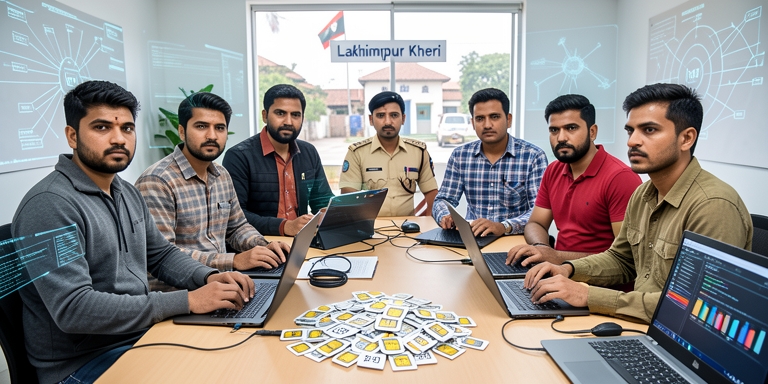
Uttar Pradesh Police dismantled an organized cyber fraud operation in Lakhimpur Kheri, leading to the arrest of eight individuals suspected of exploiting victims’ biometric information to acquire fake SIM cards and manage bank accounts for criminal activities.
Operation and Arrests
Investigators revealed that the accused targeted individuals by offering SIM porting services, collecting biometric data, and using it to activate SIM cards and banking facilities under victims’ names. These accounts were subsequently utilized to process funds from cybercrime operations nationwide.
Recovered Items and Suspects
During the operation, law enforcement recovered 121 SIM cards, nine Android smartphones, two fingerprint scanners, cash, and documents linked to fraudulent transactions. All eight suspects were presented before a court and remanded to judicial custody, with ongoing efforts to uncover the broader network.
Location and Investigation
The operation was part of a larger initiative against cybercrime under the supervision of the district’s Senior Superintendent of Police. Intelligence gathered by the Cyber Police Station indicated the presence of an illicit network operating from the Amritaganj Canal Bridge passenger shelter in the Kheri police station area. A police raid at the location resulted in the seizure of incriminating materials, prompting the filing of a criminal case.
Suspects and Forensic Analysis
The arrested individuals include Ankit, Vikas, Saroj Kumar, Chandra Pratap, Pappu, Anand, Rinku, and Dilip Yadav. The recovered items, including electronic devices and notebooks, are undergoing forensic analysis to examine digital communications, financial activities, and connections to other cybercrime groups.
Methods and Impact
Preliminary findings suggest the group targeted economically disadvantaged individuals by offering mobile service assistance, then misused their biometric details to activate SIM cards. These SIM cards were later used to create UPI identifiers, manage bank accounts, and facilitate transactions tied to fraud. Police stated that the accounts were employed to receive proceeds from cybercrime activities across multiple regions, with the accused allegedly retaining a portion of the funds before transferring the remainder to other criminals.
Investigation and Expert Insights
Investigators are analyzing banking records, UPI transactions, mobile data, and call detail records to map the network’s reach and identify links to organized cybercrime syndicates. Experts highlight that attackers are increasingly leveraging digital identities and biometric credentials to bypass traditional security measures, using fraudulent SIM cards and mule bank accounts to obscure illicit financial flows.
Public Warnings and Actions
Authorities have urged the public to provide biometric data only at verified service centers and to avoid responding to unsolicited requests related to SIM porting, e-KYC verification, or account activation. The investigation remains active, with forensic teams examining seized evidence to identify additional suspects, financial accounts, and cybercrime networks.
Conclusion and Next Steps
Law enforcement has indicated further legal actions may follow if new evidence emerges. Citizens are encouraged to report suspicious cyber activities through the National Cyber Helpline (1930) or local police stations.
Experts highlight that attackers are increasingly leveraging digital identities and biometric credentials to bypass traditional security measures, using fraudulent SIM cards and mule bank accounts to obscure illicit financial flows.

About Author







 English