

Cybersecurity Summit Workshop: Live Cyber Range Attack-Defense Training
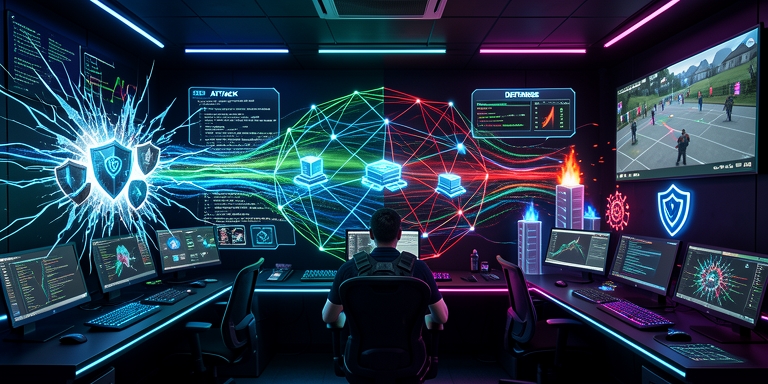
A recent session at the FutureCrime Summit highlighted the growing emphasis on immersive, simulation-based training to prepare cybersecurity professionals for real-world threats.
The Workshop’s Approach
The workshop, led by Gitesh Sawariya, co-founder of DefHawk, focused on creating realistic attack scenarios to enhance defensive capabilities. Unlike traditional methods that rely on theoretical instruction, cyber ranges provide controlled environments where participants can practice identifying, mitigating, and responding to threats without risking operational systems.
Hands-On Experience
The primary objective of the session was to emphasize the value of hands-on experience in cybersecurity. Cyberattacks often unfold rapidly, requiring defenders to analyze anomalies, understand adversary tactics, and implement countermeasures in real time. While conventional training may explain procedures, live simulations replicate the urgency and complexity of actual incidents.
Real-World Application
Participants engaged in scenarios where attackers and defenders operated simultaneously, testing their ability to detect vulnerabilities, isolate compromised systems, and restore services under dynamic conditions. This approach aims to build confidence and ensure teams can act decisively during crises.
Beyond Technical Skills
Beyond technical skills, the workshop addressed the broader challenges of incident response. Effective cyber defense demands coordination, threat prioritization, and decision-making with limited information. Live simulations expose participants to multifaceted problems that mirror the unpredictable nature of real attacks.
Adapting to Adversaries
For specialized teams, such training is critical, as adversaries frequently adapt tactics, exploit multiple weaknesses, and shift strategies mid-attack. The session demonstrated how simulation platforms enable repeated practice, allowing teams to refine their strategies and improve resilience over time.
The Importance of Readiness
A key takeaway from the workshop was the importance of readiness through consistent practice. Organizations may invest in advanced tools and monitoring systems, but their effectiveness hinges on how well teams can deploy them during an active incident. Cyber ranges help identify gaps in procedures, communication, and technical execution, providing opportunities for improvement before real threats emerge.
Continuous Improvement
By conducting regular exercises, teams can track progress, address recurring issues, and develop more robust response protocols.
Shifting Cybersecurity Education
The event underscored a broader shift in cybersecurity education from knowledge acquisition to operational proficiency. As threats evolve, defenders must train in environments that replicate real-world conditions rather than relying on theoretical understanding. The workshop highlighted how cyber ranges integrate live attack scenarios, defensive decision-making, and structured simulations to bridge the gap between technical knowledge and practical application.
Measuring Preparedness
For cybersecurity professionals, this transition is essential—preparedness is ultimately measured by performance during active attacks, not by theoretical expertise alone.

About Author








 English