

Gwalior Woman Scammed via Instagram Ad, Loses Thousands from Bank Account
Gwalior Woman Clicks Instagram Ad, Loses Thousands From Bank Account
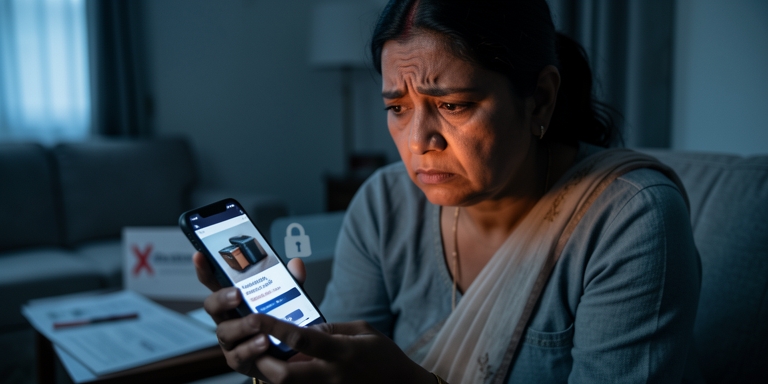
A resident of Gwalior reported unauthorized withdrawal of ₹98,000 from a bank account following a mobile device compromise linked to an Instagram advertisement. The incident occurred when a family member interacted with a suspicious ad, leading to device malfunction and subsequent financial fraud. The victim, identified as Rachna, reportedly accessed Instagram on a mobile phone on August 11 when an advertisement appeared. Upon clicking the ad, the device reportedly ceased functioning, rendering all operations non-responsive. The family attempted to power off the device but encountered difficulties. The phone was later taken to a local repair shop near Purani Chhawani crossroads, where it was forcibly shut down and restarted. At this stage, the family remained unaware of any security breach. The financial loss was discovered later that evening when the account holder received a notification about an unauthorized transaction. A review of the account balance revealed a deficit of ₹2,970, with the total amount withdrawn reaching ₹98,000 through three separate Unified Payments Interface (UPI) transactions. The victim’s spouse, Jay Pratap Singh Batham, confirmed no intentional transfers had occurred. Following the discovery, the family contacted the cybercrime helpline on August 16 and submitted a formal complaint to local authorities. Bank officials confirmed the withdrawals were unauthorized, though details regarding the authentication mechanisms for the transactions were not disclosed. Purani Chhawani police are investigating the sequence of events, focusing on how the device compromise facilitated access to the financial account. The probe aims to determine the technical pathways exploited by malicious actors, including potential malware deployment or phishing techniques. No further details about the fraudulent activity, including specific indicators of compromise or affected platforms, have been publicly disclosed. The case remains under active scrutiny by law enforcement and cybersecurity professionals.

About Author








 English