

Understanding the Critical Difference: Cloud Logging vs. Incident Readiness
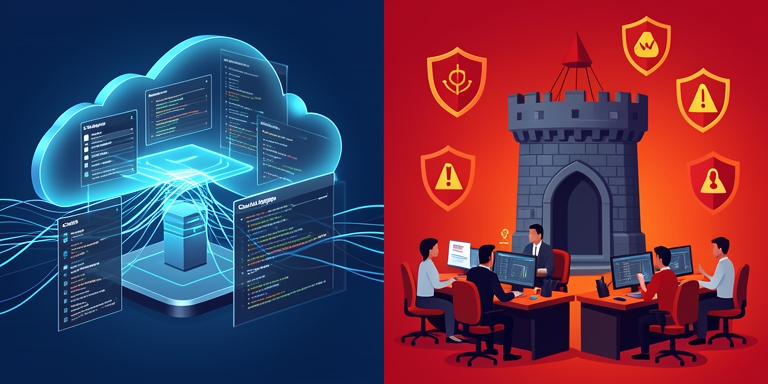
Most cloud security programs have logging enabled, but cloud logs often fail to address critical containment questions during incidents.
Why Logs Fail During Incidents
Eight conditions commonly lead to cloud logs failing as investigative tools, particularly in environments assuming logging coverage is adequate.
Logging is absent in peripheral accounts and new regions
As cloud environments expand through account creation, organizations without centralized governance frameworks face inconsistent logging. New accounts may not inherit logging configurations, leaving attackers who pivot to these accounts without an audit trail. A critical diagnostic question: can you confirm CloudTrail is enabled in every account created in the last 90 days?
Log retention periods often fall short of investigation requirements
Retention settings should align with regulatory obligations, forensic needs, and operational risks, not default configurations. When retention windows are insufficient for compliance or realistic dwell time estimates, attackers operate in periods with no recoverable evidence.
Logs stored in compromised accounts also pose risks
If audit logs export to an S3 bucket or storage account within the same environment, an attacker with permissions can alter or delete evidence before investigators access it. Modern safeguards like immutable storage, S3 Object Lock, cross-account log archives, and dedicated security accounts directly mitigate this.
Data-plane logging is frequently missing
Control-plane logs track API activity, while data-plane logs reveal what was accessed. S3 bucket access logs, Azure Storage blob records, or GCP Data Access Audit Logs are essential to determine if a public resource was accessed. Without data-plane logging, investigators cannot confirm whether exposed data was read.
Identity logs also face challenges under pressure
Logs spread across accounts or regions without centralized query capabilities force investigators to manually extract and search data during active incidents. Advanced practices now include SIEM platforms, security data lakes, and cloud-native analytics tools that normalize, correlate, and prioritize logs for faster response.
Evidence scope often falls short of the attack surface
Modern cloud incidents require data beyond control-plane and data-plane logs. Endpoint telemetry, Kubernetes audit logs, container runtime logs, DNS records, network flow telemetry, and SaaS audit logs are all relevant depending on the environment. Multi-cloud architectures and cross-tenant designs add complexity, with API version differences, inconsistent logging configurations, and visibility gaps creating blind spots during investigations.
Pre-approved containment measures are also lacking
Logs that reconstruct attacker activity are only useful if the organization can act on the findings. If an investigation identifies a compromised identity but lacks the authority to revoke access, containment becomes impossible.
What This Gap Enables
Attackers exploit logging-readiness gaps to gain five key advantages. Extended dwell time allows persistence beyond organizational estimates when actions occur outside retention windows or in unlogged accounts. NSA and CISA joint guidance highlights logging gaps—such as insufficient retention, lack of centralization, and telemetry coverage—as factors that adversaries exploit to reduce detection chances.
Scope concealment occurs when unlogged accounts, services, or regions remain invisible, enabling attackers to operate without evidence trails. Evidence destruction is possible if attackers modify logging configurations to delete trails or alter export rules before investigations begin. When logs lack protections like immutable storage or isolated security accounts, the control plane becomes a tool for undermining investigations. Investigation delays arise when scope reconstruction is incomplete, giving attackers more time in the environment. Disclosure uncertainty forces organizations to assume potential data exposure under regulations like GDPR or HIPAA, expanding notification requirements beyond supported evidence.
What This Looks Like at Incident Time
During active cloud incidents, logging-readiness gaps manifest through specific failures. Log retention may end before the estimated compromise date, not because the breach is recent but due to default settings expiring evidence. Accounts with no CloudTrail activity might not be dormant but lack logging entirely, as they were created outside centralized governance. Identity evidence may show logging configurations were altered post-compromise, with attackers using control-plane permissions to limit investigation capabilities. Query interfaces requiring manual correlation across multiple sources delay containment decisions, leading to incomplete timelines with critical gaps.
Decision Checklist
Six diagnostic questions can identify gaps immediately:
- 1. Account and region coverage: Is CloudTrail (or equivalent) enabled in every cloud account and region, including those created in the last 90 days? If account provisioning lacks centralized governance, how is logging verified for new accounts?
- 2. Evidence preservation: Are logs exported to a security-controlled destination outside the accounts they cover, protected by immutable storage, Object Lock, WORM capabilities, or a dedicated security account the compromised environment cannot modify?
- 3. Retention adequacy: Do log retention periods meet regulatory, compliance, and investigation requirements for realistic attacker dwell times across all accounts, subscriptions, and projects?
- 4. Data-plane visibility: Are data-plane access logs enabled for storage services and other resources containing sensitive data?
- 5. Investigation capability: If the highest-permission cloud identity were compromised today, can you reconstruct every action it took in the last 30 days across all accounts, regions, services, and evidence sources—including endpoint telemetry, Kubernetes logs, and SaaS audit logs—within the time needed for containment decisions? Does your SIEM, data lake, or security analytics platform support this without manual extraction?
- 6. Readiness validation: Has your organization conducted a tabletop exercise or log reconstruction test in the last 12 months to validate investigation capabilities under simulated incident conditions?
Many organizations discover gaps during simulations rather than real incidents, which is the preferable scenario. The tradeoff is clear: comprehensive logging increases storage costs and query complexity, but the alternative is failing to meet investigative needs during incidents. Testing these conditions reveals whether cloud logs function as evidence or merely expensive data collection.
Sources NSA/CISA Joint Cybersecurity Advisory AA23-278A, https://www.cisa.gov/news-

About Author








 English