

Europe’s Underground Hawala Cash Network Exposed via 532-Member WhatsApp Group
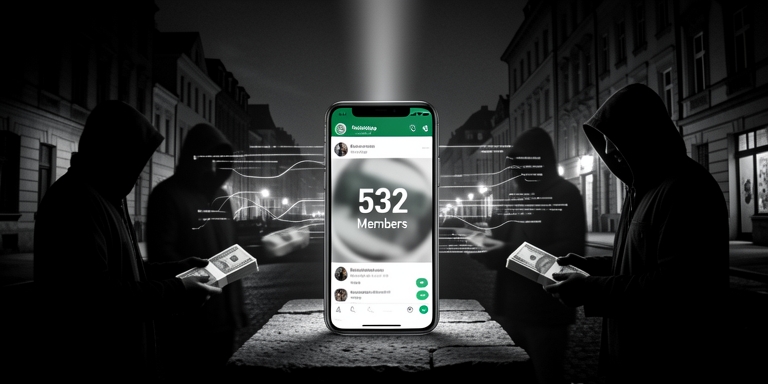
A group of 532 individuals, comprising over 82,000 messages, has revealed the operations of brokers allegedly facilitating hundreds of millions in cross-border cash movements.
The Traders of Greater Europe Network
The network, referred to as “Traders of Greater Europe,” operated between February and December 2022, with communications indicating transactions spanning multiple European nations, including the United Kingdom. Investigators uncovered links between the network and organized crime activities, such as drug trafficking, human smuggling, and associations with Islamic State-affiliated entities.
Operations and Communication
Belgian authorities traced a transfer from Brussels to Syria linked to funds intended for spouses of Islamic State detainees in camps. Hawala, an informal financial system, relies on trusted intermediaries rather than formal banking institutions. Users deposit funds with a broker in one location, who then coordinates with a counterpart in the destination country to disburse the equivalent amount. This method bypasses traditional banking infrastructure, making it difficult to trace.
Illicit Exploitation of Hawala
While Hawala is not inherently illegal and is used in regions with limited access to formal banking, its structure has been exploited for illicit purposes, including money laundering and evasion of financial regulations. The 532-member group communicated primarily in Arabic, with records showing transactions exceeding €5,000, some reaching significantly higher values. British cities such as London and Birmingham were implicated in the arrangements.
Investigation and Key Findings
The network was uncovered during a Belgian money-laundering probe led by magistrate Vincent Guerra, initially linked to terror financing but expanding to reveal a broader financial infrastructure. The messages were obtained following a 2024 Belgian court case that convicted six individuals, including Abu Adam, the alleged Brussels network leader, and his associate Abu Ahmed.
Evidence Recovered
Investigators recovered over 6,000 images of €5 notes, including serial numbers, and 6,000 identity documents from Abu Adam’s phone, suggesting tools for tracking transactions and clients. Guerra estimated the group processed at least 12,000 transactions. A former launderer, identified as “Frank,” described handling hundreds of millions in euros through European hawala networks, including instances where couriers delivered €1 million in cash to a Rotterdam office.
Connections to Organized Crime
The networks were connected to terror financing, drug trafficking, and prostitution, with evidence of collaboration with human smuggling operations. In Austria, a hawala office operating from a kebab restaurant was linked to human trafficking, leading to convictions of two Syrian brothers. Another network, investigated by Austrian authorities and Europol, allegedly used hawala to fund the smuggling of approximately 100,000 individuals into Europe over 18 months.
Implications and Recommendations
The scale of the 532-member group highlights how traditional financial mechanisms can be integrated with modern communication tools to coordinate cross-border transactions. The digital footprint of 82,000 messages provides investigators with critical evidence typically avoided by underground networks. The case underscores the growing reliance on digital forensics, including mobile devices and messaging platforms, in financial crime investigations.
While hawala can serve legitimate needs, unregulated use exposes participants to legal and financial risks. For international transfers, authorities recommend utilizing licensed banking or remittance services and maintaining detailed records of transaction origins and destinations.

About Author









 English