

US Agencies Warn: China’s Systematic Frontier AI Extraction Threat
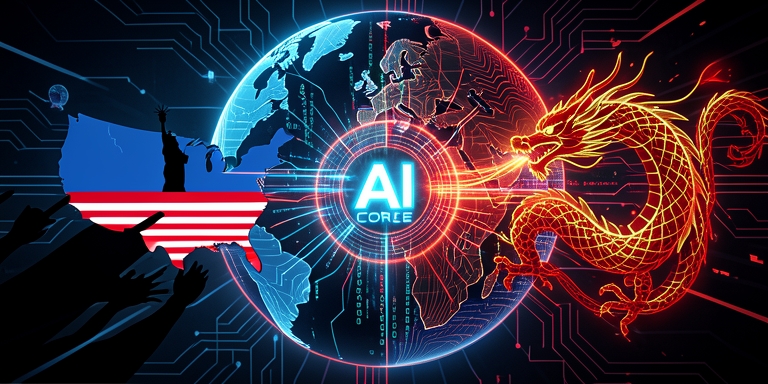
U.S. federal agencies have identified that Chinese AI firms are using data distillation techniques to extract information from American advanced AI models.
Key Entities and Techniques
According to the NSA, CISA, and FBI, entities such as DeepSeek, Moonshot AI, Alibaba, MiniMax, StepFun, and Z.AI have accessed billions of tokens through interactions with U.S. frontier AI systems. These operations, likely overseen by the Chinese government, target models like Claude, GPT, Gemini, and Grok, with activities traced back to late 2024.
Data Distillation Process
The process involves API-based exchanges to reverse-engineer training data and capabilities from high-profile models. For example, DeepSeek utilized data from Claude, Gemini, GPT-4, GPT-5, and Grok 4 to develop its R1 and V3 models. Moonshot AI extracted data from Claude Fable 5 and GPT-4o to refine its Kimi-K3 and Kimi-K2 models.
Threats and Implications
The report outlines tactics, techniques, and procedures (TTPs) aligned with the MITRE ATLAS framework, including resource development, access acquisition, data collection, and exfiltration. The distillation process poses risks such as financial harm to U.S. developers, erosion of competitive advantages, and threats to technological leadership.
The agencies emphasize that the operations are part of a coordinated national effort, not opportunistic. Additional methods include regional restriction evasion, subscription exploitation, and automated metadata sanitization to minimize detection.
Mitigation Strategies and Recommendations
The report urges collaborative mitigation strategies across the U.S. AI ecosystem, including cloud providers and infrastructure firms. Recommendations include behavioral monitoring for anomalous patterns and proactive measures like modifying responses to high-confidence malicious requests.
Evolving Threat Landscape
The findings highlight novel challenges, as some techniques fall outside existing frameworks like MITRE ATLAS. The agencies stress the need for adaptive security strategies to address the evolving nature of AI-related threats.
Conclusion
The report underscores the urgency of protecting frontier AI technologies from systemic exploitation, emphasizing the broader economic and national security implications of U.S. technological dominance. Stakeholders are urged to remain vigilant and implement coordinated countermeasures.

About Author






 English