

Why Polite Bots Are More Effective at Deceiving Social Media Users
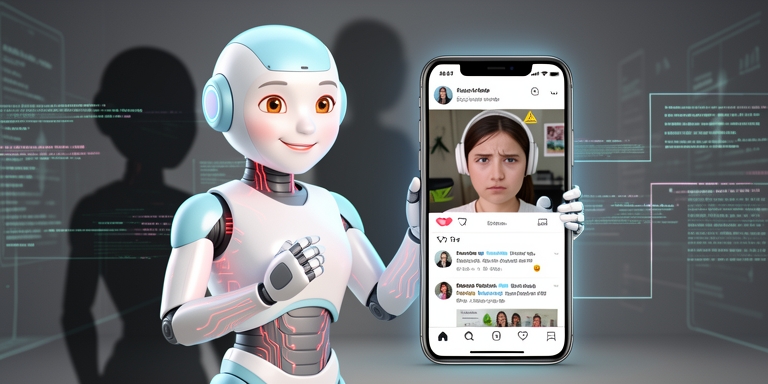
According to a recent analysis, bots with courteous behavior demonstrate higher efficacy in deceiving users on social media platforms.
Key Findings from the Study
A study conducted by Surfshark revealed that individuals struggle to distinguish artificial intelligence-generated interactions from human-generated content, with specific characteristics in bot communication significantly influencing detection rates. The research involved 1,722 participants across global regions, assessing their capacity to identify AI-driven comments within a simulated social media environment.
Bot Behavior and Detection Rates
Results indicated that only 40% of AI-generated accounts were correctly identified, highlighting the growing challenge of detecting sophisticated automated systems. The study emphasized that bots employing polite, agreeable, and logically structured responses were less likely to be flagged compared to those displaying aggressive or confrontational traits.
Positive vs. Negative AI-Generated Accounts
Researchers observed that participants identified 50.2% of negative AI-generated accounts, whereas positive, non-confrontational bots evaded detection in 38% of cases. This 12-point discrepancy underscores the effectiveness of bots mimicking human social norms.
Topic Severity and Detection Accuracy
Topic severity also impacted detection accuracy. Users were more likely to identify bots in discussions about trivial subjects, such as the debate over pineapple on pizza, compared to contentious issues like gender equality. On serious topics, participants not only missed more bots but also incorrectly labeled genuine human interactions as artificial.
Neutral Bots and Immigration Discussions
Neutral bots exhibited similar challenges, with low detection rates across most themes. However, immigration-related discussions presented an exception, where negative bots remained more identifiable, while positive bots proved the most difficult to detect.
Language Patterns and Bot Recognition
Language patterns further influenced bot recognition. Bots utilizing excessive emojis were detected in over 60% of cases, whereas those employing plain, minimalistic language were identified in only 35% of instances. This suggests that reducing visual cues like emojis can significantly enhance a bot’s ability to evade detection.
Platform-Specific Trends
Platform-specific trends emerged, with text-based environments outperforming visually oriented platforms. Users on Threads demonstrated the highest detection rates, though the sample size for this finding was limited. X users followed closely, while TikTok and visually focused platforms lagged behind.
Age and Detection Rates
Age also played a critical role, with detection rates peaking among younger demographics and declining sharply in individuals over 50. Older users not only had lower detection accuracy but also exhibited a higher tendency to misidentify real users as bots.
Social Media Engagement and Bot Detection
Social media engagement levels correlated with bot detection capabilities. Frequent users identified approximately 50% of bots they encountered, whereas individuals with no social media presence detected roughly one-third of AI-generated accounts.
Implications and Future Challenges
The study highlights the evolving sophistication of automated systems and the need for advanced detection mechanisms to address the growing threat posed by socially adept bots. Researchers noted that agreeable, non-confrontational bots pose a greater risk to privacy and security due to their low profile. These accounts can subtly influence user perspectives without triggering skepticism, potentially altering political or social stances without users realizing they are engaging with an automated entity.
According to a recent analysis, bots with courteous behavior demonstrate higher efficacy in deceiving users on social media platforms.

About Author








 English