

AI in Cybersecurity 2026: Battlefield or Breakthrough? Future Implications
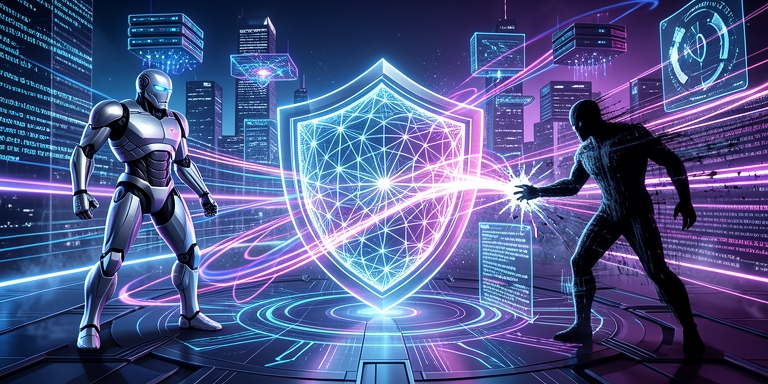
Cybersecurity has transitioned from a specialized defensive function to an essential operational framework for all modern enterprises.
Cybersecurity has transitioned from a specialized defensive function to an essential operational framework for all modern enterprises. Attackers have evolved to employ more sophisticated coordination, speed, and automation, compelling organizations to integrate advanced technologies into their security postures. Defenders are now prioritizing artificial intelligence, zero-trust architectures, and resilience strategies as foundational elements rather than supplementary measures. Brooks identifies five key factors that will shape the cybersecurity ecosystem and influence competitive dynamics in 2027.
The Emergence of Agentic AI
Agentic AI enables autonomous decision-making and adaptive threat behaviors, fundamentally altering traditional attack and defense paradigms.
Quantum Computing Advancements
Quantum computing advancements are compressing the timeframe for threat actors to exploit vulnerabilities. The “Harvest Now, Decrypt Later” strategy is becoming increasingly risky as quantum capabilities accelerate.
Evolving Social Engineering Tactics
Social engineering tactics are evolving through the use of deepfakes and synthetic identities. These tools allow adversaries to create convincing impersonations, bypassing conventional authentication mechanisms and increasing the sophistication of phishing and fraud campaigns.
Expansion of IoT and Edge Computing
The expansion of Internet of Things (IoT) devices, edge computing infrastructure, and endpoint ecosystems is broadening the attack surface. This proliferation introduces new vulnerabilities, requiring organizations to adopt more comprehensive monitoring and threat detection frameworks.
Cybercrime as a Structured Global Economy
Cybercrime is maturing into a structured global economy. Cybersecurity Ventures reports that cybercrime inflicted $10.5 trillion in damages in 2025, surpassing traditional illicit markets. Projections indicate this figure will rise to $12.2 trillion annually by 2031, reflecting the growing financial incentives for malicious actors.
The integration of AI into both offensive and defensive strategies is redefining the cybersecurity battlefield. As threat actors leverage machine learning for automated attacks, defenders must deploy countermeasures that prioritize real-time threat intelligence, adaptive response protocols, and continuous system hardening. The convergence of quantum computing, AI, and decentralized networks is accelerating the pace of innovation, but also intensifying the risks associated with emerging technologies. Organizations must adopt a proactive approach to mitigate these challenges, embedding security into every layer of their digital infrastructure. Collaboration between enterprises, governments, and cybersecurity firms will be critical in addressing the evolving threat landscape. As the line between technological advancement and security risk continues to blur, the need for robust, scalable defenses has never been more urgent.

About Author






 English