

Fake MBBS Allotment Letter Scandal: ₹22.75 Lakh Fraud Exposed in Ahmedabad
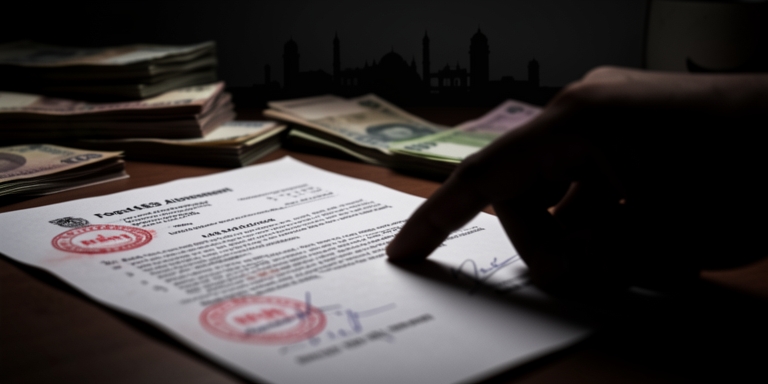
Fake MBBS Allotment Letter Exposes ₹22.75 Lakh Admission Fraud in Ahmedabad
The Incident
An Ahmedabad school principal was reportedly defrauded of ₹22.75 lakh by two individuals who promised to secure an MBBS seat at a government medical college for his daughter. The scheme unraveled when officials at B J Medical College identified an allotment letter issued to the student as counterfeit.
The Scheme
The complainant, Satishbhai Shankarbhai Patel, 41, serves as the principal of Matrushree M P Shah Secondary School. His daughter, Gyani, had completed Class XII with a science stream and qualified for the National Eligibility-cum-Entrance Test (NEET). According to the complaint, she encountered a social media reel promoting a consultancy named PIXEL MBBS in July 2026. The advertisement claimed to assist with admissions to government medical institutions.
The Payment Process
Patel’s daughter contacted the number listed in the reel, speaking with a man who introduced himself as Gopal Bhardwaj. He allegedly offered to arrange an MBBS seat for ₹30 lakh. During subsequent interactions, Bhardwaj reportedly referenced a Central Government Nominee Quota and the Medical Counselling Committee (MCC), asserting that admissions could be facilitated through a process tied to the Ministry of Health and Family Welfare. Another individual, Pankajsinh Rajput, allegedly contacted the family and provided links for document uploads and registration procedures.
The accused reportedly demanded payments under multiple justifications, including registration fees, a service bond, an allotment letter, and a no-objection certificate (NOC) purportedly required by the National Medical Commission (NMC). The family made an initial payment of ₹50,000 on August 9, 2026, followed by ₹25,000. Subsequent transactions included ₹4.5 lakh for a service bond and ₹5 lakh after the accused claimed funds were needed to transfer another student’s seat to Patel’s daughter. Additional payments were made for the allotment letter and NMC NOC. All transfers were directed to accounts under the name PIXEL Education Service, as well as other bank accounts and UPI IDs linked to the suspects. The family executed 11 transactions between August 9 and October 1, totaling ₹22.75 lakh.
The Discovery
The accused allegedly provided payment receipts and emails to reassure the family that the admission process was progressing. Suspicion arose when the process stalled despite the payments. The accused ceased communication with the family starting October 3. On October 7, Patel and his family visited B J Medical College to verify the allotment letter ahead of the admission deadline. College officials confirmed the document issued in the daughter’s name was fake. This revelation led the family to file a police report.
According to the complaint, she encountered a social media reel promoting a consultancy named PIXEL MBBS in July 2026. The advertisement claimed to assist with admissions to government medical institutions.
The Investigation
Following the discovery, Patel reported the incident to the Ahmedabad cybercrime police and the national cybercrime helpline, 1930. Investigators are examining emails, messages, payment receipts, and financial records to trace the scheme’s operations and identify potential accomplices. The case involves allegations of fraud targeting a family seeking medical admission for a NEET-qualified student. The roles of the two accused remain under investigation, with legal proceedings determining their involvement.
Conclusion
This case highlights the growing threat of fake admission schemes targeting students and parents. The use of social media and fabricated documents underscores the need for heightened vigilance and verification processes in educational admissions. Authorities are urged to strengthen cybersecurity measures to prevent such frauds in the future.

About Author








 English