

India’s Digital Growth Under Threat from Rising Cyber Scam Fears
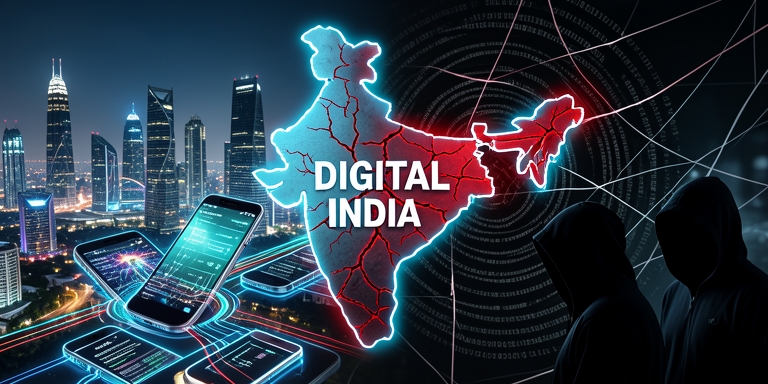
India’s digital growth faces trust issues as cyber fraud concerns reshape online behavior, according to a GSMA survey.
GSMA Survey Findings
A recent GSMA survey reveals that 72% of Indian internet users have altered their online habits due to heightened anxiety over cyber fraud. This shift in behavior has sparked concerns that growing distrust in digital platforms could impede the nation’s digital economy and delay the adoption of online services. The survey data highlights a critical juncture for India’s technological advancement, as 70.72% of respondents expressed significant worry about online scams, actively modifying their digital interactions. These findings underscore a broader crisis of confidence in the security of online transactions and services.
Consumer Behavior and Cyber Fraud Concerns
Gorman, GSMA’s Asia Pacific head, emphasized these findings at the India Mobile Congress in New Delhi, cautioning that cybersecurity apprehensions could hinder the nation’s digital progress. He noted that over two-thirds of India’s population now perceives online fraud as a substantial risk, with nearly 12% of individuals reporting personal victimization within the past year. Many of these victims described inadequate resolution of their complaints, exacerbating concerns about the efficacy of current fraud response mechanisms.
Gorman’s Analysis and Recommendations
The survey underscores a pivotal challenge for India’s digital infrastructure. While the country has positioned itself as a leader in digital public systems, artificial intelligence, and 5G development, Gorman stressed that technological innovation alone cannot sustain long-term growth. He identified digital trust as a foundational element for expanding online services, arguing that consumer confidence directly influences participation in the digital economy. This concern comes as India accelerates its telecommunications network expansion and promotes broader digital access.
Satellite Internet and 5G Development
Gorman also addressed the role of satellite internet in bridging connectivity gaps, noting that while satellite broadband could complement terrestrial networks, it should not replace them. He cited data showing that mobile broadband already covers 98% of the population, with satellite services offering potential for remote areas lacking traditional coverage. However, he maintained that terrestrial networks would remain the primary connectivity solution for the foreseeable future.
Competitive Landscape and Affordability
The discussion extended to potential competition from satellite internet providers like Starlink. Gorman dismissed fears of market disruption, pointing to India’s 5G success as evidence that late entry into a technology sector does not preclude leadership. He emphasized that India’s 5G adoption rate is projected to reach 62% by 2030, surpassing regional averages. Affordability emerged as a critical barrier for satellite broadband, with Gorman advocating for prioritizing mobile network expansion over satellite deployment.
Future Outlook and Digital Trust
This approach, he suggested, would balance accessibility with sustainable investment in telecommunications. Looking ahead, Gorman highlighted India’s growing role in global 5G and 6G development. While the Asia-Pacific mobile market is expected to grow from $1 trillion to $1.4 trillion by 2030, he stressed that technological leadership requires more than participation in standard-setting. The GSMA findings reveal a pressing challenge for India’s digital trajectory. As 5G adoption accelerates and 6G research progresses, the nation must address evolving cyber threat landscapes. With over 70% of users modifying online behavior due to fraud fears, strengthening trust mechanisms and improving fraud mitigation strategies could become as vital as expanding connectivity.
The path forward hinges on balancing technological advancement with robust security frameworks to ensure sustained digital growth.

About Author









 English