

Android App Utilizes Bluetooth Technology to Identify Nearby Smart Glasses Devices
New Android App Detects Smart Glasses in Public Spaces
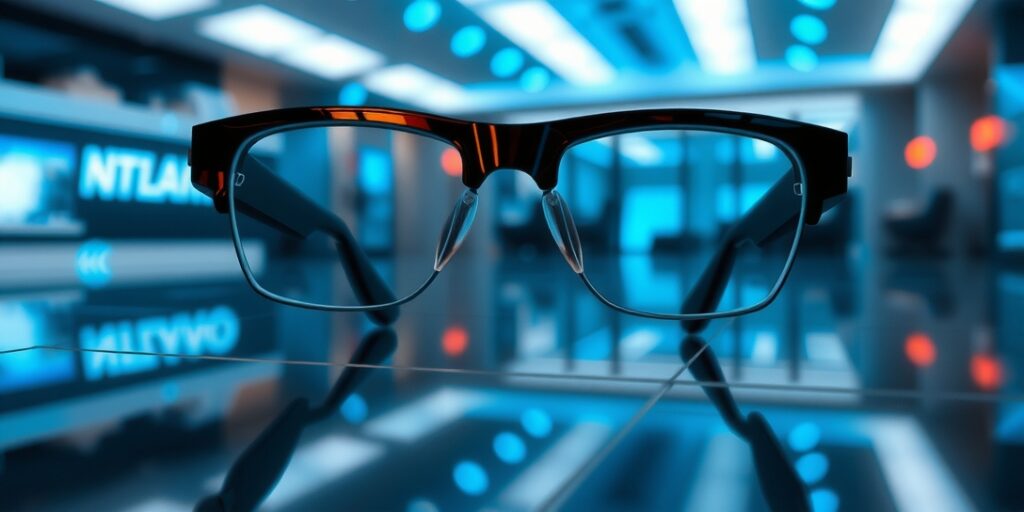
A new Android app, developed to address growing concerns over smart glasses in public spaces, uses Bluetooth signals to detect nearby devices equipped with cameras.
App Development and Motivation
The app, called Nearby Glasses, scans for manufacturer-specific identifiers in Bluetooth Low Energy (BLE) traffic to identify smart glasses from known manufacturers.
How the App Works
Nearby Glasses detects smart glasses by targeting the company ID field in BLE advertising packets, which is standardized and immutable within the BLE specification.
The app currently monitors for four company IDs: Meta Platforms, Meta Platforms Technologies, Luxottica, and Snapchat.
Users can override the built-in list and enter custom hex values to detect other manufacturer IDs.
Notifications and Limitations
When a BLE device matching one of the monitored company IDs is detected above a configurable signal strength threshold, the app pushes a local notification.
The default threshold is set to -75 dBm, which corresponds to a range of 10 to 15 meters in open space and 3 to 10 meters indoors.
However, the app’s detection method has limitations, as it may trigger false positives on other Bluetooth-enabled products from the same manufacturers, including VR headsets.
Privacy and Future Development
The app collects no user data, sends no telemetry, and displays no ads.
An optional log records only BLE manufacturer ID codes encountered during a scan session, which is stored locally and not transmitted automatically.
The project’s documentation notes that BLE scanning on Android can be unpredictable due to signal absorption from human bodies, obstacles, and device orientation, which may affect the detection of nearby devices.
Additionally, smart glasses users who intend to record covertly often pair devices in advance, making the pairing-phase device name broadcast invisible in the field.
The app’s developer has listed several items for future development, including expanding the monitored company ID list, improving the layout for Google Pixel devices, and potentially developing an iOS port.
A longer-term possibility is deeper BLE traffic analysis through packet sniffing, which could reduce false positives by applying heuristics to encrypted transmissions.

About Author







 English