

Combat Drone Operations: How Public Mobile Networks Are Being Weaponized for Military Advantage
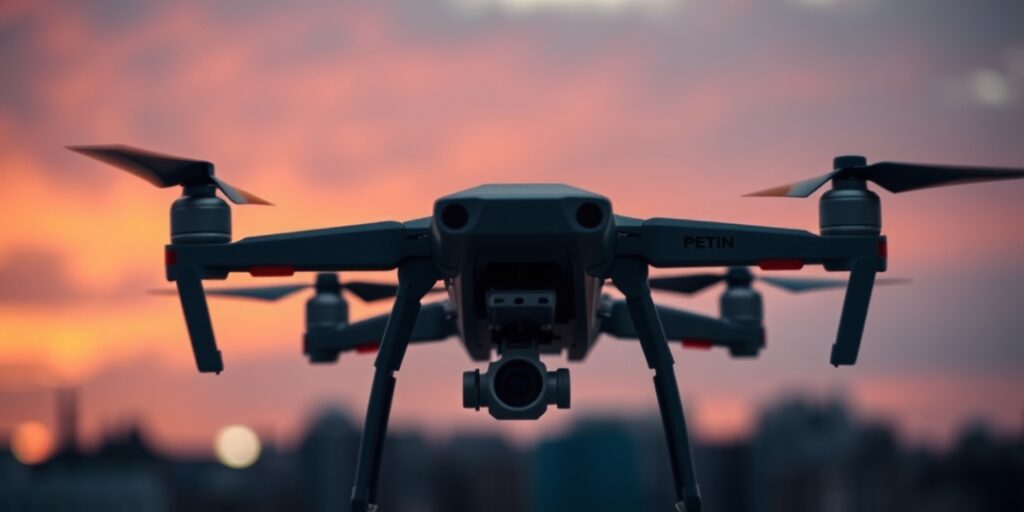
Combat Drone Operations Rely on Public Mobile Networks
The use of public mobile networks in combat drone operations has become increasingly prevalent, as evidenced by recent conflicts in Ukraine. On June 1, 2025, Ukraine launched a coordinated drone strike on five airfields inside Russia, disabling or destroying aircraft. The attack involved over 100 drones carrying explosive payloads, which used mobile networks to transmit telemetry, receive instructions, and send back images during the operation.
Research and Development
Researchers at Enea have been tracking the integration of civilian mobile networks into combat drone operations, highlighting the trend’s implications for national infrastructure. The use of mobile-connected drones has evolved significantly over the past two decades, with advances in airframes and onboard computing expanding their capabilities.
The spread of commercially available components has increased the availability and accelerated the deployment of drones from development to battlefield use. Mobile operators began testing drone connectivity in the mid-2010s, following the rollout of 4G networks. The 3rd Generation Partnership Project (3GPP) has since incorporated technical provisions to support drones operating on cellular networks.
Military Adoption
While civilian telecom research moved steadily toward drone support, military institutions showed limited public focus on cellular-connected drones prior to 2022. However, the war in Ukraine has intensified technological experimentation on both sides, with the first Russian experimentation in the use of mobile networks for drone communications reported in late 2023.
Recovered long-range drones contained 4G modems paired with local SIM cards, which transmitted position data, allowing operators to determine where drones were intercepted. The initial phase focused on telemetry, but by early 2024, recovered drones included onboard cameras linked to 4G modems, transmitting video feeds through the mobile internet.
Operational Use
The use of mobile networks in drone operations has expanded across various drone categories, driven by mission objectives, distance, bandwidth requirements, and the level of electronic warfare in the area. Cellular technology supports diverse drone classes when operational conditions align, with mobile networks selected for medium- to long-range missions, especially those conducted behind enemy lines with moderate to high data needs.
According to Cathal McDaid, VP of Technology at Enea, “The fact that the functionality of mobile-connected drones has increased during the war, not decreased, leads us to believe that it is highly likely mobile-connected drones in conflict will continue. This remains the case even if t

About Author








 English