

CrackTheLab Launched by Craw Security: Train & Push Forward
The advanced, gamified Capture the Flag (CTF) and virtual lab platform “CrackTheLab” was introduced by Craw Security, one of the top cybersecurity training and consulting companies in India.
For ethical hackers, penetration testers, and security enthusiasts, it is a high-octane training ground that aims to close the gap between academic understanding and practical application. The platform, its features, and its place in the larger cybersecurity ecosystem are all broken down in detail here.
Core Concept and Purpose
CrackTheLab is basically a “Cyber Range,” a safe, interactive setting where users may practice defense tactics and cyberattacks without running any risks to their safety or legal standing.
- The Mission: To offer a practical simulator that tests practitioners’ “thinking power” and compels them to think creatively rather than merely following instructions.
- Target Audience: From complete novices (Pre-Security Fundamentals) to seasoned experts (Red Team Specialists), it has something to offer everyone.
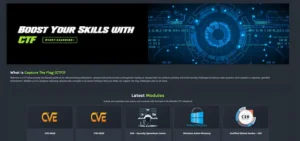
Gamification and Platform Architecture
A Gamified Learning Path is used by CrackTheLab, in contrast to conventional static laboratories. This strategy uses video game mechanics like leaderboards, badges, and points to keep user interest high.
The Gamification Layer:
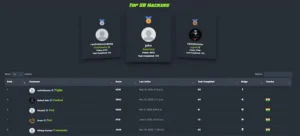
- Live Leaderboards: A dynamic ranking system that allows users to monitor their progress in real time against a worldwide community.
- Achievement Badges: Digital credentials (such as “Web Exploitation Master”) are given for finishing particular challenge categories.
- Brainstorming Sessions: Specific CTF tasks intended to promote strategic problem-solving and critical thinking.
Key Features and Modules
The full VAPT (Vulnerability Assessment and Penetration Testing) lifecycle is covered by the platform’s multiple specialized modules.
1. Diversity of Challenges
CrackTheLab provides a vast collection of scenarios:
- Web Security: Centered on the OWASP Top 10, which includes broken authentication, SQL injection, and cross-site scripting (XSS).
- Reverse Engineering: Dissecting binary files to reveal hidden features or provide insight into their internal operations.
- Cryptography: Breaking algorithms, deciphering codes, and comprehending encryption protocols.
- Digital Forensics: Examining log data and memory dumps to find evidence of a cyberattack.
- Network Security: Possibilities for intrusion detection and packet analysis (using programs like Wireshark).
2. Isolated Lab Environments
When practicing hacking, security is crucial. CrackTheLab offers:
- Sandboxed VMs: Each task takes place in a safe, cloud-based sandbox.
- Multi-OS Support: In order to replicate a variety of business settings, vulnerable computers are hosted on several operating systems (Linux, Windows, etc.).
- 24/7 Availability: Because of the cloud-based architecture, students can access laboratories from any location at any time.
Public vs. Private CTFs
The platform’s dual-mode competitive system is one of its distinctive features:
- Public CTFs: Open competitions that allow any registered user to compete against anyone across the world. These are excellent for developing a portfolio for the public.
- Private CTFs: “Invite-only” sessions only. These are frequently utilized by businesses to foster teamwork or by educational institutions to conduct controlled internal skill evaluations.
Integration with the Curriculum of Craw Security
CrackTheLab is intricately woven into Craw Security’s teaching ecosystem and is not merely a stand-alone offering.
- Complementary Access: Students who participate in the 6-month information security course or the 1-year cybersecurity diploma sometimes get a premium subscription for free.
- Interview Preparation: To help students be ready for the demanding technical rounds of cybersecurity job interviews, the site offers specialized tools and simulated technical difficulties.
- Real-World Mirroring: Expert penetration testers design challenges based on real vulnerabilities discovered in enterprise environments (government, healthcare, and finance sectors).
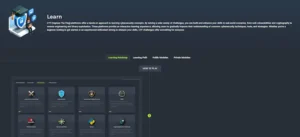
Educational Routes (Roadmap)
| S.No. | Path | Difficulty | Focus Areas |
| 1. | Cybersecurity Analyst | Easy | Fundamental defense, incident investigation, and alert monitoring. |
| 2. | Networking Engineer | Easy | Secure communication, firewalls, DNS, and IP addresses. |
| 3. | Penetration Tester | Intermediate | Post-exploitation, reporting, and exploitation. |
| 4. | Forensics Analyst | Intermediate | Trace recovery, malware analysis, and evidence retention. |
| 5. | Cloud Security Engineer | Easy/ Med | Protecting data and AWS/Azure settings. |
Strategic Importance for Career Growth
Having a certificate is frequently insufficient in the modern work market. A key requirement for recruiters is “Proof of Skill.” CrackTheLab assists users in creating this proof:
- Portfolio Boosting: Rankings, accomplishments, and finished projects can be included in resumes or displayed on LinkedIn.
- Hands-on Experience: It gives you the real-world “keyboard time” you need to pass exams like OSCP or CEH.
- Feedback System: To make sure the learning process doesn’t stall, the platform offers expert advice and instructional articles to users who get stuck.

Read More:
PhishNext Launched by Craw Security: A Next‑Gen Phishing Simulation Service
About Author









 English