

Dehradun Cyber STF Arrests Kolkata-Based Accused in ₹3.20 Crore WhatsApp Fraud Case
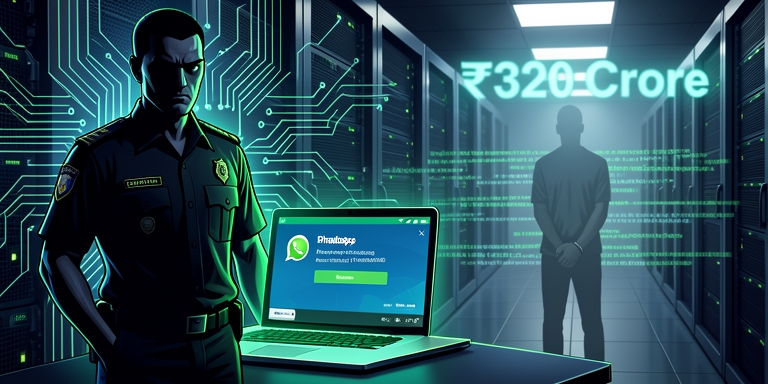
Uttarakhand Cyber Security Task Force (STF) apprehended a suspect in Kolkata for orchestrating a ₹3.20 crore impersonation fraud scheme targeting a corporate entity.
Details of the Fraud
The accused, Chandrakant Mishra, was identified as a key figure in a cybercrime operation where fraudulent actors assumed the identities of high-level executives to manipulate a company’s General Manager into transferring funds.
The investigation revealed that the perpetrators leveraged digital communication channels to fabricate senior executive personas, creating a false sense of authority to execute the deception.
Investigation and Methods
The fraud centered on social engineering tactics, wherein the accused posed as a Managing Director and other senior officials to establish credibility.
Through orchestrated interactions, they pressured the victim to authorize large financial transfers under the guise of project-related advances.
Investigators are currently analyzing the mechanisms by which confidential corporate data was accessed, as well as the methods used to construct convincing fake identities.
Seizure of Evidence
The movement of illicit funds across multiple bank accounts is also under scrutiny to trace the financial flow.
A technical investigation led law enforcement to Mishra’s location in Kolkata. During the arrest, authorities seized two mobile phones, four SIM cards, and a laptop, which are undergoing forensic examination.
Initial analysis of the laptop uncovered digitally editable files linked to multiple organizations, including bank loan applications, Aadhaar and PAN card copies, and other sensitive documentation.
Chargesheet and Ongoing Efforts
These materials are being evaluated to determine their role in the fraud, such as facilitating identity fabrication or supporting financial transactions.
Mobile devices and SIM cards recovered from the suspect are being scrutinized for communication records, contact logs, and potential financial activity.
Investigators are also assessing Mishra’s specific role in the operation, including whether he was involved in fund transfers or held a broader position within the criminal network.
The case includes three previously arrested individuals, with a chargesheet already submitted to the court. The latest arrest is expected to provide critical insights into the network’s structure and the allocation of the misappropriated funds.
Conclusion and Implications
Ongoing efforts aim to identify additional suspects and evaluate whether similar tactics were used to target other organizations.
The investigation remains active, with legal proceedings pending for all accused parties. The case highlights the evolving threat of cyber-enabled financial fraud and the importance of digital forensics in tracing transnational criminal activities.

About Author








 English