

Fake QR Codes Emerging As New Threat, Experts Alert UPI Users
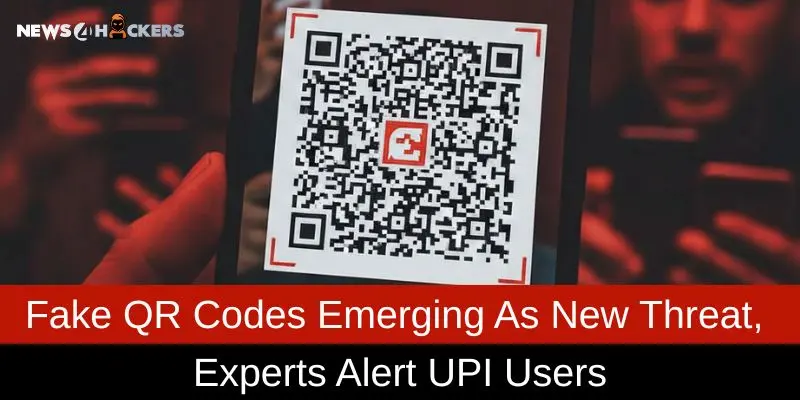
“QR became the new route for cyber threats for the UPI users. Experts advise being careful of such codes.”
As digital payments and UPI transactions, Fake QR Codes become more commonplace, fraudsters have discovered a new and extremely dishonest method of using phony QR codes to target victims. These fake codes, which appear exactly like real ones, can steal personal information, empty a bank account in a matter of seconds, and even infect mobile phones with malware with just one scan.
Experts in cybersecurity caution that suspicious messages and fraudulent phone calls are no longer the only examples of this type of scam. Rather, phony QR codes are now being placed in real places, such as public notice boards, ATMs, retail stores, gas stations, parking lots, roadside barriers, and electrical poles.
Fraudsters frequently cover a genuine QR sticker with a fake one, making it almost impossible for consumers to spot the scam right away.
How does the fraudulent QR code scheme operate?
When a user scans a phony QR code, they are taken to a fraudulent website or a false payment interface that imitates well-known UPI programs.
The user is then prompted by the page to provide sensitive information like the following:
- UPI PIN,
- OTP,
- Bank Credentials, and
- Card Information.
Fraudsters can access the account and steal money in a matter of seconds once this data is supplied.

Certain QR codes are connected to malicious URLs that discreetly download malware onto the user’s phone, according to cyber specialists. Beyond the immediate transaction, this malware can corrupt banking apps, steal passwords, record keystrokes, and reveal other private information saved on the device.
Why are there more examples of QR code fraud?
Although transactions are now quicker and more convenient due to India’s quick adoption of UPI and contactless payments, this has also led to a sense of misguided trust. Many consumers scan QR codes without checking their legitimacy, particularly when they seem to be connected to a store, parking lot, or service provider.
Using labels like “Scan for Payment,” “Refund QR,” or “Offer Activation,” fraudsters take advantage of this confidence. Users were instructed to scan a QR code in a number of documented instances in order to validate a transaction or receive a refund; this strategy ultimately resulted in unauthorized withdrawals.
How can one spot a phony QR code?
After reading a QR code, experts encourage consumers to remain vigilant right away. The process should be immediately halted if the link appears suspicious, has spelling mistakes, reroutes to an unknown domain, or requests more permissions. In order to obtain OTPs, UPI PINs, or bank information, legitimate payment apps never send users to other websites.
Fraud can also be detected by physical indicators. Layered QR prints, broken stickers, and QR codes put in odd places should all raise red flags. Costly errors can be avoided by confirming with the store owner or service provider before making a payment.
How to guard against QR code fraud?
- Use only reputable and authorized payment apps.
- Refrain from scanning QR codes that are positioned in haphazard or unattended public areas.
- Never divulge banking credentials, UPI PINs, or OTPs to third parties.
- If further information is requested during payment, cancel the transaction right away.
- Notify your bank and the cybercrime helpdesk of any unusual transactions as soon as possible.
Convenience must be balanced with care
Unquestionably, digital payments have made daily transactions easier, but they also require users to be more conscious. A brief error may result in long-term compromise of personal information in addition to financial loss.
Cybersecurity experts emphasize that the best defense against this kind of scam is to take a moment to confirm a QR code before scanning it. Vigilance, not speed, will define how safe digital transactions remain for millions of consumers nationwide as QR-based payments continue to expand.
About The Author
Suraj Koli is a content specialist in technical writing about cybersecurity & information security. He has written many amazing articles related to cybersecurity concepts, with the latest trends in cyber awareness and ethical hacking. Find out more about “Him.”
Read More:
PyStoreRAT Malware Payloads Are Spread via Fake OSINT and GPT Utility GitHub Repos
About Author









 English