

Submarine Cables Emerge as a Central Concern in Critical Infrastructure Security Discussions
The Security of Submarine Cables Takes Center Stage
The vast majority of international data traffic relies on submarine cables, which have historically received little attention from a strategic security perspective. However, recent events have propelled these critical infrastructure components to the forefront of the security debate. A new report by Capacity Insights, based on interviews with senior executives in the subsea industry, highlights the converging factors of growing demand, hyperscaler investment, and geopolitical pressure that are elevating the security priority of these cables.
The 2024 Incident in the Baltic Sea
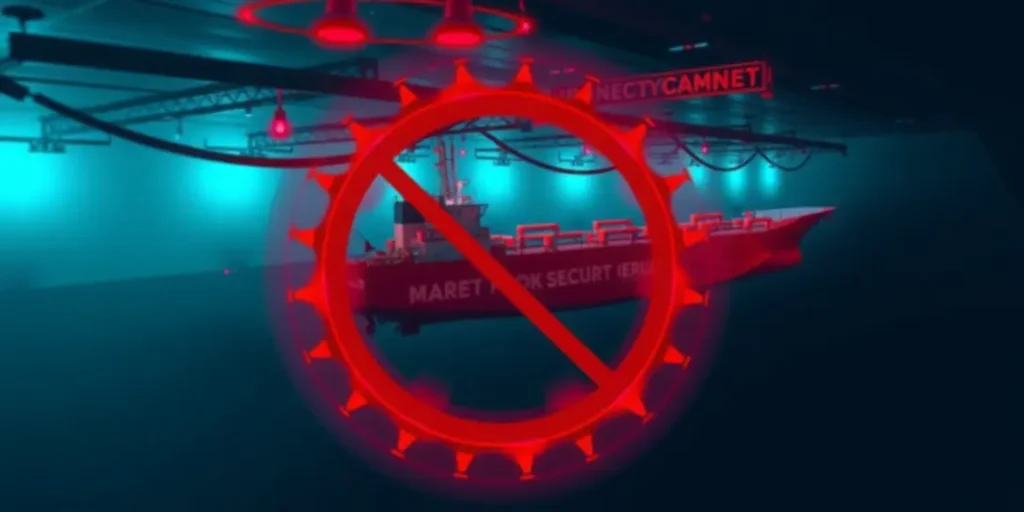
The 2024 incident in the Baltic Sea, where a Chinese-flagged vessel severed key cables, serves as a reference point for the industry’s shift in focus. Executives describe this event as an example of “persistent grey-zone risk,” which has prompted governments to increase scrutiny of cable routes and landing stations. The challenge lies in developing frameworks that enable monitoring, incident response, and attribution without disrupting the cross-border commercial model that the industry relies on.
Physical and Cybersecurity Concerns
Physical security of cables and cybersecurity of landing stations are now primary concerns for both operators and government risk assessors. Hybrid conflict scenarios are driving the need for new preparedness measures. Valentino Giuseppe, VP of product management at Sparkle, notes that these scenarios are reshaping the security landscape.
According to Valentino Giuseppe, VP of product management at Sparkle, “Hybrid conflict scenarios are reshaping the security landscape.”
Operational Risks and Challenges
Beyond intentional interference, the sector experiences an average of 150-200 cable faults annually, primarily caused by human activities such as fishing and anchoring. The report identifies repair logistics as a significant vulnerability, citing a shortage of specialized cable ships, spare parts, and experienced personnel. Industry leaders acknowledge that resolving this gap will take time. Carl Grivner, CEO at FLAG, states that the current shortage of ships makes a short-term resolution unlikely.
According to Carl Grivner, CEO at FLAG, “The current shortage of ships makes a short-term resolution unlikely.”
The Impact of Hyperscalers
The involvement of hyperscalers has significantly altered the ownership and risk dynamics in the subsea sector. These cloud providers have transitioned from wholesale capacity customers to lead investors and infrastructure architects, introducing commercial tension and differing priorities. Aligning these interests is an ongoing challenge with implications for long-term sector resilience. Nakashidze warns that network operators risk diminished roles as hyperscalers drive demand, maintenance, and infrastructure agendas.
Towards a More Secure Future
The integration of distributed acoustic sensing and AI-enabled fault detection is transforming submarine cables from passive conduits to active monitoring tools. As network utilization increases, these capabilities are becoming operational, providing real-time monitoring and sensing functions that enhance operational visibility for security planning and incident response.
Conclusion
Ultimately, the report concludes that coordination is the central unsolved problem in securing submarine cables. Resilience depends on cooperation between governments, private operators, and competing commercial interests. The subsea sector’s expansion has outpaced the development of governance structures, repair resources, and cross-border response mechanisms necessary to protect this critical infrastructure. Securing submarine cables requires a combination of technical controls, organizational readiness, and cross-border cooperation, mirroring the approaches used to protect other critical infrastructure categories.

About Author





 English