

The “Infinite Money Glitch”: The Way a Well-Known ATM Hack Becomes a Federal Offense
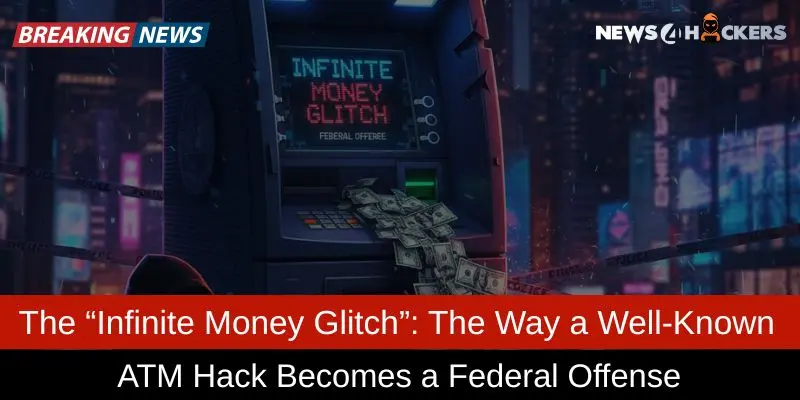
A TikTok craze that promised “free money” from Chase Bank ATMs has turned into one of the most notable instances of how financial crime and viral disinformation can coexist. Even regular users who thought they had discovered a loophole now risk lawsuits and perhaps felony charges as federal agents follow digital breadcrumbs.
A Viral Illusion of “Free Money”
Like many online fads, it began with a video, a rumor, and an alluring promise. Users on Instagram and TikTok discussed a purported “glitch” in Chase Bank ATMs that permitted anyone to take out more money than they had in their account. Videos of people making deposits and quickly withdrawing massive quantities of money helped the technique, known as the “infinite money glitch,” gain widespread attention.
The glitch wasn’t real, though. In reality, participants were taking advantage of a check processing delay by depositing fictitious or nonexistent checks and then taking money out before the bank’s systems could confirm their legitimacy. Chase was left with the losses when the cheques eventually bounced, as well as a trail of digital evidence that connected the participants to fraud.
One investigator stated, “There is no such thing as free money,” reiterating a lesson hundreds of consumers discovered too late.
The Mechanics of a Viral Crime
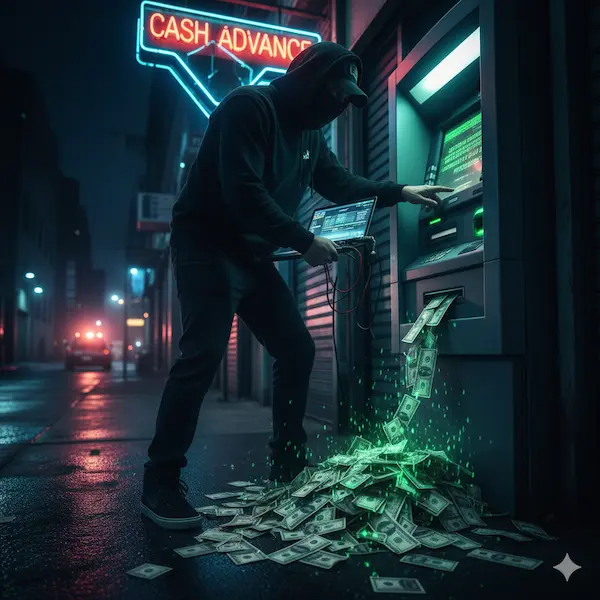
The plan was straightforward yet disastrous. Participants used Chase ATMs to deposit fake checks, sometimes totaling hundreds of thousands of dollars. Scammers took out lesser but substantial sums of money in the interval since banks usually permit restricted access to deposited funds prior to complete clearance.
A guy in Houston is accused of depositing a fraudulent check for $335,000 (₹2.9 crores) and taking out most of it over the course of two days before the crime was discovered. Chase was in debt by the time he froze the account, about $291,000 (₹25.55 lakh).
JPMorgan Chase acknowledged that it had brought many lawsuits against people and companies in Miami, Houston, and Los Angeles, alleging that they had stolen over $661,000. As soon as it became clear that the scam was spreading on social media, the bank “acted swiftly” to alert consumers and take legal action, a representative told Fortune.
From Hoax to Federal Investigation
In recent years, check fraud has become “the largest source of illicit proceeds in the country,” according to the Financial Crimes Enforcement Network (FinCEN). The majority of crimes have historically included delivery fraud or mail theft, although digital-age variations, such as the Chase ATM “hack,” are becoming more common.
Experts caution that participation in these crimes has increased due to the infectious ecosystem of the internet.
| “Because the glitch went viral online, more people likely participated than usual, being influenced by the prospect of easy money,” FinCEN analysts noted. |
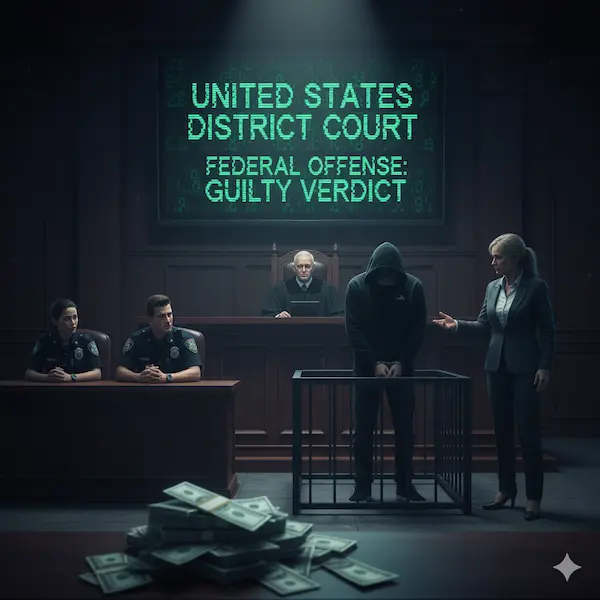
Legally referred to as “check kiting,” the technique entails taking advantage of delays in bank processing to obtain money that is not there. Both Cornell Law and financial organizations categorize it as a type of check fraud, which, depending on the amount involved, can be punished as either a misdemeanor or a felony. Fraud over $500 (₹43,912) is considered a felony in the majority of states.
The New Face of Old Fraud
Check fraud has subtly returned to the digital economy, despite checkbooks seeming like a thing of the past. According to Chase authorities, scammers are combining analog systems with viral web strategies to exploit the antiquated financial infrastructure, even as fewer people write checks.
According to the bank, “this type of check fraud was really just a viral hoax and a crime.” What many initially believed to be a lighthearted internet gimmick has now turned into a warning about the dangers of digital groupthink.
About The Author:
Yogesh Naager is a content marketer who specializes in the cybersecurity and B2B space. Besides writing for the News4Hackers blogs, he also writes for brands including Craw Security, Bytecode Security, and NASSCOM.
Read More:
Top 10 Upcoming Cybersecurity Conferences in India
About Author




 English