

US Drone Manufacturing Lags Behind Global Rivals in Modern Warfare
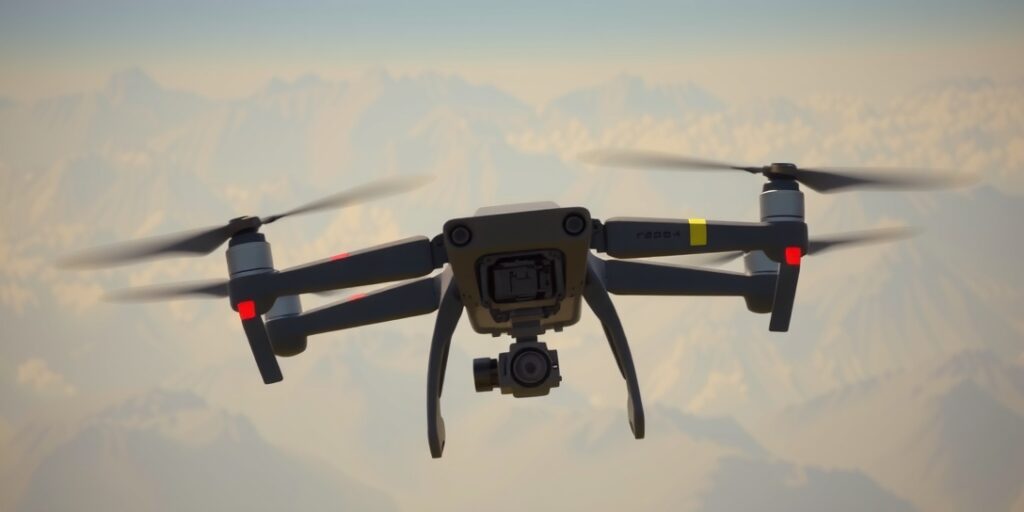
The United States’ Drone Gap: A Significant Challenge in Modern Warfare
The United States is facing a significant challenge in its ability to manufacture drones at scale, a capability that has become crucial in modern warfare.
The Prevalence of Drones in Modern Warfare
The use of drones has become increasingly prevalent, with Ukraine and Russia relying heavily on them in their ongoing conflict. In fact, drones have become the primary means of reconnaissance and targeting in Ukraine, and are also used to carry out strikes against Russian forces.
The “Drone Gap”
The United States, however, remains behind in its ability to produce drones in sufficient numbers, at sufficient speed, and with sufficient resilience to sustain a prolonged conflict. This is what has been referred to as the “drone gap.”
“The global drone ecosystem is dominated by China, which produces roughly 90% of the world’s commercial drones and controls a significant share of the components used to build them.”
China’s Dominance in Drones
China’s dominance in drones is the result of a deliberate industrial policy that has created vertically integrated supply chains and massive commercial scale, reducing costs and accelerating iteration. This has significant implications for the United States, as commercial drone production underwrites military capability.
The U.S. Drone Industrial Base
The U.S. drone industrial base, on the other hand, is fragmented, expensive, and constrained by supply-chain problems. Many American drone manufacturers rely on Chinese components, creating economic vulnerability and national-security risk.
The War in Ukraine
The war in Ukraine has shown that drone production, modification, and repair are now embedded directly in the warfighting loop. Ukraine and Russia are producing drones continuously, often close to the battlefield, and modifying them for new missions or against new countermeasures within days or weeks.
The Pentagon’s Response
The Pentagon’s Replicator initiative recognizes the need for rapid production of expendable autonomous systems, but it operates within an industrial base that is poorly suited for mass production of cheap weapons.
Recent U.S. Government Actions
Recent U.S. government actions have underscored the urgency of the problem and the tension in current policy. The Department of Defense has launched a major push to scale domestic drone production, with plans to procure tens of thousands of low-cost drones on accelerated timelines.
The SkyFoundry Program
The U.S. Army has also established the SkyFoundry pilot program, a domestic industrial initiative designed to establish high-volume drone manufacturing capacity. The SkyFoundry program aims to leverage additive manufacturing, off-the-shelf parts, and public-private partnerships to create a sustained domestic production pipeline decoupled from Chinese supply chains.
Closing the Drone Gap
The United States must recognize that the next major war will not be won solely by superior algorithms or exquisite platforms, but by the side that can produce, replace, and adapt expendable weapons faster than its adversary. The U.S. has world-class engineers, operators, and innovators, but lacks a manufacturing base aligned with the realities of drone warfare. Closing the drone gap will require urgency, coordination, and a willingness to rethink how America builds its tools of war.

About Author







 English