

11 Countries Unite to Warn About North Korean Remote IT Fraud Network
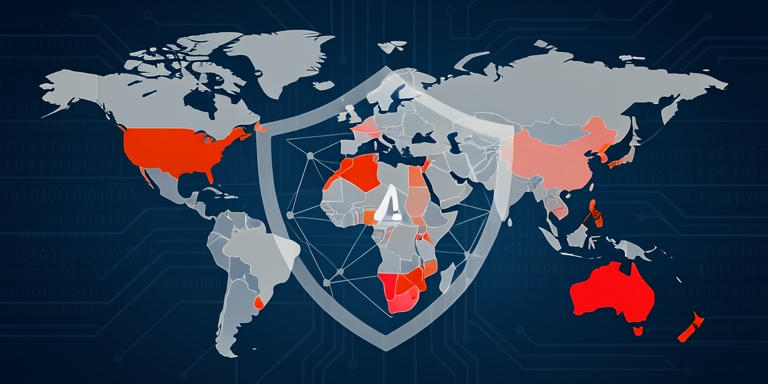
11 international agencies warn of a sophisticated cyber employment fraud network linked to North Korean IT specialists.
The Alert and Its Scope
A coalition of 11 international intelligence and foreign affairs agencies has issued a warning to global enterprises, recruitment platforms, and digital hiring services regarding a sophisticated cyber employment fraud operation linked to North Korean IT specialists. The alert, coordinated by representatives from Australia, Canada, France, Germany, Italy, Japan, the Netherlands, New Zealand, South Korea, the United Kingdom, and the United States, highlights the growing threat posed by state-sponsored actors leveraging advanced technologies to infiltrate remote work environments.
The Fraud Network’s Tactics
The advisory details how North Korean operatives are exploiting artificial intelligence, falsified documentation, and third-party proxy networks to secure remote software development roles across multiple industries. These efforts are aimed at circumventing international sanctions, generating illicit revenue to support Pyongyang’s military programs, and gaining access to sensitive corporate infrastructure. The agencies emphasize that the scheme involves multiple layers of deception, including the use of fabricated credentials, stolen personal data, and coordinated human intermediaries to bypass standard verification processes.
Laptop Farms and Remote Access
The operation relies on a network of domestic “laptop farms” established in target regions, including the United States and Western Europe. These facilities are managed by local facilitators who receive company-issued devices and connect them to secure remote access systems. North Korean personnel, operating from locations such as China, Russia, and Southeast Asia, then access these devices via virtual private networks (VPNs) and proxy servers, creating the illusion of in-country employment. This method allows the actors to evade detection while maintaining operational control over the remote work environment.
Risks and Consequences
The alert underscores the significant risks associated with these activities, including the potential for insider threats, data exfiltration, and financial fraud. Once embedded within corporate networks, North Korean workers have been observed extracting proprietary source code, customer databases, and technical architecture blueprints. In some cases, they have also engaged in extortion, threatening to leak sensitive information unless additional payments were made in cryptocurrency. Financial transactions within the scheme are designed to obscure the flow of funds, with payments frequently routed through cryptocurrency wallets or third-party bank accounts.
Previous Enforcement Actions
The advisory builds on prior enforcement actions by global law enforcement agencies. Earlier operations, including U.S. Department of Justice investigations, have led to the dismantling of 29 laptop farms, the seizure of multiple fraudulent domains, and the freezing of accounts used to launder millions in salary payments. Historical cases revealed that syndicates managed dozens of fictitious identities to maintain over 100 active remote engineering roles within major corporations.
Recommendations for Businesses
To mitigate these risks, the joint advisory recommends that organizations implement robust identity verification protocols. Employers are encouraged to prioritize in-person verification where feasible, conduct thorough background checks, and monitor remote access activity for anomalies. Additional measures include restricting unauthorized remote desktop protocols, scrutinizing account behavior for irregularities such as frequent payment changes or hardware signature duplication, and maintaining continuous surveillance of employee network activity. The agencies stress that proactive measures are critical to preventing exploitation by state-sponsored actors.
Conclusion
The alert serves as a stark reminder of the intersection between cybercrime and geopolitical strategy, highlighting the need for heightened awareness in an increasingly interconnected digital landscape.

About Author




 English