

Orca Security Protects AI-Powered & Developer-Built Applications
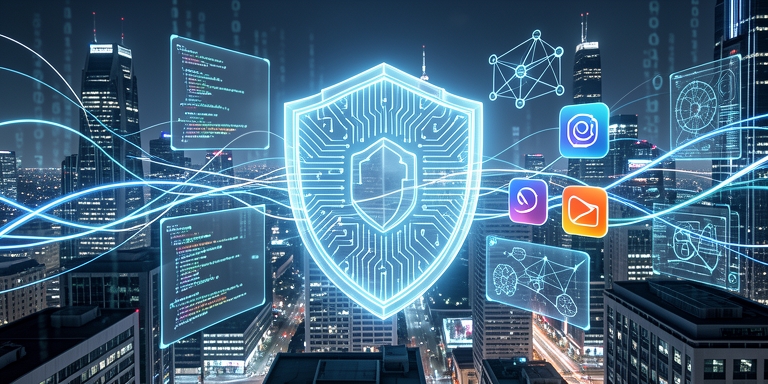
Orca Security has unveiled two AI-powered solutions designed to address evolving risks in application development.
Orca Security’s AI-Powered Solutions
Orca Security has unveiled two AI-powered solutions designed to address evolving risks in application development. The first, Orca AI AppGen Security, identifies and protects applications created outside traditional development pipelines using AI platforms such as Claude, Supabase, and Lovable. The second, AI Code Security Auditor, employs deep static analysis to detect vulnerabilities in code generated through conventional software development processes. These additions expand the Orca Platform’s capabilities to secure applications across all stages of creation, from enterprise engineering teams to AI-assisted developers.
Key Findings from Orca Research Pod
A 2026 report from Orca Research Pod, analyzing anonymized data from over 1,200 cloud environments, revealed that 52% of organizations now construct custom applications with AI assistance. As business units deploy AI-generated applications connected to APIs, cloud infrastructure, and sensitive data, traditional security oversight is increasingly insufficient. Simultaneously, exploitable flaws persist within development pipelines. IBM’s research indicates that breaches involving shadow AI systems cost organizations an average of $670,000 more than standard incidents, emphasizing the urgency of comprehensive security measures.
“Modern software development is no longer confined to engineering teams. Developers, non-technical employees, and even advanced AI models are generating applications across multiple environments. Security frameworks must adapt to this reality without hindering innovation,” stated Gil Geron, CEO of Orca Security. “Our AI Code Security Auditor equips teams to proactively identify critical vulnerabilities in AI-assisted workflows, while AI AppGen Security ensures visibility over applications created outside traditional pipelines. Together, these tools provide unified protection for all software creation methods.”
Addressing Critical Challenges
The solutions address two critical challenges in contemporary development. Orca AI AppGen Security provides security teams with visibility into AI-generated applications by:
- Identifying applications built outside formal pipelines and tracing their creators
- Assessing risk exposure across API integrations, data access points, and third-party dependencies
- Prioritizing threats based on potential business impact
Orca Code Security Auditor enhances traditional static analysis by:
- Detecting vulnerabilities overlooked by conventional SAST tools through AI-driven code evaluation
- Conducting comprehensive repository scans to identify risks associated with frontier AI models
- Focusing on exploitable weaknesses that pose immediate threats to systems
“Developers and business teams are deploying applications at a pace that outstrips our ability to manually review them. Applications created outside our pipeline were previously invisible, creating significant blind spots,” said Sangram Dash, CISO at Sisense. “These tools allow us to maintain control while enabling rapid development, ensuring we can govern all software without impeding progress.”
Expanding Risks and Industry Trends
The report highlights growing risks as AI integration expands. Organizations must now secure applications developed through hybrid models where human and machine-generated code coexist. The tools emphasize the need for context-aware security strategies that balance innovation with risk mitigation.
Additional findings from the State of AI Security Report 2026 include:
- 78% of surveyed organizations reported increased complexity in managing AI-generated code
- 43% of security teams lack tools to assess risks in AI-assisted development
- 61% of breaches involving AI systems originated from unmonitored third-party integrations
Adaptive Security Architectures
The report underscores the necessity of adaptive security architectures capable of evolving with emerging technologies. As AI-generated software becomes more prevalent, the focus shifts toward proactive risk assessment and real-time threat detection. The solutions are part of a broader industry trend toward AI-enhanced security. Recent studies show that organizations using AI-driven security tools experience 34% faster threat response times and 22% lower incident resolution costs compared to peers relying on traditional methods.
Conclusion
The findings align with growing concerns about AI’s role in cybersecurity. While AI accelerates development, it also introduces new attack vectors that require specialized mitigation strategies. The report recommends that organizations adopt unified security platforms capable of addressing both human and machine-generated software risks.

About Author





 English