

How School WhatsApp Groups Pose Cyber Fraud Risks: Protect Your Child’s Online Safety
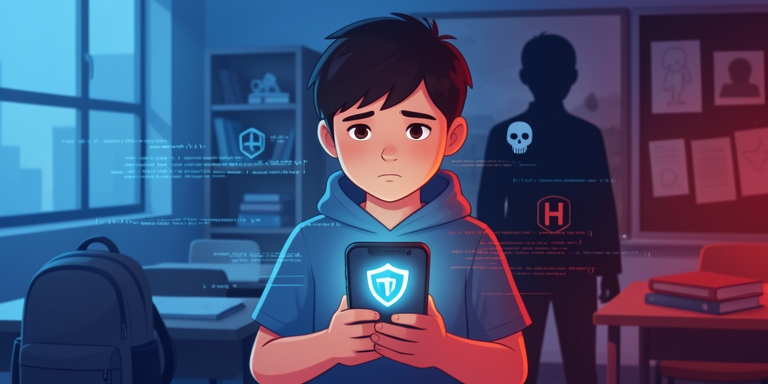
Experts warn that school groups can be exploited for financial fraud and digital extortion, highlighting the need for vigilance.
Incident Overview
Cybercriminals in Gujarat’s Morbi have reportedly exploited an official school group to execute financial fraud and digital extortion. Authorities disclosed that a woman affiliated with a private school’s official group had her account compromised, leading to the theft of ₹30,000 from her relatives and subsequent demands for ₹10 lakh in extortion.
The Fraud Unfolds
According to a police complaint, Shilpaben, the wife of Morbi resident Bhaveshbhai Harshadbhai Pachotiya, was a member of a private school’s official group. Between June 20 and June 29, an unidentified individual contacted her, posing as a school administrator. The caller claimed to need verification of the group’s details and convinced her to share a One-Time Password (OTP), which granted attackers access to her account.
Police Complaint Details
Once inside, the fraudsters sent messages to her relatives and acquaintances, falsely claiming she was in a medical emergency and required immediate financial assistance. Her brother and brother-in-law transferred ₹30,000 to the account provided by the perpetrators. Following this, the attackers contacted one of the woman’s associates via phone, demanding ₹10 lakh in exchange for avoiding harm. The caller allegedly threatened to kill the individual if the payment was not made.
Investigation and Response
The victim’s family later reported the incident to cybercrime authorities. Investigators are currently gathering technical evidence, including call records from suspected mobile numbers, login history, and IP address data. They are also tracing the bank account and UPI ID used to receive the ₹30,000 transfer to determine if the funds were moved to another state. If such a connection exists, the case will be coordinated with cybercrime agencies in the relevant jurisdictions.
Expert Advice
A prominent cybercrime expert and former IPS officer, Prof. Triveni Singh, emphasized that users must never share OTPs under any circumstances, regardless of the caller’s claimed affiliation with schools, banks, or government bodies. He recommended enabling two-step verification, exercising caution with unsolicited communications, and independently verifying any requests for financial assistance before initiating transfers.
Policing and Public Warnings
Police have advised the public to remain vigilant against verification calls purporting to originate from schools, banks, or other institutions. They reiterated that OTPs should never be disclosed without thorough verification and urged individuals to report suspicious activities to cybercrime authorities immediately.
“Users must never share OTPs under any circumstances, regardless of the caller’s claimed affiliation with schools, banks, or government bodies.” – Prof. Triveni Singh, Cybercrime Expert
Conclusion
The investigation remains active as authorities work to trace the perpetrators and recover stolen funds. This incident underscores the importance of digital security awareness, particularly in community groups where trust can be exploited by cybercriminals.

About Author









 English