

SBOMs, Signing, and Provenance: Why They Don’t Guarantee Software Safety
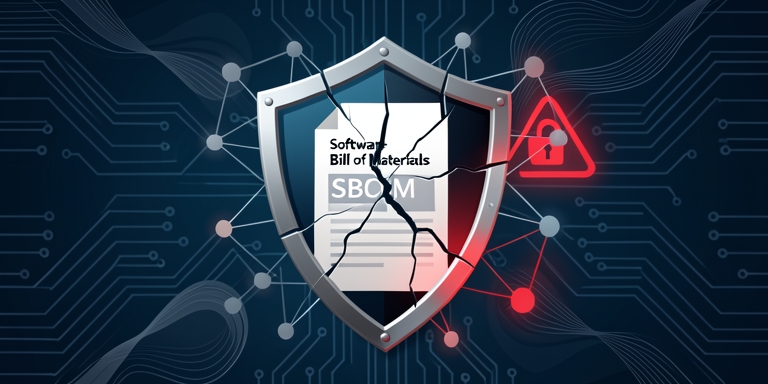
Significant advancements in software supply chain security have improved visibility into component composition, authenticity, and build integrity.
Advancements in Software Supply Chain Security
Significant advancements in software supply chain security have improved visibility into component composition, authenticity, and build integrity. These developments trace back to Executive Order 14028, which prompted agencies, contractors, and enterprises to adopt SBOMs, digital signatures, and provenance tracking.
The Gap in Execution Capabilities
While these measures provide foundational value, they fail to address a critical risk factor: the actual capabilities of code during execution. This gap is widening as artificial intelligence transforms the speed, scale, and adaptability of malicious software.
Limitations of SBOMs
Software Bill of Materials (SBOMs) address the question of composition: what components are included in a software artifact? Without this information, organizations cannot manage dependencies, assess open-source exposure, or identify known vulnerabilities. However, knowing a package’s dependencies does not reveal its runtime behavior.
Runtime Behavior Risks
A seemingly clean library might execute harmful actions such as credential theft, system persistence, lateral movement, or data exfiltration. SBOMs provide insight into software ingredients but lack predictive power regarding execution risks.
Authentication and Provenance
Authentication does not guarantee safety. Digital signatures and provenance verification answer distinct questions: can the software’s origin be validated? Can the build process be confirmed? These controls enhance integrity, accountability, and compliance but do not ensure trustworthiness.
Challenges with Traditional Models
Traditional trust models struggle to keep pace with AI-generated, modified, and deployed code, which operates faster than human review can accommodate. Trust cannot be based solely on a software’s origin, identity, or historical patterns.
The Missing Fourth Pillar: Behavioral Analysis
The missing fourth pillar in supply chain security frameworks is behavioral analysis. Current models address three questions: what is inside the software, where did it come from, and how was it built? The critical fourth question—what can it do?—remains underdeveloped.
Shifting Focus to Execution Risks
Software execution inherits the privileges of the user, workload, service account, or automation context that initiates it. Once running, code can access data, modify systems, communicate externally, establish persistence, disable controls, or move laterally.
Shifting to Behavioral Verification
The shift from identity to behavior is essential. Integrating behavioral verification into existing supply chain controls creates a more robust model. High-risk artifacts such as third-party packages, installers, scripts, containers, and AI-generated code require pre-execution behavioral evaluation.
Zero Trust in Software Execution
The Zero Trust principle, which rejects implicit trust in networks and identities, must now apply to software execution. No artifact should be trusted solely based on its origin, signature, or reputation.
Conclusion
Enterprises have improved their ability to identify software composition, origin, and build processes compared to five years ago. The evolving challenge lies in determining what software can do once executed.

About Author








 English