

Smart Home Security Research: Using Fake Residents to Simulate Real Users
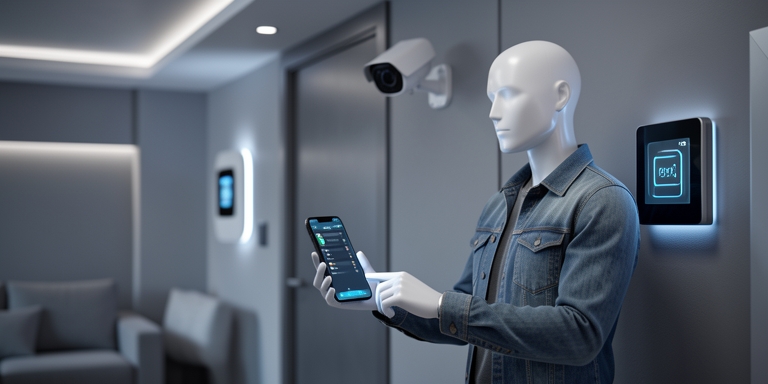
Smart home security research relies on limited data about real user interactions with home devices. Collecting this information typically involves installing monitoring systems in private residences for extended periods, a process that is time-consuming, expensive, and intrusive.
The Problem with Traditional Data Collection
Researchers from Leipzig University and ipoque, a subsidiary of Rohde Schwarz, have developed an alternative approach that leverages artificial intelligence to generate synthetic user activity. By training a language model to simulate household routines, the team creates realistic device interaction patterns without compromising privacy.
An AI-Driven Solution
The method involves assigning a virtual persona to a language model, along with a specific living environment. The model then generates sequences of actions a hypothetical resident might perform, such as adjusting lighting, locking doors, or operating appliances. These simulated activities produce timestamped device commands that can be executed on physical smart home hardware.
Generating Realistic Device Interactions
This process enables researchers to analyze network traffic and device behavior under controlled conditions, addressing a critical gap in the development of intrusion detection systems and traffic analysis tools. The approach addresses privacy concerns associated with traditional data collection methods.
Challenges and Limitations
Previous studies have demonstrated that encrypted smart home traffic can reveal detailed information about user behavior, such as when individuals are home, their movement patterns, or even their daily schedules. By generating synthetic data, researchers avoid the need to monitor real households, reducing ethical and legal risks.
Synthetic Data and Real-World Complexity
The team is also developing a complementary dataset called SPARTAN, designed specifically for testing smart home security systems. However, the method faces challenges. Synthetic data may not fully replicate the unpredictability of real-world behavior. Human routines often include irregularities, such as prolonged device usage, unexpected movements, or erratic schedules, which current models struggle to replicate.
Initial Demonstration and Future Work
Researchers acknowledge that their simulated scenarios may lack the complexity of actual household activity, potentially leading to false positives in security systems trained on such data. Additionally, language models may produce idealized representations of smart home interactions, influenced by the text they were trained on rather than real-world variations.
A Simplified Scenario
The initial demonstration involved a simplified scenario using OpenAI’s GPT-5.4, with two virtual residents, Alice and Bob, navigating a German winter morning from 6 a.m. to 10 a.m. The simulation included eight devices, such as lights and locks, and reflected typical morning activities. Alice’s behavior spread across the morning, while Bob’s actions clustered before an 8:30 a.m. departure.
Conclusion
Despite the limited scope, the test validated the feasibility of the approach. The research team emphasizes that this is an early-stage project. The current model has not been tested against real hardware for full schedules, and the generated routines have not been verified against actual user behavior. Nevertheless, the method offers a promising alternative for security researchers seeking to balance data utility with privacy protections.
According to the researchers, the method addresses privacy concerns associated with traditional data collection methods. Previous studies have demonstrated that encrypted smart home traffic can reveal detailed information about user behavior, such as when individuals are home, their movement patterns, or even their daily schedules.

About Author








 English