

US Indicts Russian Nationals and Firms Over Cybercrime Operations
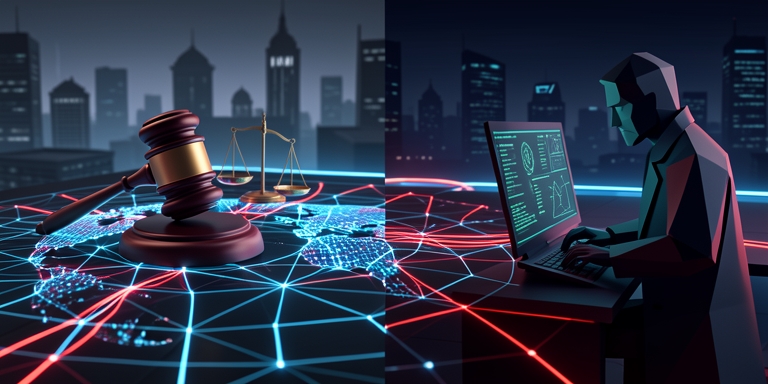
US authorities have filed an indictment against three Russian nationals and two companies for allegedly operating cybercrime infrastructure. The charges involve Aleksandr Alexandrovich Volosovich, Kirill Andreevich Zatolokin, and Yulia Pankova, along with ML.Cloud and Media Land, which maintained servers in multiple jurisdictions including China, the Netherlands, Finland, and the United States. The defendants are accused of managing bulletproof hosting platforms that facilitated malicious activities by various threat groups. The Department of Justice revealed that the infrastructure associated with ML.Cloud and Media Land was utilized for phishing campaigns, distributed denial-of-service attacks, brute-force attempts, ransomware deployments, and the operation of cybercrime marketplaces. These services reportedly targeted at least 42 organizations across 21 US states, resulting in significant financial damage estimated in the tens of millions of dollars. The indictment was submitted in December 2024 but remained sealed until recently. This is not the first public acknowledgment of the suspects and their entities. In late 2025, the United States and its international partners imposed sanctions on the individuals and companies linked to illicit cyber activities. Additionally, the DOJ announced a reward of up to $10 million for information leading to the identification of ML.Cloud and Media Land operators, along with potential relocation assistance. While Russian nationals involved in bulletproof hosting services rarely face prison sentences in US courts, such cases are not entirely unprecedented. The indictment highlights the ongoing efforts by law enforcement to disrupt cybercriminal ecosystems and hold operators accountable for their roles in enabling large-scale attacks. The case underscores the challenges of addressing cross-border cybercrime, as the infrastructure and operators often operate in jurisdictions with limited cooperation with US authorities. The charges also reflect broader international collaboration to counter cyber threats, including sanctions and financial incentives aimed at disrupting malicious networks. The DOJ’s actions align with previous measures targeting cybercriminal enterprises, emphasizing the agency’s focus on dismantling platforms that enable ransomware, data breaches, and other forms of digital exploitation. The case remains under investigation, with further legal proceedings expected as the probe progresses.
Indictment Details
The indictment targets Aleksandr Alexandrovich Volosovich, Kirill Andreevich Zatolokin, Yulia Pankova, ML.Cloud, and Media Land. These entities allegedly operated bulletproof hosting platforms that facilitated cybercriminal activities, including phishing, DDoS attacks, ransomware, and cybercrime marketplaces.
Cybercrime Infrastructure
The infrastructure linked to ML.Cloud and Media Land was used to target 42 organizations across 21 US states, causing tens of millions in financial damage. The servers operated in jurisdictions such as China, the Netherlands, Finland, and the US, complicating enforcement efforts.
International Collaboration
In 2025, the US and its partners imposed sanctions on the accused individuals and companies. The DOJ also offered a $10 million reward for information leading to the identification of ML.Cloud and Media Land operators, highlighting global efforts to combat cybercrime.
Legal and Cross-Border Challenges
Russian nationals involved in cybercrime often avoid prison sentences in US courts, but this case underscores the DOJ’s commitment to holding operators accountable. Cross-border challenges persist due to limited cooperation from jurisdictions hosting the infrastructure.
Ongoing Investigation
The case remains under investigation, with further legal proceedings anticipated. The DOJ’s actions align with broader strategies to dismantle platforms enabling ransomware, data breaches, and digital exploitation.
The indictment highlights the ongoing efforts by law enforcement to disrupt cybercriminal ecosystems and hold operators accountable for their roles in enabling large-scale attacks.
Conclusion
The case underscores the complexities of addressing cross-border cybercrime and the importance of international collaboration in combating digital threats.

About Author









 English