

India Issues Cyber Security Alert: Calls for United Digital Defense in BRICS
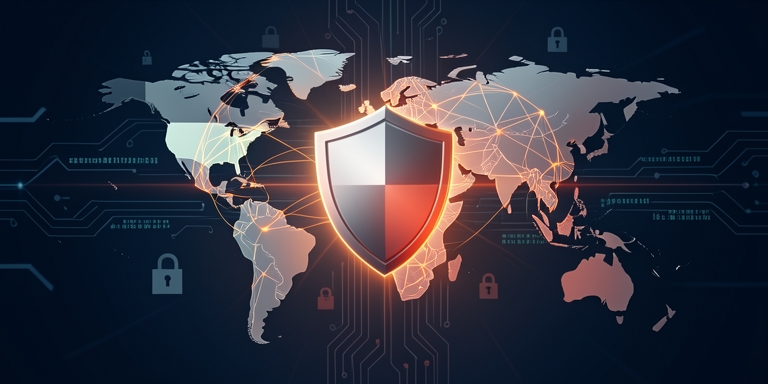
New Delhi, September 12: Advanced digital threats are evolving at an unprecedented pace, with AI-powered criminal activities, ransomware operations, and cross-border financial fraud emerging as critical challenges for BRICS nations. The increasing speed and complexity of these attacks necessitate a unified approach to address vulnerabilities that transcend national boundaries.
Three Key Cybersecurity Priorities
Cybercriminal Networks and AI
Cybercriminal networks are leveraging artificial intelligence to enhance the sophistication of their operations. Techniques such as deepfake technology, voice synthesis, automated phishing campaigns, and advanced social engineering tactics are enabling fraudsters to create highly convincing deceptive communications while minimizing resource expenditures.
Transnational Cyber Fraud
The second priority involves the proliferation of transnational cyber fraud, where victims, perpetrators, and infrastructure may reside in distinct jurisdictions, complicating investigative efforts. Stolen assets are frequently laundered through international banking systems or cryptocurrency platforms, further obscuring the trail of illicit activity.
Vulnerability of Critical Infrastructure
The third concern centers on the vulnerability of critical infrastructure, including financial systems, digital payment gateways, telecommunications networks, energy grids, transportation systems, and government IT environments. Disruptions to these sectors can trigger cascading effects with far-reaching economic and societal consequences.
Jurisdictional Challenges in Modern Cybercrime
Contemporary cybercrime ecosystems operate across multiple countries, exploiting diverse digital platforms, mule accounts, virtual assets, and encrypted communication tools. This fragmentation creates significant obstacles for law enforcement agencies confined to national legal frameworks. By the time authorities detect an incident, evidence or stolen funds may have already traversed multiple jurisdictions, complicating forensic analysis and recovery efforts.
For BRICS nations, enhanced coordination between computer emergency response teams, real-time sharing of threat intelligence, standardized digital evidence protocols, joint cyber exercises, and synchronized investigative procedures could become vital components of a resilient defense strategy.
Artificial Intelligence: A Dual-Edged Sword
The integration of generative AI into cyber operations presents both risks and opportunities. Criminals are utilizing AI to fabricate identities, replicate vocal patterns, generate deceptive messages, and automate aspects of cyberattacks. Conversely, the same technology offers defenders tools to identify fraudulent patterns, monitor anomalous network behavior, analyze malicious software, and accelerate threat intelligence processing.
This duality requires BRICS countries to implement robust safeguards for AI systems while leveraging their capabilities to fortify digital economies.
India’s Strategic Position
India’s extensive digital payment infrastructure, expanding tech sector, and expertise in combating financial fraud position it as a pivotal player in advancing BRICS cybersecurity collaboration. However, the success of such initiatives will depend on the establishment of operational mechanisms that enable rapid response during active incidents, rather than relying solely on diplomatic commitments.
Operational Readiness in Crisis Scenarios
Formal agreements on cooperation are insufficient to counter ransomware attacks, deepfake-enabled fraud, or global cybercrime networks. Effective mitigation requires established protocols for real-time information exchange, evidence preservation, and cross-jurisdictional coordination during active cyber incidents.
The next major cyber threat may originate from malicious code, a deepfake deception, a compromised account, or a single fraudulent click. Cybersecurity has evolved beyond IT concerns, becoming a cornerstone of economic stability, national security, and international safety.
Implications for Individuals and Organizations
Transnational cybercrime means threats can involve actors, infrastructure, and financial systems located in distant regions. Individuals and businesses must treat deepfake calls, unexpected financial requests, suspicious links, and unusual account activity as high-risk scenarios, regardless of the perceived credibility of the communication.
The primary challenge for BRICS lies in transforming cybersecurity cooperation into actionable, real-time responses. Timely threat intelligence sharing, expedited digital evidence requests, and synchronized countermeasures will determine the effectiveness of collective efforts to neutralize transnational cyber threats before assets or data become irretrievable.

About Author







 English