

UN Cybercrime Convention: Global Framework for AI Era Crime
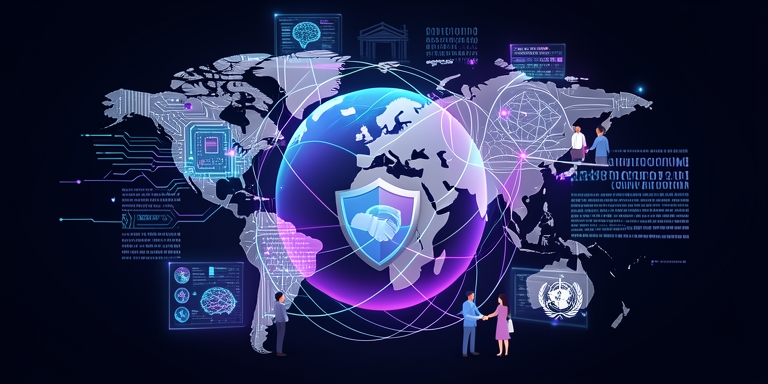
Advanced artificial intelligence applications, ransomware proliferation, and transnational cyber fraud are escalating as critical cybersecurity challenges for BRICS nations, as digital threats rapidly cross geographical boundaries.
The Establishment of a Unified International Framework
The establishment of a unified international framework for addressing cybercrime has become imperative, with a focus on cross-border collaboration, digital evidence management, and mitigating risks posed by emerging technologies.
Three Primary Cybersecurity Vulnerabilities
Three primary cybersecurity vulnerabilities have emerged as focal points for global attention. The first involves the increasing deployment of AI-driven criminal activities, including synthetic media, voice synthesis, automated phishing campaigns, and sophisticated social engineering tactics that enhance the credibility of fraudulent communications while reducing operational costs for perpetrators. The second challenge stems from the borderless nature of cyber fraud, where victims, perpetrators, and infrastructure may reside in distinct jurisdictions, complicating legal and investigative processes. The third concern centers on the vulnerability of critical infrastructure, including financial systems, digital payment networks, telecommunications, energy grids, transportation systems, and government operations, which face heightened risks due to their strategic importance and interconnected nature.
Challenges with Traditional Legal Frameworks
Traditional legal frameworks are struggling to keep pace with the complexity of modern cybercrime networks, which exploit multiple jurisdictions, digital platforms, and encrypted communication channels simultaneously. By the time law enforcement identifies an attack, evidence and illicit assets may have already traversed multiple countries and digital ecosystems.
The Dual Role of Artificial Intelligence
Artificial intelligence presents a dual challenge, as it empowers both attackers and defenders. While generative AI enables criminals to fabricate identities, clone voices, and automate deceptive messaging, it also provides defenders with capabilities to detect fraud patterns, identify anomalous network behavior, analyze malware, and accelerate threat intelligence processing. This duality requires BRICS countries to implement robust safeguards for AI systems while leveraging the technology to fortify their digital economies.
India’s Role in BRICS Collaboration
India’s extensive digital payment infrastructure, expanding tech sector, and experience in countering cyber-enabled financial fraud position it as a pivotal player in advancing cybersecurity collaboration within BRICS. However, the success of such initiatives hinges on practical implementation beyond symbolic commitments.
The Importance of Operational Coordination
Cyber incidents demand immediate coordination during active attacks, underscoring the necessity of established communication channels and operational mechanisms. The effectiveness of international cooperation will be tested during actual cyberattacks, as declarations of intent alone cannot prevent ransomware operations, AI-assisted fraud, or transnational cybercrime networks. Countries must develop systems that enable rapid information exchange, evidence preservation, and cross-jurisdictional action during cyber incidents.
The Evolving Threat Landscape
The evolving threat landscape demonstrates that future attacks may originate from malicious code, deepfake manipulations, compromised accounts, or deceptive user interactions rather than conventional military means. Cybersecurity has transitioned from an IT-focused concern to a critical component of economic, national, and global security. Individuals and organizations must recognize that cross-border cybercrime can involve infrastructure and actors located far from the victim, necessitating heightened vigilance against deepfake calls, unexpected financial requests, suspicious links, and irregular account activity.
Conclusion
The primary challenge for BRICS nations lies in transforming cybersecurity cooperation into actionable operational responses. Timely threat intelligence sharing, expedited digital evidence requests, and coordinated countermeasures will determine whether nations can disrupt transnational cybercrime operations before data, funds, or access become irretrievable.

About Author









 English