

Lookout Combats Smishing, Voice Cloning & Vishing with Real-Time Mobile Protection
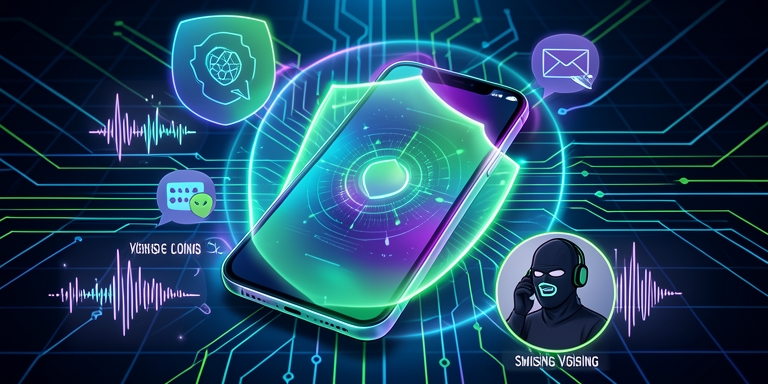
Lookout has introduced a new module called Social Engineering Protection (SEP) as part of its Mobile AI Security Platform.
Introduction to Social Engineering Protection (SEP)
Lookout has introduced a new module called Social Engineering Protection (SEP) as part of its Mobile AI Security Platform. This addition focuses on countering advanced mobile threats driven by artificial intelligence, such as linkless smishing attacks, synthetic voice cloning, and voice phishing (vishing) methods. The integration of frontier AI technologies has significantly altered the landscape of social engineering, enabling adversaries to create highly realistic and personalized deception at scale.
The Evolution of AI-Driven Social Engineering
These tools allow attackers to generate context-aware messages tailored to specific individuals, while voice cloning and deepfake technologies can mimic executives, colleagues, or IT personnel with alarming accuracy. This evolution complicates the ability of employees to differentiate between legitimate and malicious communications. As critical business interactions increasingly shift to mobile channels like SMS, voice calls, and messaging apps, mobile devices have become a primary target for AI-powered deception.
Challenges with Traditional Security Measures
Traditional security measures, which often focus on single channels and rely on detecting malicious links or attachments, are insufficient against these sophisticated, multi-channel attacks. Similarly, security awareness training struggles to keep pace with the growing complexity of AI-driven threats. To address this, Lookout’s SEP offers real-time analysis of mobile interactions to identify intent, context, and authenticity across text and voice communications.
Praveen Mamnani, Chief Product Officer at Lookout, emphasized that frontier AI has transformed the economics of cybercrime, making advanced social engineering accessible to a broader range of attackers. He stated that legacy defenses and awareness programs are ill-equipped to handle AI-powered deception that spans multiple channels, and SEP fills this gap by stopping threats before users are compromised.
Key Features of Lookout’s Social Engineering Protection
Smishing and Vishing Protection
Smishing protection within SEP continuously monitors incoming SMS, MMS, and RCS messages on iOS and Android devices to detect malicious links, phishing attempts, and suspicious intent in real time. Vishing protection analyzes audio and voicemail to identify AI-generated voice clones and deepfakes, while transcribing conversations to uncover suspicious patterns or scam tactics.
Omnichannel Defense Strategy
Additionally, the platform includes centralized call blocking capabilities that use mobile identity signals and phone-number attributes to distinguish legitimate callers from malicious ones. This allows organizations to implement risk-based controls and block suspicious numbers across their mobile workforce.
Integration with Lookout’s Mobile AI Security Platform
The launch of SEP marks the third core component of Lookout’s Mobile AI Security Platform, complementing existing focus areas of AI usage governance and mobile software risk mitigation. The AI visibility governance feature provides enterprises with control over employee interactions with generative and shadow AI applications, ensuring data security. The Mobile Software Exposure Center (MSEC) identifies vulnerabilities in mobile applications by scanning embedded components, SDKs, and libraries. SEP further strengthens this framework by addressing AI-powered human manipulation through real-time detection of smishing, vishing, and other social engineering attacks.
Broader Cybersecurity Landscape
The solution aims to mitigate risks associated with AI-driven threats, including data exposure, software vulnerabilities, and human exploitation. Other recent developments in the cybersecurity space include attacks targeting Check Point Management Servers and F5 BIG-IP APM instances, the disruption of the EvilTokens phishing service, and the discovery of AI-driven malware capable of autonomous decision-making. Additionally, new tools like Prismor, an open-source runtime control plane for AI agents, and Scamwise, a platform designed to flag potential scams, have emerged to address evolving threats.

About Author








 English