

AI’s Impact on Attack Speeds vs. Security Fundamentals
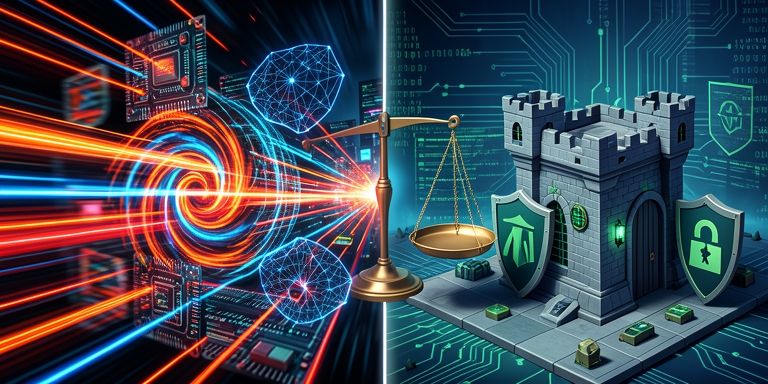
Advancements in frontier AI and similar technologies have enabled both attackers and defenders to expedite the identification of vulnerabilities and the creation of exploits for those vulnerabilities. This has led to significant discussion around the concept of “virtual patching,” with some industry professionals questioning whether this represents a novel approach or merely a rebranded version of established security practices.
Virtual Patching Debate
The debate highlights the need to distinguish between technological evolution and foundational security principles. A critical observation is that while AI tools have accelerated certain aspects of cybersecurity operations, they have not replaced the necessity of core security fundamentals.
Identity and Access Management (IAM)
Identity and Access Management (IAM) remains a cornerstone of application security. If an attacker is unable to authenticate, lacks authorization, or cannot bypass security controls through techniques like BOLA (Browser Origin Lockdown Avoidance), BFLA (Browser Feature Lockdown Bypass), or BOPLA (Browser Origin Policy Lockdown Bypass), their ability to compromise an application is significantly diminished.
Network Segmentation
Network segmentation also plays a vital role in mitigating risks. Applications that do not require broad network access should be confined to specific segments, limiting potential attack vectors. This approach reduces the surface area for exploitation and ensures that even if one segment is compromised, the broader infrastructure remains protected.
Principle of Least Privilege
The principle of least privilege further strengthens security postures. By granting users only the access necessary to perform their roles, organizations minimize the potential damage from compromised credentials or insider threats. This practice becomes even more critical when combined with network segmentation, as it restricts an attacker’s ability to move laterally within a system.
Endpoint Security
Endpoint security remains another essential layer of defense. Compromised devices, whether employee laptops or application hosting systems, often serve as entry points for attackers. Advanced endpoint detection and response (EDR) solutions can identify suspicious activity and enable rapid mitigation, preventing escalation of attacks.
Application Security
Application security requires a multi-layered strategy that addresses vulnerabilities at every stage of the stack. This includes infrastructure, APIs, and AI components. Tools such as web application firewalls (WAFs), API security solutions, bot mitigation systems, and application-layer DDoS protection are integral to this approach. However, the effectiveness of these measures depends on their integration with broader security practices.
Data Encryption
Data encryption, both at rest and in transit, is another critical safeguard. Even if an attacker gains unauthorized access to sensitive information, encryption renders it unusable without the corresponding decryption keys. This adds a significant barrier to data exfiltration and exploitation.
Detective Controls
Detective controls, such as log monitoring and threat intelligence integration, complement proactive measures by identifying anomalies and potential breaches. These controls are most effective when paired with well-documented processes and procedures.
Continuous Security Practices
Regular red team exercises, continuous vulnerability assessments, and rigorous patch management are essential for maintaining resilience. The importance of documented processes cannot be overstated. Security programs must evolve beyond reactive measures to include structured frameworks for risk assessment, policy enforcement, and incident response.
Conclusion
The discussion around AI’s impact on cybersecurity underscores a broader truth: while emerging technologies can enhance efficiency, they do not negate the value of established best practices. Defense-in-depth, a concept that has guided security strategies for decades, remains the most reliable approach to mitigating risks. As AI capabilities continue to mature, organizations must balance innovation with the enduring principles of secure design, access control, and operational discipline.
By prioritizing these elements, enterprises can build resilient defenses that withstand evolving threats without compromising operational efficiency.

About Author









 English