

16-Year-Old Suspected Ransomware Leader Arrested in KillSec Case
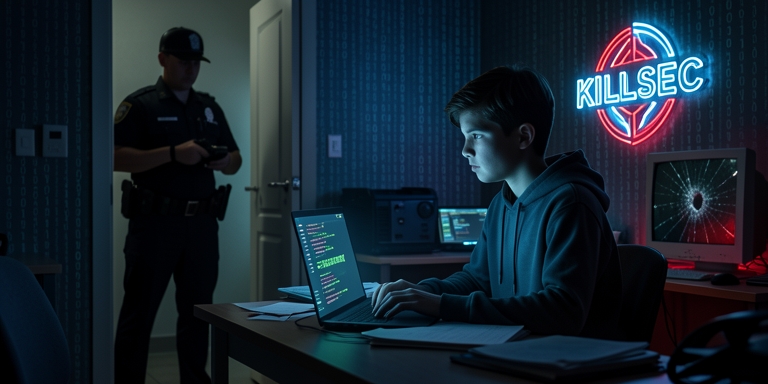
A 16-year-old is alleged to have operated as the primary administrator of KillSec, a ransomware collective linked to nearly 1,000 global cyberattacks, according to Eurojust.
Arrest Details
The group infiltrated organizational networks by exploiting misconfigured cloud storage access points. Once inside, they exfiltrated sensitive data to their infrastructure and demanded ransom payments under threat of public disclosure. Victims who refused to comply had their stolen files released without charge. To validate their claims, attackers provided sample data to victims. Some organizations reportedly paid substantial sums to avoid data exposure.
Group’s Methods
Law enforcement identified individuals fulfilling roles as administrator, developer, negotiator, and affiliate. The teenager is believed to have managed operational activities, while another suspect, a developer, was a minor during parts of the alleged criminal activities. The group utilized pseudonyms and encrypted communication platforms to obscure their identities.
International Collaboration
A coordinated international operation resulted in three arrests and the seizure of critical evidence. Authorities conducted eight residential searches across Spain, Greece, the United Kingdom, and Romania, recovering at least 110 terabytes of compromised data. Investigators also confiscated five servers used to host victim information and domains associated with KillSec.
Investigation Highlights
Eurojust facilitated collaboration among judicial bodies from Belgium, Finland, Germany, Greece, Romania, Spain, Switzerland, the United Kingdom, and the United States. A joint investigation team was established by agencies from Belgium, Germany, Greece, and Romania. The operation was managed from Eurojust’s coordination center. Participating agencies included Germany’s Federal Criminal Police Office, the UK’s Eastern Region Special Operations Unit, Spain’s Mossos d’Esquadra and Guardia Civil, and the FBI’s San Juan Field Office. Europol contributed by producing activity reports and connecting investigators with private sector partners. The agency also provided technical support for cryptocurrency tracking and digital evidence analysis.
Conclusion
The investigation highlights the evolving tactics of ransomware actors leveraging cloud vulnerabilities and encrypted communication to evade detection. Continued analysis of seized data may reveal further connections to affected organizations and additional perpetrators.

About Author








 English