

AI Displacing Junior Developers: Automation, Job Loss, and Industry Changes
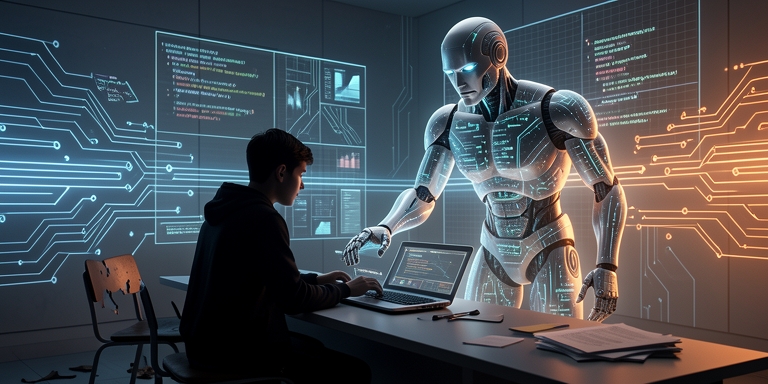
Researchers from Seoul National University conducted a study examining the impact of artificial intelligence on software development careers in South Korea.
The Study’s Findings
The investigation involved 14 professionals including senior engineers and students entering the job market. The findings reveal a systemic shift where generative AI tools are replacing foundational training opportunities for new developers.
Ai’s Role in Junior Developer Reductions
Industry Perspectives
One industry leader who eliminated junior positions noted no measurable impact on operations. When questioned about the value of junior developers, they stated AI tools like Claude provide equivalent or superior results.
Educational and Workforce Implications
This perspective contrasts with the engineer’s own early career experiences, where foundational tasks such as code writing, debugging, and testing were critical for skill development. The study highlights a critical shift in how technical expertise is cultivated.
Challenges in Skill Development
A senior developer at a mid-sized game company emphasized that while AI reduces code generation costs, the expense of verifying code quality has increased significantly. This verification process, which historically required hands-on experience with errors, is now lacking in the current workforce.
Student and Hiring Manager Observations
Students participating in the research described gaps in their understanding of fundamental development principles. Many reported uncertainty about what constitutes improper coding practices, as they have not encountered real-world errors through manual work. This aligns with observations from hiring managers who note that junior developers lack the ability to recognize flawed approaches.
Regulatory and Industry Responses
Educational institutions are also adapting to these changes. A student described how peer use of AI tools created pressure to adopt similar practices, even when it compromised learning opportunities. In one case, identical grades were achieved in two courses with differing assignment requirements, suggesting a shift in how technical skills are assessed.
Workforce Declines and Automation Parallels
The workforce implications are significant. South Korea experienced a 43% decline in IT job postings between 2023 and 2024, with graduates facing a saturated market. Similar trends were observed in the United States, where programmer employment fell 27.5% over the same period.
Manual Skills in Other Industries
Regulatory parallels exist in other industries. Aviation and nuclear energy sectors have implemented requirements to maintain manual skills despite automation. These frameworks recognize the necessity of hands-on experience for critical tasks. The software industry lacks comparable safeguards, raising concerns about long-term workforce preparedness.
Alternative Training Approaches
A re-commerce company’s onboarding process demonstrates an alternative approach. New hires begin with simple tasks like correcting minor code errors, gradually progressing to more complex challenges. This method emphasizes learning through practical experience.
Variations in Organizational Practices
However, the study found variations in how organizations handle junior development, with some maintaining traditional training methods.
Conclusion
The research underscores a growing disconnect between AI adoption and workforce development. While automation improves efficiency, it risks creating a generation of developers who lack the foundational understanding required for advanced problem-solving. The long-term consequences of this shift remain uncertain, but the need for structured training mechanisms is increasingly apparent.
About Author







 English