

Bengaluru Man’s Savings Disappeared After OTP Not Received in SIM Swap Fraud
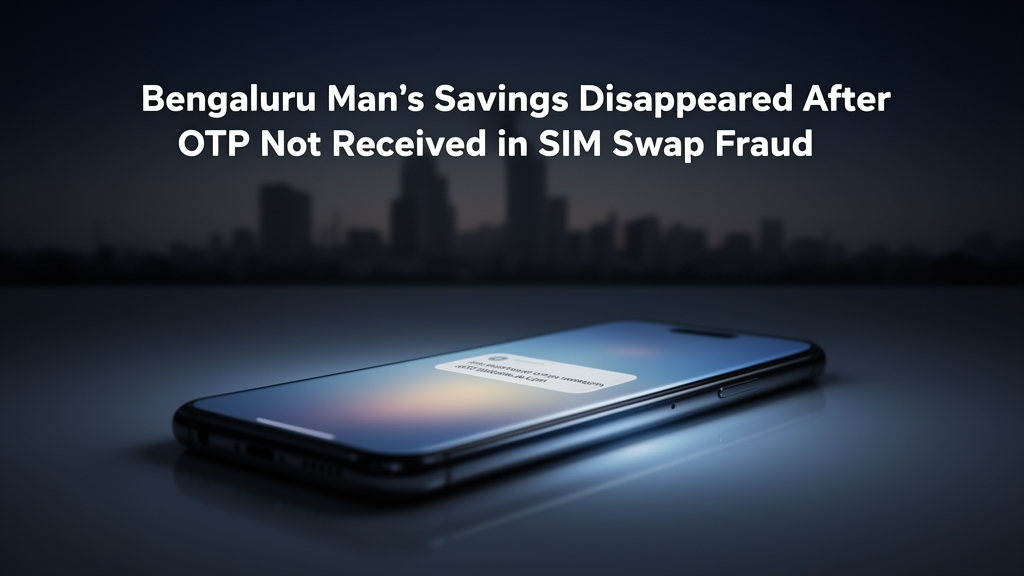
A 62-year-old individual from Bengaluru reported a financial loss of ₹7,44,831 after falling prey to a SIM swap attack, underscoring vulnerabilities in mobile-linked financial systems.
The Incident
The incident occurred when the victim’s mobile number became nonfunctional for multiple days, enabling unauthorized access to their bank account. The disruption began on May 31, 2026, with the victim’s mobile number remaining inactive until June 7. During this period, the individual could not receive calls or messages, leading to initial assumptions of a technical malfunction. Attempts to resolve the issue through the service provider proved unsuccessful, prolonging the outage.
Unauthorized Access and Security Breach
Cybercriminals exploited the mobile network disruption to bypass security measures. With the SIM card inactive, authentication alerts and security notifications failed to reach the victim, allowing unauthorized transactions to occur. The breach was discovered when the victim regained connectivity and attempted to access their mobile banking app. Login failures prompted a visit to an ATM, where a mini statement revealed multiple suspicious withdrawals. Bank officials confirmed the total loss of ₹7,44,831 through unapproved transactions.
Response and Investigation
The victim subsequently reported the case to the National Cyber Crime Helpline and filed a formal police complaint. Authorities are examining banking records, mobile service logs, and digital traces to identify the perpetrators. The telecom provider has been requested to provide details on the timeline of the number’s disconnection and restoration.
Cybersecurity Insights
Cybersecurity analysts noted that such attacks typically involve manipulating telecom verification processes to intercept one-time passwords (OTPs). Once control over OTP delivery is compromised, fraudsters can execute rapid fund transfers before the victim detects the breach. Investigators are exploring potential links to organized cybercrime networks and coordinated SIM swap operations targeting multiple victims.
Recommendations and Warnings
The case highlights critical weaknesses in digital banking systems reliant on mobile-based authentication. Experts recommend implementing enhanced SIM security protocols and supplementary verification methods beyond OTPs. Cyber officials have urged the public to report prolonged mobile service interruptions to both financial institutions and telecom providers. They also cautioned against sharing OTPs, engaging with suspicious links, or responding to unsolicited calls, which are common tactics used by malicious actors.
Ongoing Investigation
The investigation remains active, with authorities anticipating further developments as telecom and banking data are analyzed.

About Author








 English