

Cyber Crime Alert: Latest India Cybersecurity Threats 7th October
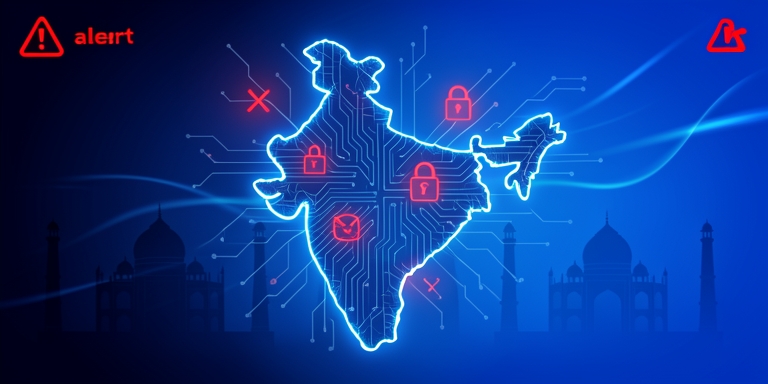
India and Sri Lanka conducted their inaugural bilateral cyber-security discussions in Colombo on 6 October, addressing cross-border cyber threats and digital security frameworks.
India and Sri Lanka Conduct Bilateral Cyber-Security Discussions
India and Sri Lanka conducted their inaugural bilateral cyber-security discussions in Colombo on 6 October, with India’s delegation including CERT-In Director General Sanjay Bahl and MEA Joint Secretary for Cyber Diplomacy Amit Shukla. Topics addressed included cyber-security governance, threat intelligence sharing, incident response protocols, capacity-building initiatives, and strategies for managing cyber crises. The dialogue also focused on safeguarding financial systems and digital economies through collaborative frameworks. Cross-border cyber threats such as ransomware, financial fraud, and critical infrastructure attacks necessitate international cooperation. India’s growing emphasis on cyber diplomacy reflects its integration of cyber defense into national security strategies, including CERT-to-CERT collaboration, threat intelligence exchanges, and joint crisis response mechanisms.
Jammu and Kashmir Police Dismantle Cross-Border Narco-Terror Network
Jammu and Kashmir Police dismantled an alleged cross-border narco-terror network linked to Pakistan-based gangster Shahzad Bhatti. Four suspects were arrested, with authorities recovering an Italian-made Beretta pistol, ammunition, heroin, and opium. Police alleged that drones were used to transport weapons and narcotics to operatives in Punjab. The investigation is ongoing, with judicial processes determining the validity of claims. Drone-enabled cross-border crime demands advanced investigative techniques, combining drone/RF forensics, GPS flight data analysis, mobile device examinations, messaging platform reviews, financial trail tracing, and supply chain investigations. This marks a critical area for law enforcement, border agencies, and national security bodies to address emerging threats.
89-Year-Old Man Falls Victim to Digital-Arrest Scam
An 89-year-old retired Civil Defence official in Lucknow fell victim to a prolonged digital-arrest scam, losing ₹16.09 lakh after being manipulated by fraudsters impersonating Anti-Terrorist Squad officers. The perpetrators claimed his identity was linked to the Pulwama terror attack, coercing him into transferring funds over 22 days. Digital-arrest schemes are evolving from brief impersonation calls to extended psychological manipulation, incorporating video calls, fabricated investigations, and national security narratives. Financial institutions and families should monitor sudden high-value transactions, especially from elderly individuals exhibiting behavioral changes. Investigators must analyze call records, digital artifacts, bank transfers, mule accounts, IP data, and device forensics to build a comprehensive evidence chain.
Delhi Police Investigate AI-Generated Video Targeting Senior Officer
Delhi Police investigated an AI-manipulated video targeting a senior police officer, with a 24-year-old suspect arrested for circulating fabricated CCTV footage. The individual operated a social-media account with 24,000 followers, raising concerns about deepfake technology’s impact on law enforcement integrity. AI-generated content involving public officials risks eroding institutional trust and escalating public order tensions. Police digital forensics units must prioritize original media analysis, metadata extraction, AI manipulation detection, account tracing, device examination, IP logging, distribution mapping, and funding coordination to mitigate such threats.
Bengaluru Police Probe Fraudulent BPO Operation Linked to Dubai
Bengaluru’s Central Crime Branch probed a suspected fraudulent BPO operation linked to Dubai, detaining six individuals and seizing electronic devices. Police estimated 60–70 employees were involved, though only a subset may have been aware of the fraud. No Indian victims were identified, and the international connection remains under investigation. Modern call-center frauds mimic legitimate businesses, utilizing recruitment networks, SIM procurement, calling infrastructure, CRM systems, and overseas controllers. Investigators must reconstruct recruitment processes, SIM acquisition, calling operations, victim targeting, payment flows, and beneficiary tracking to dismantle such networks.
Karnataka Partners with ElevenLabs for Voice AI Safety Framework
The Government of Karnataka partnered with ElevenLabs to develop a Voice AI safety framework for public services, including voice restoration for individuals with speech impairments and accessibility tools for government interactions. The initiative includes safeguards against voice cloning, deepfake misuse, and impersonation. Voice AI’s dual-use nature requires strict controls, such as consent protocols, provenance tracking, watermarking, authentication measures, anti-cloning technologies, audit logs, and public awareness campaigns to prevent misuse in CEO fraud, emergency scams, and official impersonation.
Kerala Police Launch Cyber Hackathon and Child Exploitation Initiative
Kerala Police launched HAC’KP, a pan-India cyber hackathon, alongside Project Lighthouse India 2026, a leadership initiative focused on combating online child exploitation. Senior police officers and international child safety experts participated, highlighting the intersection of encrypted communications, cloud platforms, cryptocurrency, AI-generated content, and transnational offenders. Effective policing requires specialized digital forensics, international collaboration, and platform-specific strategies to address evolving threats.
Enforcement Directorate Arrests Officials in Recruitment Scam
The Enforcement Directorate arrested a suspended Karnataka Public Service Commission chairman and another official in a recruitment-scam investigation. The probe examined irregularities in government recruitment processes, including allegations related to veterinary officer examinations and proceeds of crime. Financial forensics and digital evidence are critical in modern corruption investigations, tracing question paper decisions, insider collusion, communication channels, payment flows, asset acquisitions, and beneficial ownership.
Anthropic Expands Access to Frontier AI Models for Cyber Defense
Anthropic expanded access to its frontier AI models for cyber defense and authorized red teaming through a revised Cyber Verification Program. The initiative, building on Project Glasswing, identified over 134,000 software vulnerabilities between April and October, including 33,000 critical or high-severity flaws. The program includes tiers for incident response, malware analysis, and safety-critical infrastructure testing. While AI accelerates vulnerability discovery and security testing, stringent access controls are essential to prevent misuse, given the dual-use nature of these technologies.
Dutch Researchers Uncover Vulnerable Renewable-Energy Systems
Dutch researchers uncovered 8,547 internet-exposed administrative systems for renewable-energy installations across 35 European countries, with 181 sites vulnerable to remote control. Attackers could potentially halt wind turbines or solar operations, prompting calls to isolate management interfaces from public networks. India’s expanding renewable-energy sector must adopt security-by-design principles for inverters, remote management systems, SCADA/OT networks, and vendor access to prevent operational disruptions.
Conclusion
The convergence of AI, cybercrime, and national security defines today’s threat landscape. Voice cloning offers social benefits but enables impersonation fraud, while AI-driven vulnerability discovery enhances defense capabilities but risks creating fabricated evidence. Drones, telecom networks, and digital payments are increasingly embedded in cross-border organized crime. Indian law enforcement must adopt a multidisciplinary approach, integrating cyber police, digital forensics, financial intelligence, AI analysis, CERT-In collaboration, telecom surveillance, drone forensics, and international cyber cooperation to address these challenges.

About Author








 English