

Cyber Crime Alert: Latest Stories Shaking India – 9th October
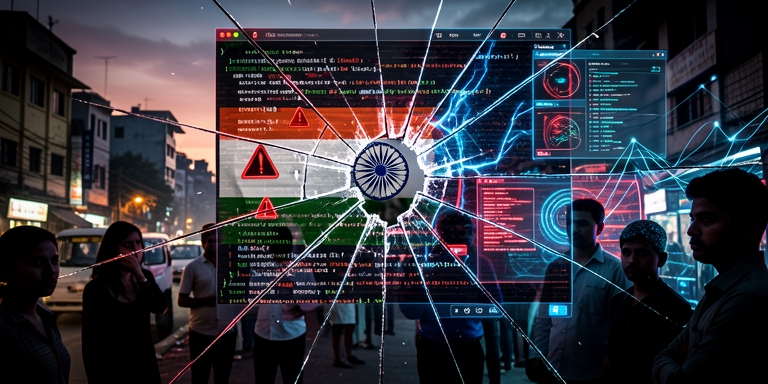
The Indian government has unveiled plans for a new artificial intelligence regulatory framework, targeting concerns around deepfakes and autonomous AI systems.
The Indian Government’s AI Regulatory Framework
On October 8, Union IT Minister Ashwini Vaishnaw revealed that a consultation paper on AI regulations will be released within a month. The proposed guidelines will address AI safety, synthetic media, user safeguards, and the growing risks posed by self-directed AI agents. The initiative includes a strategy for government procurement through approved AI vendors, alongside long-term infrastructure development. Initial efforts involve acquiring 5,000 GPUs, with a projected total requirement of 10,000. These measures remain in the planning phase and have not yet been formalized into legislation. The development underscores the need for enhanced AI governance structures, emphasizing the importance of deepfake detection mechanisms, AI accountability protocols, and liability frameworks for emerging technologies.
Prime Minister’s Call for International Cybercrime Collaboration
Prime Minister Narendra Modi, addressing India Mobile Congress 2026 on October 8, called for an international framework to address cross-border cybercrime. He emphasized the need for collaboration among governments, telecom operators, technology firms, and financial institutions to combat transnational threats. The leader specifically urged global telecom organizations, including GSMA, to develop standardized protocols for sharing threat intelligence and mitigating scams. This initiative aligns with priorities such as real-time scam monitoring, suspicious-number identification, cross-border financial tracking, and expedited digital evidence exchange.
CBI’s Investigation into Banking Fraud
The Central Bureau of Investigation has requested approval to prosecute five serving IAS officers and one former IAS official in connection with a ₹504-crore banking fraud involving Haryana government funds. The investigation alleges that public funds from eight government departments were misappropriated through irregular banking arrangements involving officials and intermediaries. Key allegations include unauthorized deposit approvals, procedural bypasses, and failure to report suspicious activities. The case highlights critical vulnerabilities in financial oversight, including the need for robust deposit verification, maker-checker systems, forensic auditing, and independent monitoring of institutional financial transactions.
Gujarat Cyber Police’s ₹11-Crore Fraud Network
Gujarat Cyber Police have uncovered a ₹11-crore fraud network linked to 79 mule accounts and Dubai-based operators. A 27-year-old suspect from Porbandar was arrested for facilitating an international cyberfraud operation, which involved setting up bank accounts, receiving illicit funds, and converting them into USDT cryptocurrency for transfer to wallets controlled by associates in Dubai. Investigators traced 79 accounts to 53 cybercrime complaints across 18 states and Union Territories, with the accused retaining a 13% commission on certain transactions. The case illustrates the complexity of organized cybercrime, involving mule account networks, cash withdrawals, and stablecoin-based money laundering.
CBI’s Dismantling of Banking Recruitment Fraud
The CBI has dismantled a multi-state banking recruitment impersonation scheme, with 180 appointments under investigation. Four individuals, including a CGST inspector, were arrested for allegedly orchestrating a fraud where substitute candidates participated in examinations and interviews conducted by the Institute of Banking Personnel Selection. Biometric and photographic analysis identified irregularities in recruitment processes between 2020 and 2024. The case underscores risks associated with identity fraud, emphasizing the need for biometric authentication, identity verification, examination audit trails, and post-hiring validation mechanisms.
Cyberabad Police’s Digital Lending Platform Investigation
Cyberabad Police are investigating allegations of ₹22-lakh extortion and personal data misuse linked to a digital lending platform. A complainant reported borrowing ₹1.56 crore through 34 loan applications over a year, with repayment totaling ₹1.79 crore. The case involves claims that recovery agents accessed mobile contacts and sent abusive messages to associates. The investigation focuses on disputed charges, coercive collection practices, and compliance with data privacy regulations. Key priorities include loan-app due diligence, recovery-agent oversight, consent management, and customer data protection.
Indian Army’s FPV Drone Procurement
The Indian Army has ordered 225 First-Person View (FPV) drones following high-altitude trials conducted at 17,500 feet. The procurement follows evaluations of endurance, speed, accuracy, and reliability under extreme Himalayan conditions. The acquisition reflects the growing role of unmanned systems in military operations, including surveillance, tactical support, and battlefield applications. The development raises implications for security agencies, including drone detection, radio frequency analysis, geospatial intelligence, and counter-drone strategies.
Anthropic’s Cyber Mission for Critical Infrastructure
Anthropic has launched a Cyber Mission focused on critical infrastructure and open-source security. The initiative includes the Critical Infrastructure Defense Program, which provides AI-driven support for protecting power grids, water systems, and transportation networks, and the OSS Scanner, offering free vulnerability assessments for open-source projects. The company aims to enhance defensive capabilities as AI transforms cybersecurity operations. For India, AI-assisted vulnerability detection could improve security assessments for government and financial systems, though findings require technical validation before remediation.
Russian Data Center Attack by Drones
A drone attack on October 8 targeted a major data center operated by Yandex in Russia’s Ryazan region, causing a fire and operational suspension at its Sasovo facility. The site, housing tens of thousands of servers, supported AI-computing infrastructure linked to YandexGPT. While core services remained functional, some online services experienced disruptions. The incident highlights the need for physical security measures alongside digital defenses, emphasizing geographic redundancy, disaster recovery, infrastructure protection, and continuity planning for AI and cloud infrastructure.
ASOS Customer Data Breach
The UK-based retailer ASOS disclosed a customer data breach following an employee impersonation attack. Attackers obtained login credentials by masquerading as a trusted contact, enabling access to third-party platforms. Exposed data included customer names and contact details, though payment-card information and passwords remained secure. The breach underscores risks associated with social engineering, prompting priorities such as phishing-resistant authentication, vendor access controls, and third-party incident response coordination.
Today’s Strategic Intelligence Assessment
Three developments require close attention. First, India’s AI governance framework is evolving, with the proposed consultation paper and the Prime Minister’s call for international collaboration signaling a shift toward structured oversight. Second, financial investigations must trace the full fraud ecosystem, as seen in cases involving institutional fraud, transnational money laundering, and digital consumer exploitation. Third, cybersecurity now extends beyond IT infrastructure, as demonstrated by the Russian data center attack and AI-driven critical infrastructure initiatives. Key priorities for law enforcement, financial institutions, and cybersecurity professionals include AI governance, financial forensics, blockchain analytics, digital evidence collection, fraud risk management, cyber threat intelligence, and critical infrastructure protection.

About Author







 English