

Essential 5-Part Checklist for AI Agent Credentials
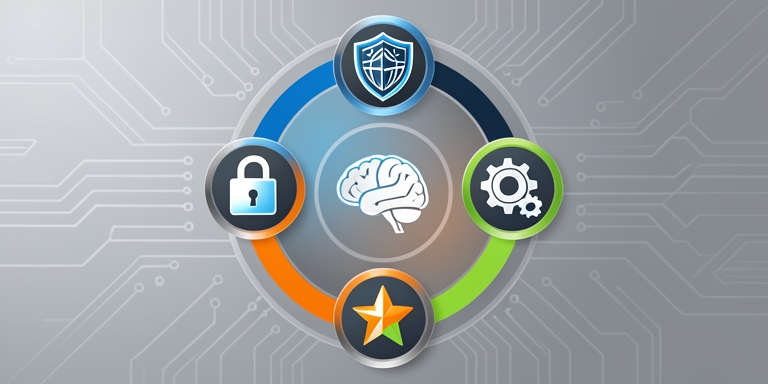
A five-part inventory for your AI agent credentials
In a recent discussion
Roy Katmor, co-founder and CEO of Orchid, highlighted a critical oversight in AI deployment practices. Organizations frequently create AI agents within development platforms, integrating them with enterprise systems and granting them access to perform specific tasks. While the agents and their development environments are typically approved, the underlying identities and credentials associated with these agents often bypass standard security review processes.
Katmor’s scenario
Katmor outlined a scenario where an AI agent interacts with multiple internal systems during onboarding, including human resources, identity management, ticketing platforms, payroll, and internal applications. Each of these connections relies on authentication mechanisms such as OAuth tokens, API keys, service accounts, or temporary human credentials. Over time, these agents accumulate permissions beyond their initial scope, leading to elevated privileges that may not align with their original purpose.
The five-part inventory
First: Identify the owner and intended purpose
Organizations must identify the owner and intended purpose of each agent.
Second: Map the tools and systems
They should map the tools and systems the agent can access.
Third: Document specific credentials
The specific credentials used for authentication, including tokens and keys, must be documented.
Fourth: Evaluate effective authority
The effective authority granted to the agent—such as data access or system control—requires continuous evaluation.
Finally: Monitor runtime behavior
Runtime behavior should be monitored to detect anomalies.
Treating AI agents as applications
By systematically tracking these factors, teams can compare an agent’s actual activities against its approved functions. This process enables the implementation of targeted security controls, such as granular access restrictions or a kill switch to terminate unauthorized actions. The approach emphasizes treating AI agents as applications rather than passive tools, ensuring their credentials and permissions remain aligned with organizational security policies.
Conclusion
The discussion underscores the growing complexity of managing AI-driven workflows. As agents become more integrated into enterprise operations, the need for rigorous credential management and continuous oversight becomes essential to mitigate risks associated with unreviewed access and evolving permissions.

About Author








 English