

Gujarat Police FIR Against Fake Hotel Booking Sites Targeting Pilgrims
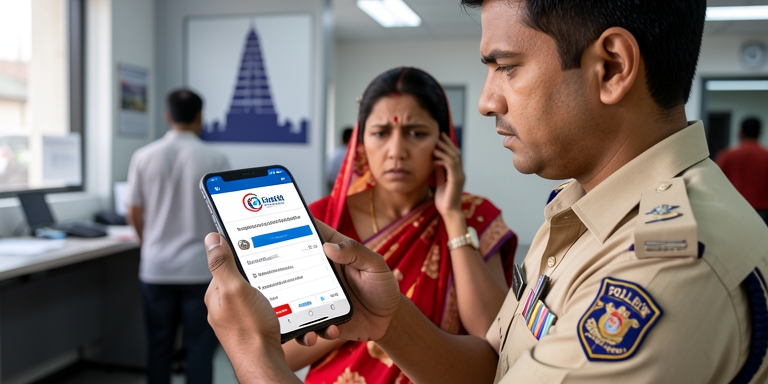
Gujarat Police has identified a nationwide cybercrime operation involving counterfeit hotel and dharamshala booking sites that targeted visitors at key religious sites.
Gujarat Police’s Cybercrime Investigation
The Cyber Centre of Excellence within the state police force uncovered an organised network that exploited digital platforms to defraud pilgrims and tourists. The scheme focused on high-traffic religious locations such as Katra, Dwarka, Tirumala, Vrindavan, and Rishikesh, where victims were lured through deceptive online portals.
The Fraudulent Booking Scheme
Investigators found that the perpetrators created sophisticated replicas of legitimate booking systems, using domains like niharikabhavankatra.co.in and swaminarayanbhaktidhamdwarka.co.in to mimic official government guest houses and religious trusts. These sites featured altered property images and fabricated contact details to appear authentic.
Victims who sought lodging near holy sites transferred advance payments via digital methods, only to discover upon arrival that their reservations were non-existent. The fraudsters then cut off all communication, leaving individuals without accommodation and facing financial losses.
Search Engine Manipulation Tactics
The operation relied on search engine manipulation to direct users to the fraudulent sites. By leveraging SEO strategies and paid advertisements on platforms like Google, the syndicate ensured its websites appeared prominently in search results for pilgrimage-related queries.
Prospective guests who accessed these links were guided through fake booking processes, with operators posing as official representatives to collect payments through the Unified Payments Interface. Additional fees, such as sanitisation charges or security deposits, were often demanded after initial payments, further exploiting victims.
Low-Value Transaction Strategy
A key tactic of the network was targeting low-value transactions to avoid detection. By limiting individual frauds to small sums, the perpetrators reduced the likelihood of victims pursuing formal complaints. This approach allowed the scheme to operate across multiple states with minimal interference.
Investigation and Legal Actions
The Gujarat Police’s e-Investigation Unit reviewed complaints filed between October 2025 and July 2026, consolidating cases into a single probe led by Police Sub-Inspector M. B. Goswami. Law enforcement agencies have linked this case to broader efforts to combat digital fraud in religious tourism.
Broader Implications for Cybercrime
The Union Home Ministry’s Indian Cyber Crime Coordination Centre has prioritised monitoring high-traffic pilgrimage routes, such as the Char Dham trail, to identify and dismantle similar operations. Federal initiatives now include automated domain tracking and collaboration with tech platforms to detect and remove fraudulent websites before they gain traction.
Cybercrime experts note that religious travel has become a focal point for organised digital crime. The reliance on unverified online booking systems and the vulnerability of pilgrims to misinformation create opportunities for exploitation.
Conclusion
Authorities continue to advise travelers to verify booking sources through official channels and avoid transferring funds through unsolicited contact numbers. The case highlights the evolving nature of cybercrime, where traditional fraud methods are adapted to exploit digital infrastructure. As enforcement agencies refine their strategies, the focus remains on disrupting networks that prey on the trust of individuals seeking spiritual or cultural experiences.
Authorities continue to advise travelers to verify booking sources through official channels and avoid transferring funds through unsolicited contact numbers.

About Author








 English