

In-App Purchases: The Hidden Cost Draining Indian Family Bank Accounts
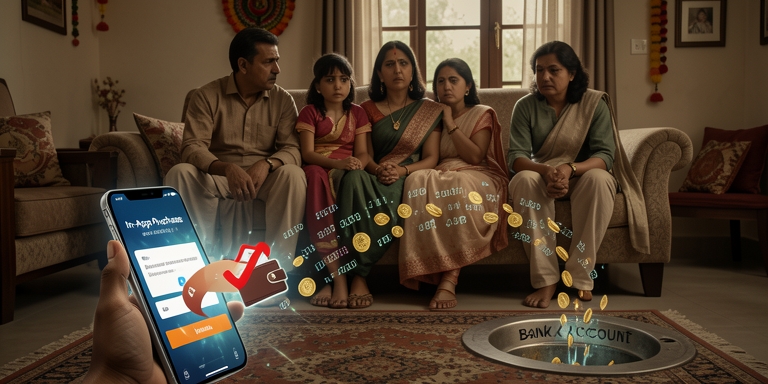
A Greater Noida family’s reported ₹29 lakh loss reveals how children’s in-app gaming purchases, unchecked permissions and linked UPI accounts are exposing Indian households to serious financial risk.
In-App Purchases Are Quietly Draining Indian Family Bank Accounts A Greater Noida family’s reported ₹29 lakh loss reveals how children’s in-app gaming purchases, unchecked permissions and linked UPI accounts are exposing Indian households to serious financial risk. A single tap on a gaming app’s “buy now” prompt, repeated over days or weeks, has led to significant financial losses for families across urban India. The case involving a Greater Noida household highlights how seemingly minor in-game transactions can escalate into substantial cyber fraud.
The Arithmetic of Small, Repeated Payments
Modern gaming platforms are designed to encourage incremental spending through low-cost virtual items such as digital currency, character upgrades and premium features priced between ₹100 and ₹500.
These amounts are often perceived as insignificant by users, particularly children, leading to repeated transactions. The risk intensifies when payment methods like saved cards, UPI handles or net banking credentials are pre-linked to devices. Cybercrime units in Hyderabad and other cities have documented numerous cases where initial reports of unauthorized access were later traced to children making purchases using family accounts. Elderly individuals are especially vulnerable, as their devices frequently store payment information and receive less frequent monitoring. The cumulative impact of small transactions often goes unnoticed until banking alerts or SMS notifications trigger awareness, by which time substantial financial damage has already occurred.
National Crime Records Bureau data indicates a sharp rise in cybercrime cases involving minors between 2020 and 2024, with gaming platforms and chat apps serving as common entry points for both financial exploitation and more severe forms of abuse. Uttar Pradesh has consistently reported high numbers of such incidents in NCRB records.
Permissions, Privacy and the Wider Data Risk
Beyond financial exposure, gaming applications that request excessive device permissions pose broader risks.
When devices with banking apps are compromised, access to sensitive data like contact lists or camera functions can enable further exploitation. This is particularly concerning in multiplayer environments where children may interact with strangers, increasing the likelihood of phishing attempts or malicious communications.
Building Safer Digital Habits at Home
Legal frameworks such as the Consumer Protection Act and the Digital Personal Data Protection Act provide mechanisms to address apps that target minors or collect data without consent.
However, enforcement remains inconsistent, leaving households to manage risks independently. Practical safeguards include restricting app permissions, regularly reviewing payment settings and educating children about digital transactions. Cybercrime units emphasize the importance of fostering open communication to ensure children report suspicious activity without fear of repercussions. Routine monitoring of banking notifications and establishing clear guidelines for device usage are critical steps in mitigating these threats. As India’s youth smartphone population grows, proactive measures to address in-app purchase vulnerabilities and digital literacy gaps remain essential to preventing further financial harm.

About Author









 English