

Punjab Police Freeze 63,000 Fraud-Linked Bank Accounts Holding ₹540 Crore
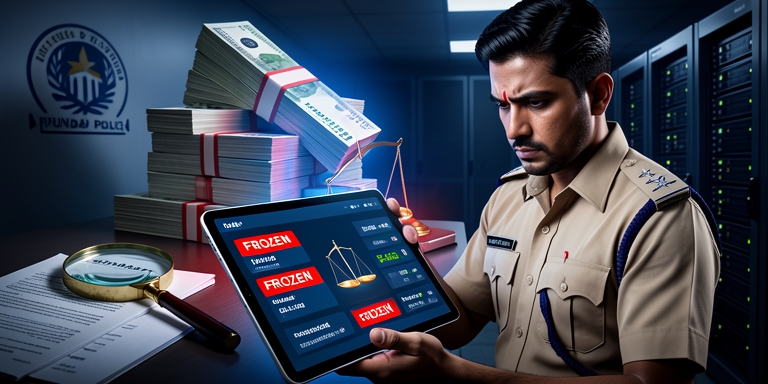
Punjab Police have frozen 63,749 bank accounts linked to online fraud involving ₹540 crore since 2024.
Punjab Police Freeze 63,749 Bank Accounts in Anti-Fraud Drive
Key Details of the Operation
Punjab Police have taken action to freeze 63,749 bank accounts associated with suspected online fraud involving over ₹540 crore since 2024. The initiative, led by the state’s law enforcement, aims to dismantle financial infrastructure supporting cybercriminal activities. The operation focuses on identifying and blocking mule accounts used to process and launder illicit funds.
Shift in Cybercrime Tactics
The investigation reveals a shift in cybercrime tactics, with fraudsters leveraging organized networks to execute schemes such as digital arrest scams, fake investment platforms, phishing campaigns, and impersonation fraud. Additional offenses include online shopping fraud, fake customer service scams, lottery and job fraud, social engineering attacks, and QR code-based deception.
Investigators highlight that these operations are frequently managed by interstate networks exploiting digital payment systems to transfer funds across jurisdictions rapidly. The use of layered transactions complicates tracking efforts, prompting law enforcement to prioritize early intervention.
Collaboration and Impact
Collaboration with financial institutions and cybercrime coordination bodies has been critical in identifying suspicious activities. This partnership enables swift blocking of accounts linked to criminal operations while preserving digital evidence for further analysis. The approach underscores the importance of real-time data sharing between agencies and banks to mitigate financial harm.
Public Advisory
A former IPS officer and cybersecurity analyst noted that organized fraud groups increasingly rely on financial mule networks rather than advanced hacking techniques. Punjab Police have advised the public to remain vigilant against unsolicited investment propositions, fake law enforcement communications, and requests for sensitive banking information. Citizens are encouraged to report incidents immediately via the national cybercrime helpline 1930.
Conclusion
Freezing accounts at the initial stage of detection disrupts these operations by severing access to stolen funds. A research organization focused on emerging crime trends highlighted that rapid coordination between law enforcement, banks, and payment service providers has proven effective in minimizing financial losses.

About Author









 English