

Real-Time Social Engineering Detection: Advancing Live Conversation Security
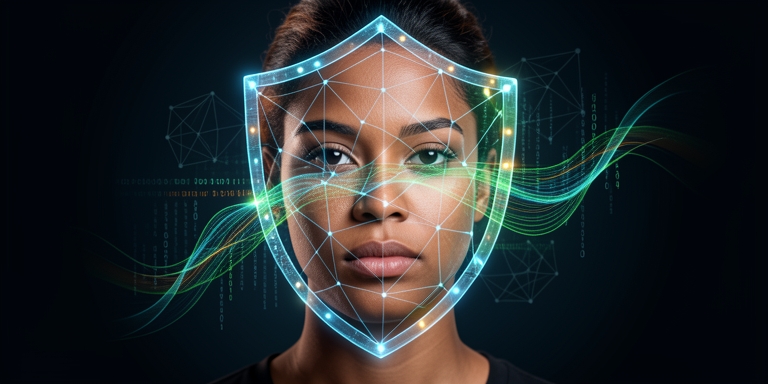
Social engineering detection is evolving to counter real-time threats through AI-driven solutions.
The Persistent Threat of Social Engineering
Organizations are investing significant resources into user education initiatives, but there is limited empirical data demonstrating their effectiveness against social engineering tactics. This method of attack continues to be a prevalent and successful entry point for adversaries. While technical vulnerabilities can be mitigated through patches, social engineering exploits human behavior, making it a persistent threat. The most common mitigation strategy is awareness training, yet this approach has not effectively neutralized the vector. Human users are inherently susceptible to psychological manipulation, and the sophistication of these tactics is increasing with the integration of AI-driven deepfake technologies.
Notable Incidents in 2023
In 2023, a series of breaches at Las Vegas casinos involved voice phishing (vishing) attacks. Threat actors posing as employees deceived help desk personnel into resetting credentials and circumventing multi-factor authentication (MFA). MGM Resorts experienced a ten-day shutdown of digital operations, resulting in approximately $100 million in lost revenue and remediation costs. Similarly, Caesars Entertainment reportedly paid a $15 million ransom after attackers demanded $30 million. More recently, the Brinks Home data leak in August 2026 involved voice phishing, with the ShinyHunters group exploiting enterprise help desk procedures. The attackers guided an employee through a Microsoft Entra authentication process, granting unauthorized access. This breach exposed nearly five million customer records and 41 gigabytes of internal data, which were later published on a public hacking forum.
Emerging Technological Solutions
Given the limitations of human detection, technological solutions are emerging to address evolving threats. Netarx has developed a system that leverages a proprietary orchestration layer, referred to as an AI defense meta harness. This tool integrates over 40 AI models to analyze real-time communications, evaluating more than 1,000 digital and metadata signals per interaction. The system employs device fingerprinting, EXIF data analysis, compression signatures, and location verification to confirm the legitimacy of endpoints. For AI-generated voice content, it detects micro-artifacts such as unnatural background silencing or electronic compression anomalies. In video-based interactions, it cross-references lip movements with audio signals and examines video frames for inconsistencies in micro-expressions, blinking patterns, lighting, or hairline distortions. No single indicator is conclusive, but the aggregation of multiple anomalies enables real-time fraud detection.
Color-Coded Traffic Analysis
The system also prioritizes user-centric alerts over automated blocking mechanisms. Traditional approaches that autonomously terminate suspicious activities can disrupt workflows and create unintended consequences. Netarx’s solution uses a color-coded traffic analysis indicator displayed during communications. Green signifies verified identities and devices, amber flags unknown sources or metadata irregularities, and red identifies synthetic media or active deepfakes. The internal term “flurp” describes this visual cue, a reference to the snail-like sound in Urban Dictionary. If amber transitions to red during a conversation, users are advised to terminate the interaction rather than relying on system-imposed restrictions.
Compatibility and Real-World Impact
The Netarx Identity Key (NIK) is compatible with Windows, macOS, Chrome, iOS, and Android. The company also maintains the Impact Database, which documents real-world incidents where human deception was critical to successful attacks. This technology represents an early shift toward automated detection replacing human oversight, a trend likely to expand as social engineering tactics grow more complex. The vulnerability of enterprise security is underscored by the fact that a single compromised employee can bypass even robust technical defenses, emphasizing the need for adaptive, AI-driven solutions.

About Author




 English