

Security Teams Need AI-Ready Workflows, Not Just AI Hype
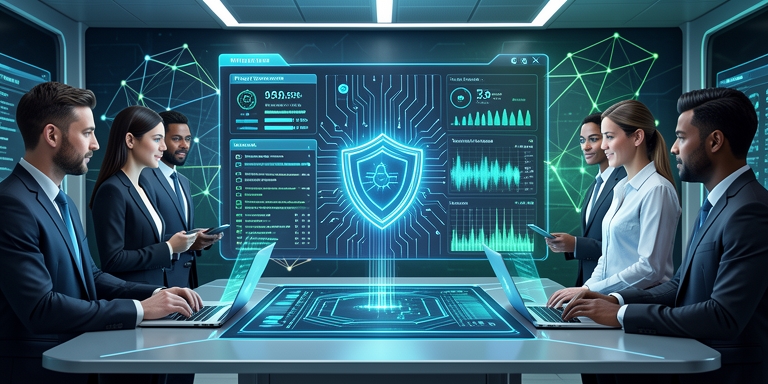
San Jose, Calif. – Jul. 21, 2026 The promise of artificial intelligence in cybersecurity is widely acknowledged, with claims that it will reduce alert fatigue, accelerate investigations, and enhance analyst productivity. However, the reality is that AI’s impact on security outcomes depends on its integration into operational workflows rather than its mere availability. For AI to deliver tangible benefits, it must operate within structured processes, access relevant contextual data, and align with established security controls.
The Challenges in Security Workflows
Most security operations teams face challenges not from a lack of tools but from fragmented workflows. Alerts originate from multiple sources, requiring analysts to switch between platforms. Case management is often manual, and response actions occur in disconnected systems. Managed Security Service Providers (MSSPs) face additional complexity managing diverse customer environments with varying tools, data formats, and policies.
The Solution: AI-Ready Workflows
In this landscape, generic AI solutions that function as standalone assistants fail to address core inefficiencies. Instead, they become another layer of complexity without resolving underlying issues. The next evolution in AI for security operations focuses on making workflows compatible with AI rather than adding AI as an afterthought.
Operational Context for Effective AI
For AI to be effective, it requires operational context, including access to alert details, user activity, asset information, timelines, telemetry, and historical data. It must also adhere to strict permissions and governance, particularly in multi-tenant environments where data separation and customer-specific policies are critical.
Stellar Cyber 6.5 and the MCP Server
Stellar Cyber 6.5 introduces Early Access support for the Stellar Cyber MCP Server, enabling approved AI clients to connect to the platform via the Model Context Protocol (MCP). This framework establishes a governed pathway for AI to interact with structured security operations data. Unlike generic AI integrations, MCP ensures AI operates within defined boundaries, respecting access controls and tenant-specific requirements.
Enhancing Analyst Workflows
Cases, not isolated alerts, form the foundation of effective security operations. A single alert provides a signal, but a case consolidates related evidence—such as observables, user behavior, network activity, and cloud data—to determine significance. Stellar Cyber 6.5 enhances analyst workflows by providing real-time triage status updates within cases.
Human-Augmented Autonomy
Human-augmented autonomy represents the future of security operations. AI should handle repetitive tasks, accelerate investigations, and recommend actions while humans retain oversight for critical decisions. This model requires clear handoffs between AI and analysts, ensuring transparency in AI’s findings, confidence levels, and supporting evidence.
Benefits for MSSPs and Lean Teams
For MSSPs, AI-enabled workflows address scalability challenges. Manual context gathering and inconsistent triage decisions create operational risks and limit capacity. By embedding AI into governed case workflows, MSSPs can standardize processes, reduce repetitive work, and support more customers without proportional headcount increases. Lean security teams benefit similarly, as AI helps them start investigations from a more informed position rather than sifting through raw alerts.
Key Takeaway
The key takeaway is that AI’s value in security operations depends on its integration into existing workflows. Stellar Cyber 6.5 advances this goal by introducing governed AI connectivity through the MCP Server and enhancing case workflows with real-time triage updates. These improvements deepen AI’s role in detection, triage, investigation, and response while maintaining visibility and control.
Stellar Cyber’s Open XDR Platform
Stellar Cyber’s Open XDR Platform offers a unified approach to security, enabling teams to identify and remediate threats efficiently. The platform reduces risk by improving threat detection speed and response times, while also lowering costs and enhancing analyst productivity. Its capabilities include an 8X improvement in mean time to detect (MTTD) and a 20X improvement in mean time to respond (MTTR).
Conclusion
Based in Silicon Valley, the company focuses on simplifying security operations for organizations of all sizes. Without AI-ready workflows, even the most advanced models will fail to deliver meaningful outcomes.

About Author





 English