

Strategic U.S. Cyber Defense Coordination: Streamlining One Report for Multiple Missions
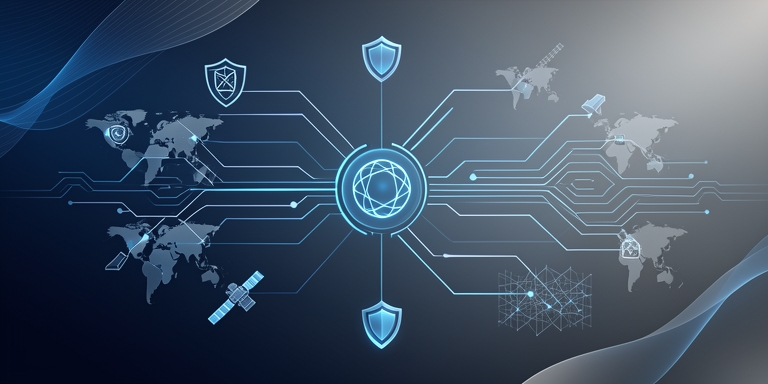
America has spent over two decades developing the structures, legal frameworks, and collaborative mechanisms necessary to safeguard a nation increasingly reliant on digital systems.
Introduction
America has spent over two decades developing the structures, legal frameworks, and collaborative mechanisms necessary to safeguard a nation increasingly reliant on digital systems. This effort has created significant capabilities but also introduced layers of complexity. A severe cyber incident impacting critical infrastructure can activate obligations across multiple federal agencies, each operating under distinct mandates, timelines, and responsibilities. As an organization seeks to analyze an adversary, mitigate an intrusion, restore operations, and protect its stakeholders, it may simultaneously navigate multiple branches of the federal government.
CIRCIA’s Framework and CISA’s Role
The Cyber Incident Reporting for Critical Infrastructure Act of 2002, or CIRCIA, establishes a framework to streamline this process. Enacted by Congress, the law aims to enhance federal visibility into major cyber incidents affecting essential systems. The Cybersecurity and Infrastructure Security Agency (CISA) is developing the final rule to operationalize this mandate. The administration has also prioritized reducing regulatory burdens and improving interagency coordination. CIRCIA presents an opportunity to achieve both goals simultaneously.
Information Sharing and Federal Coordination
When a company submits a comprehensive, compliant incident report to CISA, it should expect the federal government to distribute that information to relevant agencies. CISA would oversee this transfer, ensuring the protections applied to the original submission remain in effect throughout the federal system. The reporting entity should not face additional liability or compliance risks based on how subsequent agencies handle the data. Federal partners can then utilize the shared information in accordance with their specific authorities and may request further details when their unique missions demand it.
CISA’s Mission and Cyber Defense Capabilities
CISA was designed to facilitate this model. Its mission bridges government, industry, and critical infrastructure sectors. It operates across multiple domains, maintains direct relationships with system owners and operators, and aggregates data from individual incidents to build a broader understanding of adversary tactics. CISA’s role is particularly critical because cyberattack patterns often emerge only when data from multiple victims is combined.
Collective Insights and Threat Detection
One organization might detect anomalous authentication patterns, another could identify malicious software, and a third may experience service disruptions. Individually, these observations may lack context, but collectively they reveal actionable insights. This is where incident reporting transforms into a national cyber defense capability. The system’s effectiveness should be evaluated by CISA’s post-report actions: synthesizing the data with other sources, identifying trends, generating defensive strategies, and providing relevant insights to affected entities.
CIRCIA’s Legal Mandates and Data Utilization
Congress embedded much of this approach in CIRCIA. The law requires federal agencies receiving covered cyber-incident data to forward it to CISA and mandates that CISA share it with appropriate partners. It also directs CISA to identify actionable threat indicators, disseminate protective measures, and leverage incident data to inform broader defense strategies.
Respecting Agency Roles and Legal Authorities
A coordinated system must also respect the distinct roles of agencies receiving the information. CISA may use the data to analyze threats and strengthen collective defenses. The FBI could apply it to investigate or disrupt malicious activities. A sector-specific regulator might use it to assess service reliability or safety. Other agencies may have responsibilities related to investors, consumers, privacy, procurement, or national security. While these missions overlap, they remain distinct, and harmonization should focus on information management processes while preserving each agency’s legal authorities.
Modern Reporting Frameworks and Efficiency
A modern reporting framework can simplify coordination for all stakeholders. Standardized data fields would minimize redundant submissions. Unified definitions would reduce ambiguity. Aligned timelines could streamline reporting where operational and legal requirements allow. Secure technical systems could route information to authorized recipients, eliminating the need for victims to repeatedly reconstruct the same data.
Streamlining Federal Integration
The federal government should take ownership of integrating incident information across agencies, allowing organizations to concentrate on accurate reporting and incident response. CIRCIA’s approach to “substantially similar” reporting provides a foundation for broader alignment. Information should be deemed equivalent when it delivers the necessary insights, regardless of which agency’s portal collected it.
Criticality Assessment and Systemic Perspective
A core set of incident data could then flow across the federal government, with agencies gathering additional details when their missions require it, supported by legal and technical infrastructure ensuring effective sharing and utilization. In practice, this means designing federal reporting around the information the government needs rather than the organizational boundaries through which it travels.
Redefining Criticality Metrics
The same systems-based approach should guide CISA’s assessment of criticality. Cyber risk is better understood through dependencies, concentration, and consequences rather than company size. A small software vendor, cloud service provider, or managed service provider may serve as a critical node for thousands of organizations across vital sectors. Criticality should reflect the functions an entity enables, the entities that depend on it, and the impact of its disruption.
Conclusion: Strengthening National Cyber Defense
America’s cyber capabilities are distributed across federal agencies, private enterprises, infrastructure sectors, states, communities, law enforcement, intelligence agencies, and technology providers. Effective national cyber defense hinges on connecting these capabilities through shared information, clear responsibilities, and coordinated action. CIRCIA offers a chance to strengthen these connections. Its impact could extend beyond a reporting rule, becoming a foundational element that enables the nation to detect threats earlier, respond more swiftly, and convert insights from one incident into protections for future victims.

About Author







 English