

Cyber Resilience: Why Supply Chain Security is Critical
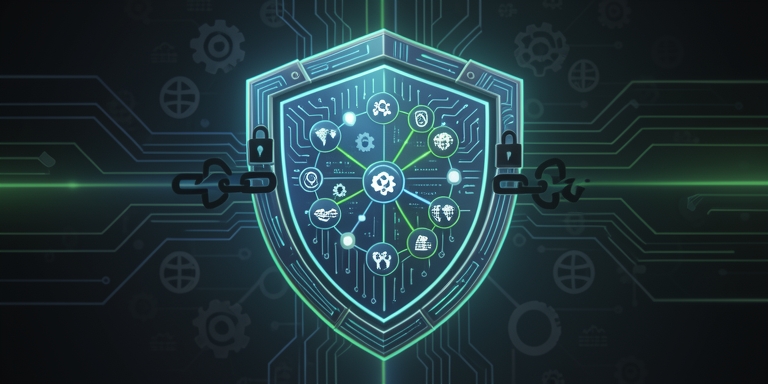
Cyber resilience in modern enterprises requires managing interconnected systems, third-party dependencies, and AI risks to ensure operational continuity.
Interconnected Systems and Dependencies
Cyber resilience is increasingly defined by interconnected systems and dependencies beyond traditional organizational boundaries. Modern enterprises rely on technologies, services, and systems they cannot fully control, including third-party code, cloud infrastructure, and AI-driven tools. These interdependencies create complex relationships that can amplify disruptions across networks, applications, and business processes.
Modern Enterprise Challenges
For security professionals, this shift demands a reevaluation of resilience strategies to account for risks originating from external sources and evolving technological ecosystems. The challenge extends beyond securing individual components. Organizations must now map and understand how their systems interact with external entities, including software suppliers, AI agents, and operational technology (OT) environments. A vulnerability in a third-party application, a compromised AI system, or a failure in cloud infrastructure can cascade into broader operational impacts.
AI and Emerging Threats
AI introduces new layers of dependency that may not be immediately visible to security teams. As enterprises adopt AI systems capable of interacting with enterprise applications, data, and identities, these agents often require access to sensitive resources. Attackers are also leveraging AI to enhance their capabilities, creating a growing gap between the speed of technological change and organizational preparedness.
Research by LevelBlue highlights this disparity, noting that only 20% of CIOs believe their organizations are highly effective at defending against AI-driven threats. Despite 51% of respondents anticipating AI-powered attacks within 12 months, fewer than one-third feel prepared to manage such risks.
Software Supply Chain Risks
Software supply chains further complicate resilience efforts. Applications increasingly depend on open-source components, third-party libraries, and cloud services, making it difficult for security teams to trace vulnerabilities or disruptions. A single compromised library can affect multiple systems, while an outage at a critical SaaS provider can disrupt operations across an organization.
Third-Party Dependencies
LevelBlue data reveals that fewer than 9% of organizations have business continuity plans addressing critical third-party dependencies, and less than 10% include these entities in continuity testing. Organizations that do implement such measures report significant improvements in incident response effectiveness.
IT and Operational Technology Convergence
The convergence of IT and operational technology (OT) raises additional stakes. Critical infrastructure, such as manufacturing systems and utility networks, relies on connections between traditional IT and OT environments. While these integrations enhance efficiency, they also create pathways for cyber incidents to impact physical operations.
Critical Infrastructure Risks
AI is further altering the threat landscape, with state-sponsored actors using AI-assisted tools for reconnaissance and attacks. Recent conflicts have demonstrated how cyber operations can disrupt energy, telecommunications, and other essential services, emphasizing the need for resilience strategies that account for both digital and physical consequences.
Visibility and Collaboration
Visibility into system dependencies is a foundational step, but it is not sufficient. Organizations must identify which components are most critical to business operations and establish clear ownership of associated risks. This requires collaboration across security, IT, business units, and third-party partners.
Risk Ownership and Coordination
For example, an AI agent may be deployed by a business unit but governed by enterprise security policies, while an OT system may be managed by operations but connected to IT infrastructure. Resilience hinges on aligning technical, operational, and strategic perspectives to address risks proactively.
Resilience Frameworks
Security leaders must shift from reactive measures to coordinated planning. This involves identifying systems that support critical operations, understanding their dependencies, and developing alternatives to mitigate disruptions. LevelBlue CISO Kory Daniels advocates for a resilience framework that focuses on maintaining minimum operations during incidents, mapping supporting systems, and testing plans as real-world scenarios rather than compliance exercises.
This approach enables organizations to address emerging technologies like AI, software supply chains, and IT/OT integration without creating siloed security programs.
Conclusion
Ultimately, cyber resilience depends on the ability to navigate complex dependencies and fragmented responsibilities. While eliminating all dependencies is impractical, organizations can prioritize risks based on potential business impact and build collaborative response strategies. By aligning technical, operational, and strategic efforts, enterprises can better withstand disruptions and maintain continuity in an increasingly interconnected digital landscape.

About Author





 English