

Food Spoilage Caused by Refrigeration System Hack in European Supermarkets
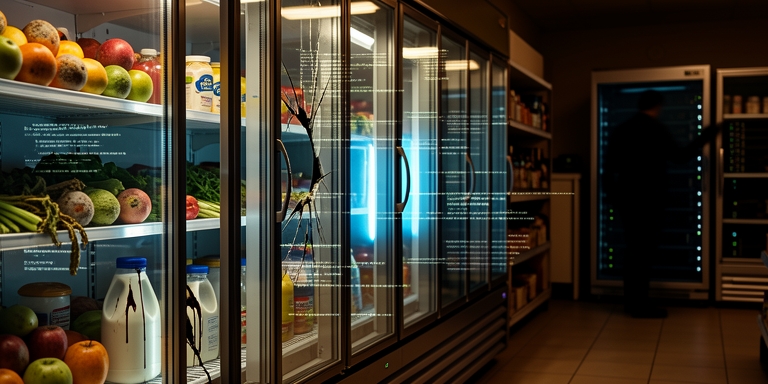
Refrigeration Controller Hack Spoils Food Across European Supermarkets A cyberattack targeting refrigeration systems disrupted operations at hundreds of supermarkets across multiple European countries, leading to widespread spoilage of perishable goods.
The Incident Unfolds
The incident involved unauthorized access to refrigeration controllers, which were manipulated to initiate defrost cycles, raising internal temperatures to 50 degrees Celsius (122 degrees Fahrenheit). This resulted in significant financial losses and raised concerns about the security of critical infrastructure.
Affected Supermarket Chains
The attack impacted several major supermarket chains, including Auchan, Carrefour, E.Leclerc, Intermarché (a subsidiary of Groupement Mousquetaire), and Monoprix, according to reports. While the majority of affected locations were in France, the breach also extended to stores in Belgium, Germany, the Netherlands, Poland, Portugal, and Spain.
Cooperative U’s Response
Cooperative U, which operates stores under the Hyper U, Super U, and U Express brands, confirmed the breach through a statement shared on X. The organization emphasized that its teams were working with refrigeration specialists to restore normal operations and conduct a full investigation.
CEO’s Statement
“This act is unacceptable and undermines the essential role of these systems in maintaining food safety for the French population,” the translated statement read.
Scope of the Breach
French media outlet BFM TV reported that over 300 supermarket locations in France were affected, with estimated damages reaching millions of euros. The attack involved compromising refrigeration controllers supplied by Danish manufacturer Danfoss, which were remotely adjusted to initiate defrost cycles.
Technical Details
Employees discovered the temperature spikes after six hours, with some freezers releasing hot air upon opening in the morning. Security researcher Lukasz Olejnik described the breach as a remote takeover of refrigeration controllers, noting that attackers set target temperatures to 50°C.
Vulnerabilities in Danfoss Systems
The incident occurred approximately two months after cybersecurity firm Claroty disclosed vulnerabilities in the Danfoss AK-SM 800A management platform. The flaws could allow attackers to bypass authentication, execute arbitrary code, and inject malicious configuration directives.
Recommendations and Risks
Claroty identified thousands of publicly accessible AK-SM 800A interfaces and recommended upgrading to firmware version R4.3.1 to mitigate risks. The firm warned that compromising such systems could lead to severe operational disruptions, as they provide centralized control over refrigeration equipment.
Implications for Industrial Security
The incident has prompted renewed scrutiny of security measures for industrial systems, particularly those managing critical infrastructure like food storage. The attack highlights the growing threat of cyberattacks targeting operational technology (OT) systems, which are increasingly connected to corporate networks.
Proactive Measures Needed
As organizations rely more heavily on digital management tools, securing these systems against remote exploitation becomes imperative. The breach also underscores the need for proactive vulnerability management and regular system updates.
Conclusion
The full scope of the attack, including the identity of the perpetrators and the exact methods used, remains under investigation. However, the incident serves as a stark reminder of the potential consequences of cyberattacks on physical systems, emphasizing the importance of integrating cybersecurity into all aspects of industrial operations.

About Author








 English