

Advanced Security Measures Rolled Out by OpenAI for ChatGPT Users

Advanced Security Feature Rolled Out for High-Risk ChatGPT Users
OpenAI has introduced an advanced account security feature for high-risk ChatGPT users, providing additional protection against targeted hacking attacks.
Feature Overview
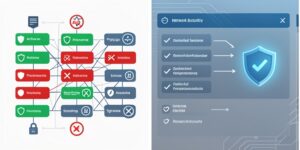
The new feature, dubbed Advanced Account Security, focuses on four critical areas: sign-in protection, account recovery, session duration, and device authentication. By enabling this feature, users can fortify their accounts with physical security keys or passkeys, eliminating the reliance on password-based logins.
According to OpenAI, “This feature provides an additional layer of security for our most vulnerable users, protecting them from targeted hacking attempts.”
Implementation Details
- Sign-in Protection: Users who enable Advanced Account Security will no longer receive SMS-based login codes. Instead, they will receive physical security keys or passkeys to authenticate their identity.
- Account Recovery: Traditional SMS-based account recovery methods are replaced with backup passkeys, recovery keys, and security keys. OpenAI’s support team will no longer be able to assist users with account recovery.
- Session Duration: To reduce the window of opportunity for malicious actors to gain unauthorized access, OpenAI has implemented a system that automatically logs users out after a designated period.
- Device Authentication: The feature also includes device authentication, requiring users to verify their identity using physical security keys or passkeys before accessing their accounts.
Users at elevated risk can enroll in the Advanced Account Security program through a dedicated webpage provided by OpenAI.
Related News
- Google has adjusted its bug bounty program to prioritize rewards for finding vulnerabilities in Android applications.
- Two U.S. security experts were sentenced to prison for assisting a ransomware gang, highlighting the severity of consequences for individuals involved in cybercrime.
- Cisco has released an open-source tool for verifying the provenance of AI models, addressing concerns about the integrity and transparency of these complex systems.
- The Federal Bureau of Investigation (FBI) has warned of a surge in cargo thefts facilitated by hackers, underscoring the need for increased vigilance among businesses and logistics providers.
- A critical vulnerability was discovered in the Gemini command-line interface, allowing attackers to execute host code and launch supply chain attacks.
- Exploitation of a previously unknown Linux vulnerability compromised over 40,000 servers worldwide.
- Hundreds of Internet-facing VNC servers exposed industrial control systems (ICS)/operational technology (OT) environments to remote hacking risks.
- DigiCert revoked certificates following a support portal hack.
- cPanel exploitation continued, affecting numerous servers.
- An edtech firm, Instructure, disclosed a data breach amid hacker leak threats.
- The U.S. military reached deals with seven tech companies to integrate their AI capabilities into classified systems.
Last but not least, a phishing kit featuring an AI-powered assistant emerged, offering attackers advanced tactics and improved evasion techniques.

About Author








 English